
Decoding Equity Crowdfunding: Why Your Network Matters More Than Your Narrative
Investigating the impact of multidimensional social capital on equity crowdfunding performance
This research investigates the impact of multidimensional social capital—comprising cognitive, relational, and structural dimensions—on equity-crowdfunding (ECF) performance. Using a sample of 243 Italian ECF campaigns, the authors demonstrate that relational and structural factors are primary drivers of success, while cognitive elements yield mixed or even negative results.
TL;DR
Success in Equity Crowdfunding (ECF) isn't just about a polished pitch; it's about the intricate web of social capital you weave. This study of 243 Italian campaigns reveals that relational trust and structural networks are the true engines of funding, while over-explaining your project in long videos might actually drive investors away.
Context: This work moves ECF research from simple "follower counts" to a sophisticated, multidimensional analysis of social assets.
The Problem: The Unidimensional Trap
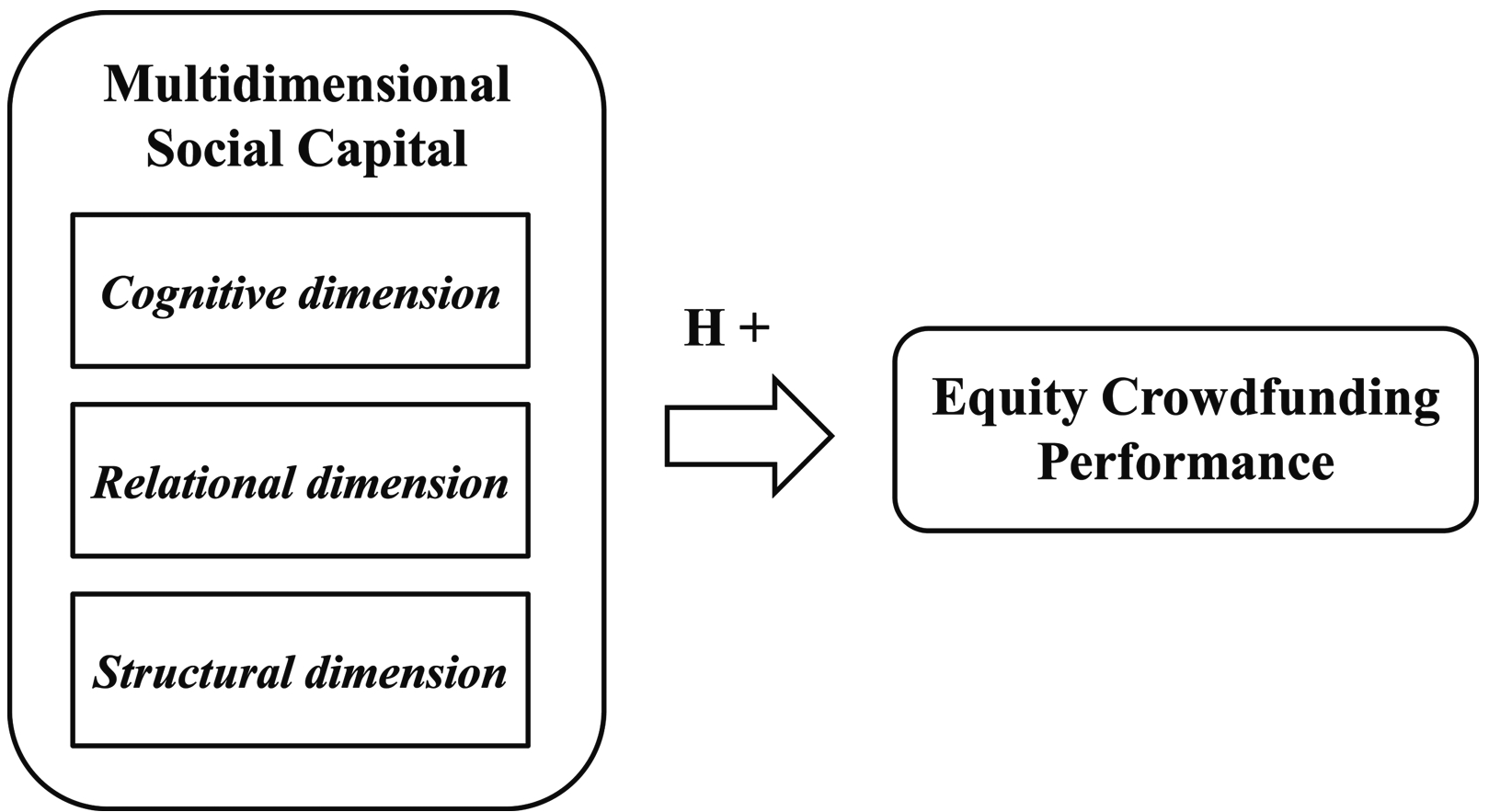
Most entrepreneurs view social capital as a singular "score"—how many followers do I have? However, academic literature has long suggested social capital is a triad of Cognitive (shared language), Relational (trust/obligation), and Structural (connections) dimensions.
The pain point is that while reward-based crowdfunding (like Kickstarter) thrives on "hype" and "storytelling," Equity Crowdfunding involves selling actual shares. Investors here aren't just buying a product; they are buying into a future. Prior research failed to explain why high-quality narratives sometimes fail while less "vocal" projects succeed.
Methodology: The Multidimensional Lens
The authors broke down social capital into measurable proxies to see which levers actually move the needle on ECF performance (measured by % of funds raised and number of investors).
The Framework
- Cognitive: Measured by Project Description Length and Video Duration.
- Relational: Measured by whether the entrepreneur has backed others (Obligation) and their ties to "trustworthy actors" like universities or incubators.
- Structural: Measured by Facebook friends and LinkedIn followers.
Key Insights: Trust Beats Talk
The results from the Italian market offer a reality check for ECF strategy:
1. The "Boredom Effect" of Videos
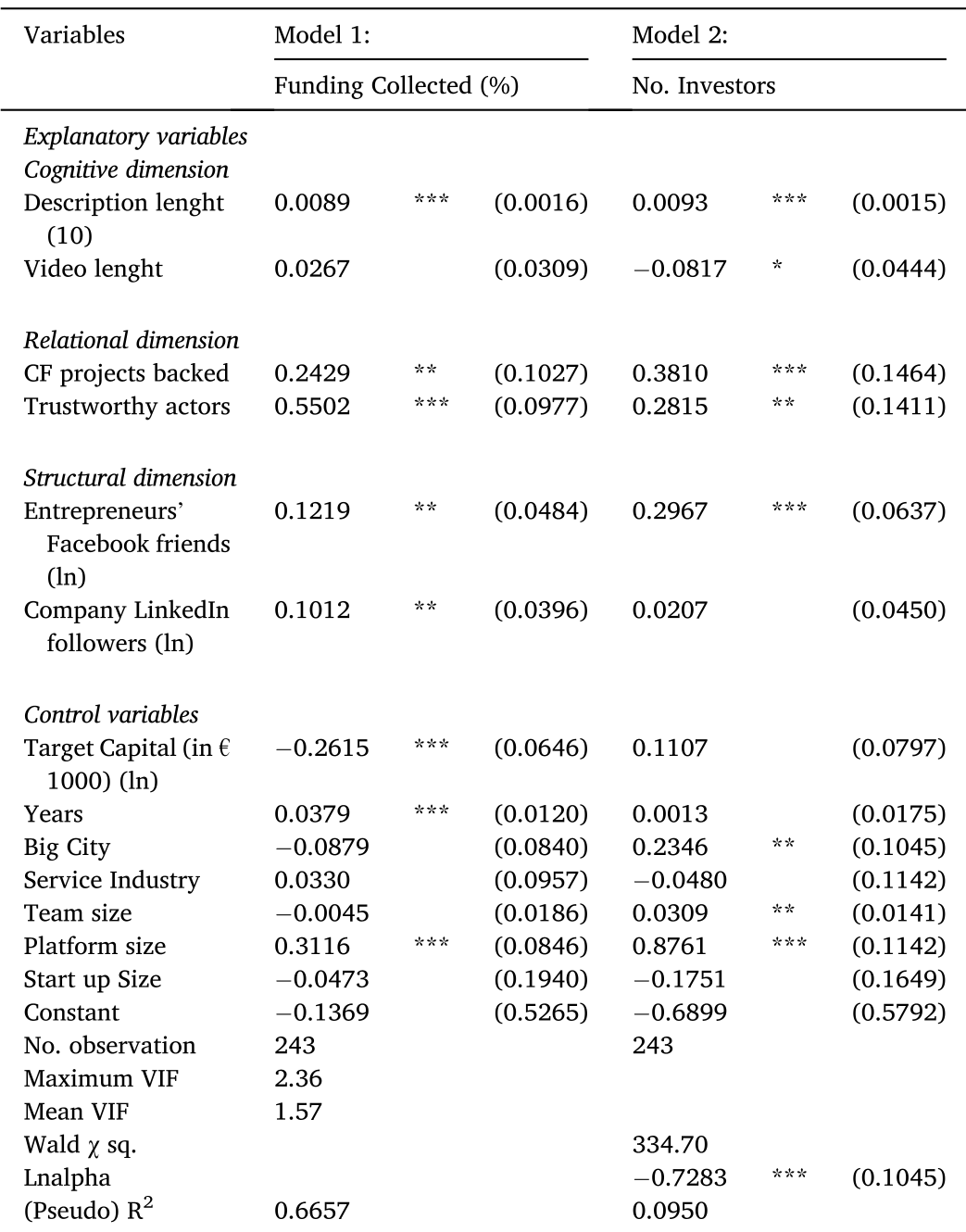
Counter-intuitively, longer videos had a negative impact on the number of investors. In the high-stakes world of equity, investors likely value efficiency and hard data over long-winded storytelling. If you can't hook them quickly, you lose them.
2. The Power of "Credit Slips"
The research found that entrepreneurs who had previously backed other projects saw significantly higher success. This is "Relational Social Capital" in action—by supporting the ecosystem, you earn "credit slips" or reciprocal obligations that manifest as support for your own campaign.
3. Trust by Association
Establishing ties with trustworthy actors (incubators, accelerators, or reputable partners) was one of the strongest predictors of success. These actors act as "trusted intermediaries," effectively transferring their reputation to the startup.
Deep Dive: Does Structural Capital Scale?
The study confirms that Structural Ties (Facebook friends) and Social Interactions (LinkedIn followers) both correlate positively with capital raised. However, LinkedIn followers predominantly helped with the funding amount rather than the number of investors. This suggests that professional networks (LinkedIn) attract "heavier" hitters—investors capable of committing larger sums—whereas personal networks (Facebook) are better for building raw numbers (the "crowd").
Conclusion & Practice
The Takeaway: If you are launching an ECF campaign:
- Prioritize Relational Capital: Get endorsed by an incubator or support other campaigns months before your own launch.
- Trim the Cognitive Fat: Keep your videos short and data-heavy. Don't let narrative "fluff" obscure your business model.
- Leverage Professional Channels: Use LinkedIn to target high-value backers, but don't ignore the "viral" potential of your personal Facebook network to hit investor count targets.
Limitations: The study focuses on Italy, a pioneer in ECF regulation. While the results are robust (checked via VIF and multicollinearity tests), the "video length" effect might vary in cultures with different communication styles.