
Multilateral Security: Balancing Anonymity and Accountability in Decentralized Social Networks
Multilaterally Secure Communication Anonymity in Decentralized Social Networking
The paper introduces a multilaterally secure communication framework for decentralized social networks within the EU FP7 di.me project. It combines network-level anonymization (Tor) with application-layer anonymous credential systems (IBM's Idemix) to provide unlinkable social interactions while balancing business requirements for fraud resolution.
TL;DR
In the decentralized social networking landscape, "going dark" via Tor isn't always enough—and it often crashes into business and legal walls. This paper presents a hybrid solution for the di.me project that uses a flexible proxy layer and Idemix anonymous credentials. The result is a system that protects user identity from linkability while allowing businesses to maintain fraud-resolution capabilities and mobile-friendly performance.
Background: The Conflict of Privacy
Anonymity is often designed for a single-user model, but social networking is inherently collaborative. When we move to decentralized platforms, new risks emerge:
- Network Linkability: Even with Tor, static TLS certificates or unique metadata in URLs can re-identify users.
- The Business Barrier: Companies often forbid anonymity tools because they make legal auditing impossible.
- Mobile Constraints: Tor is slow, and mobile OS environments (iOS/Android) frequently lack the performance or library support for advanced privacy-enhancing technologies (PETs).
The Core Innovation: Multilateral Security
The authors argue for Multilateral Security—the idea that a system is only secure if the goals of all affected parties (users, providers, and regulators) are balanced. To achieve this, they propose a two-tier defense:
1. The Flexible Proxy Layer
Instead of forcing all traffic through Tor, the system uses a di.me proxy layer. This allows users to toggle between:
- Tor Hidden Services: Maximum network anonymity.
- di.me Proxy: Lower latency, hiding IP from the end-point but managed by the di.me environment.
- Direct IP: For non-sensitive, high-performance tasks.
2. Anonymous Credentials (Idemix)
To solve the "Accountability vs. Privacy" paradox, the paper integrates Idemix. Unlike standard certificates that link a public key to an identity, Idemix allows a user to prove they have an attribute (e.g., "I am a registered member") without revealing who they are.
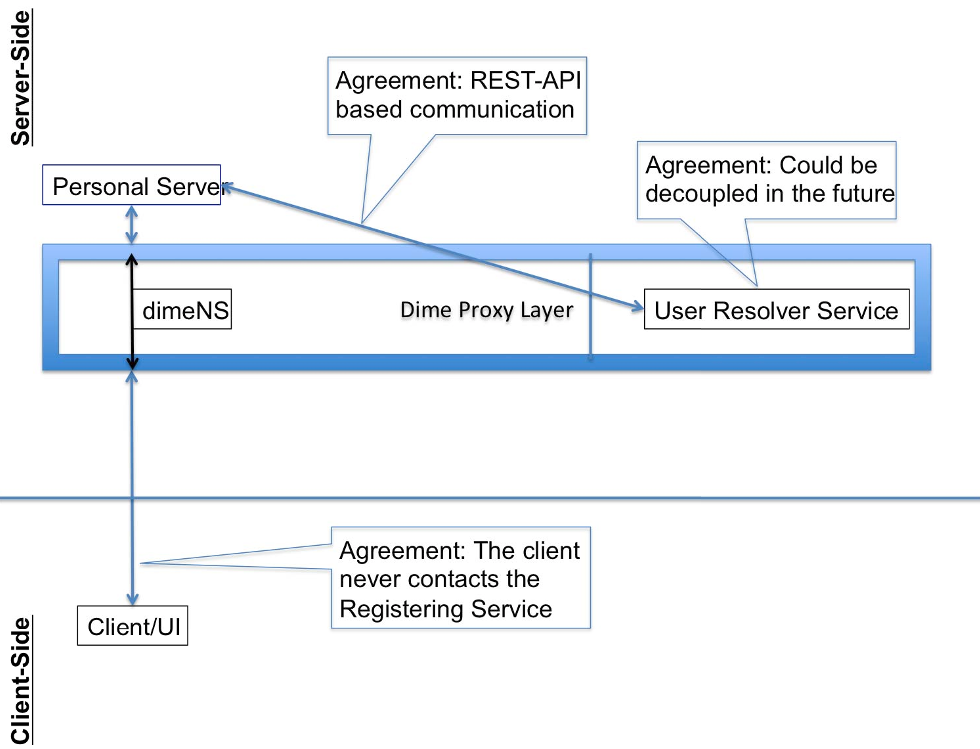 Figure 1: The User Resolver Service (URS) acts as the bridge between anonymous credentials and resource access.
Overcoming Mobile Limitations
A significant contribution of this work is making Idemix practical for mobile. Since many mobile platforms cannot handle the heavy computational load of the Idemix library, the authors developed a RESTful Web Service API. This externalizes the verification and proof generation to a "Prover Service" that can run in a user-controlled environment, providing a hybrid function that serves non-JVM environments like Windows Phone.
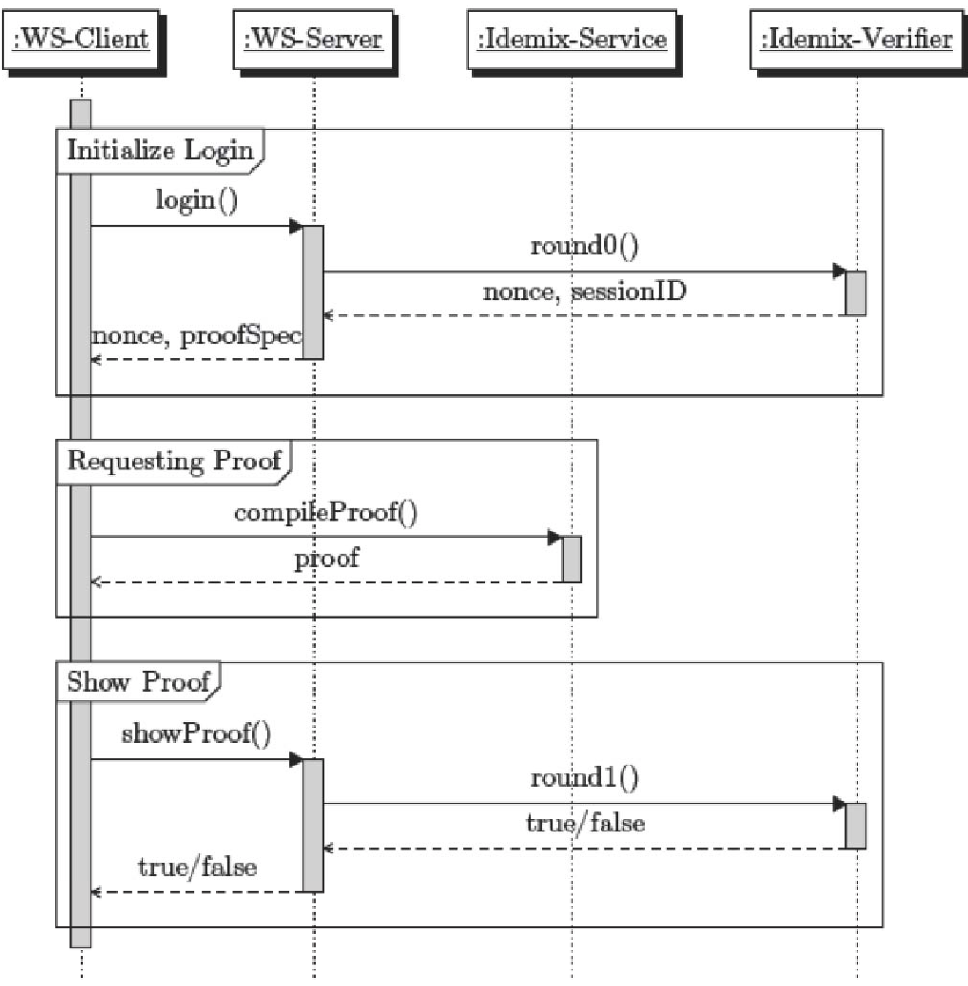 Figure 2: The 3-step login process utilizing Idemix and short-term tokens (OAuth).
Performance and Business Compliance
The paper directly addresses industrial requirements:
- Latency: By using the di.me proxy, they target a 1-3 second response time, which is critical for mobile user experience.
- Fraud Resolution: One of the unique features of Idemix is "Anonymity Revocation." If a legal fraud occurs, a trusted third-party resolver can disclose the identity of the requester, satisfying corporate and legal audit needs.
Critical Insight: Why This Matters
Most decentralized social networks (like Diaspora or Friendica) focus on data ownership but ignore traffic analysis or re-identification via application-layer metadata. This paper highlights that authenticity and anonymity are not mutually exclusive. By using a "Resolver" that issues unlinkable tokens, we can build a social network where your "Personal Information Sphere" remains private, yet your actions are verifiable.
Conclusion and Limitations
The di.me project succeeds in creating a "middle ground" in the privacy wars. However, the reliance on a Proxy/Resolver Service introduces a point of trust. While decentralized, the choice of the resolver becomes the new security perimeter. Future work in this space will likely look toward Zero-Knowledge Proofs (ZKP) on edge devices to eliminate the need for an external "Prover Service" entirely.
Takeaway for Architects: When designing for privacy, don't just hide the IP. Think about the linkability of sequences of actions and provide "exit ramps" for accountability to satisfy the business side of the ecosystem.