
The Multilevel Architecture of Digital Transformation: Lessons from Internet Banking
18527_A multilevel analysis of factors influencing the adoption of Internet Banking.
This paper presents a multilevel analysis of the factors influencing Internet banking adoption, categorized at the external context, industry, and firm levels. It identifies Internet banking as a "technological application" of an "enabling technology" (the Internet) and uses the "Reverse Product Cycle" model to track its evolution from efficiency gains to radical product innovation.
TL;DR
Internet banking wasn't just a new tool; it was a radical shift in the "Conditions of Possibility" for the financial sector. This paper breaks down the adoption of the Internet across three layers—contextual, industrial, and organizational—revealing that in service industries, innovation moves backward: from saving money (efficiency) to creating new products (customization).
The "Reverse Product Cycle" Insight
In traditional manufacturing, you invent a product and then figure out how to make it cheaply. In banking, the Internet flipped this script. According to the Reverse Product Cycle Model, adoption follows three distinct phases:
- Phase I (Efficiency): Using the tech to do existing things cheaper (e.g., viewing balances).
- Phase II (Quality): Improving the process (e.g., faster loan approvals).
- Phase III (Innovation): Creating products that couldn't exist before (e.g., real-time account aggregation and granular risk-based pricing).
Methodology: A Tripartite Lens
The authors argue that looking at a bank in isolation is a mistake. To understand why a firm adopts a technology, you must examine:
1. The External Context (The Soil)
Without "Complementary Assets"—like secure encryption (SSL/SET protocols) and a "Critical Mass" of PC owners—Internet banking would have remained a laboratory curiosity. Adoption speed is a function of network externalities: the more people online, the more valuable the bank's digital portal becomes.
2. The Industry Dynamics (The Battlefield)
The paper explores the classic struggle between Incumbents and New Entrants.
- New Entrants: Unencumbered by legacy systems, they move fast but face high "Realization Delays" (building trust from scratch).
- Incumbents: Slow to start, but they possess "Complementary Assets" (brand, existing customers, and deep pockets) that eventually allow them to overtake the pioneers.
Firm-Level Strategy: Strategic Choice vs. Determinism
Why do two similar banks choose different paths? The authors posit that adoption is a Strategic Choice.
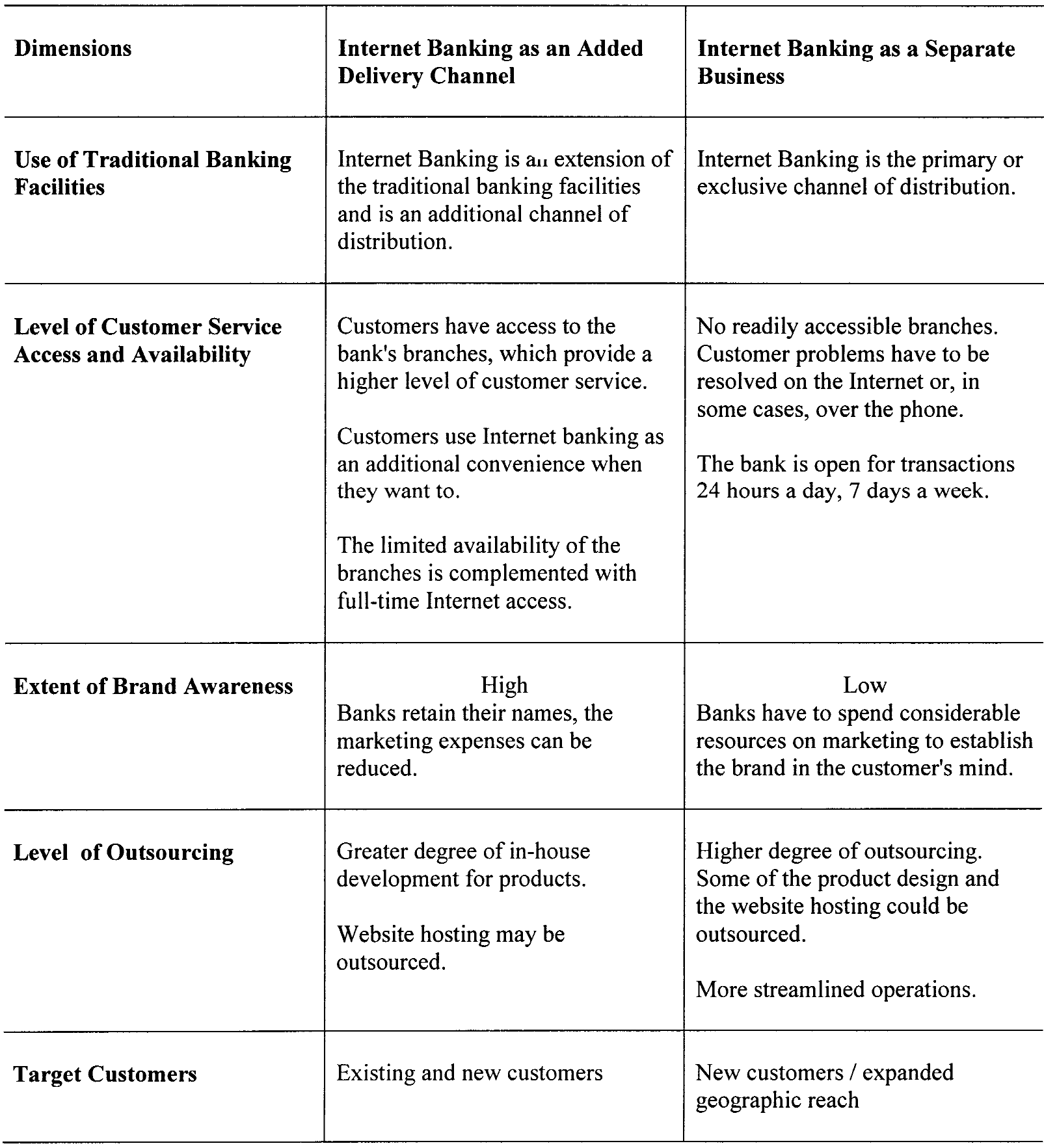
- Added Delivery Channel: The Internet as a "defensive" extension. It boosts loyalty and cross-selling.
- Separate Business: Creating a "Virtual Bank" (like WingspanBank). This allows for rapid innovation but risks cannibalizing the parent brand and requires massive marketing spend.
Key Performance Findings
The data reveals a harsh reality for "pure-play" digital banks:
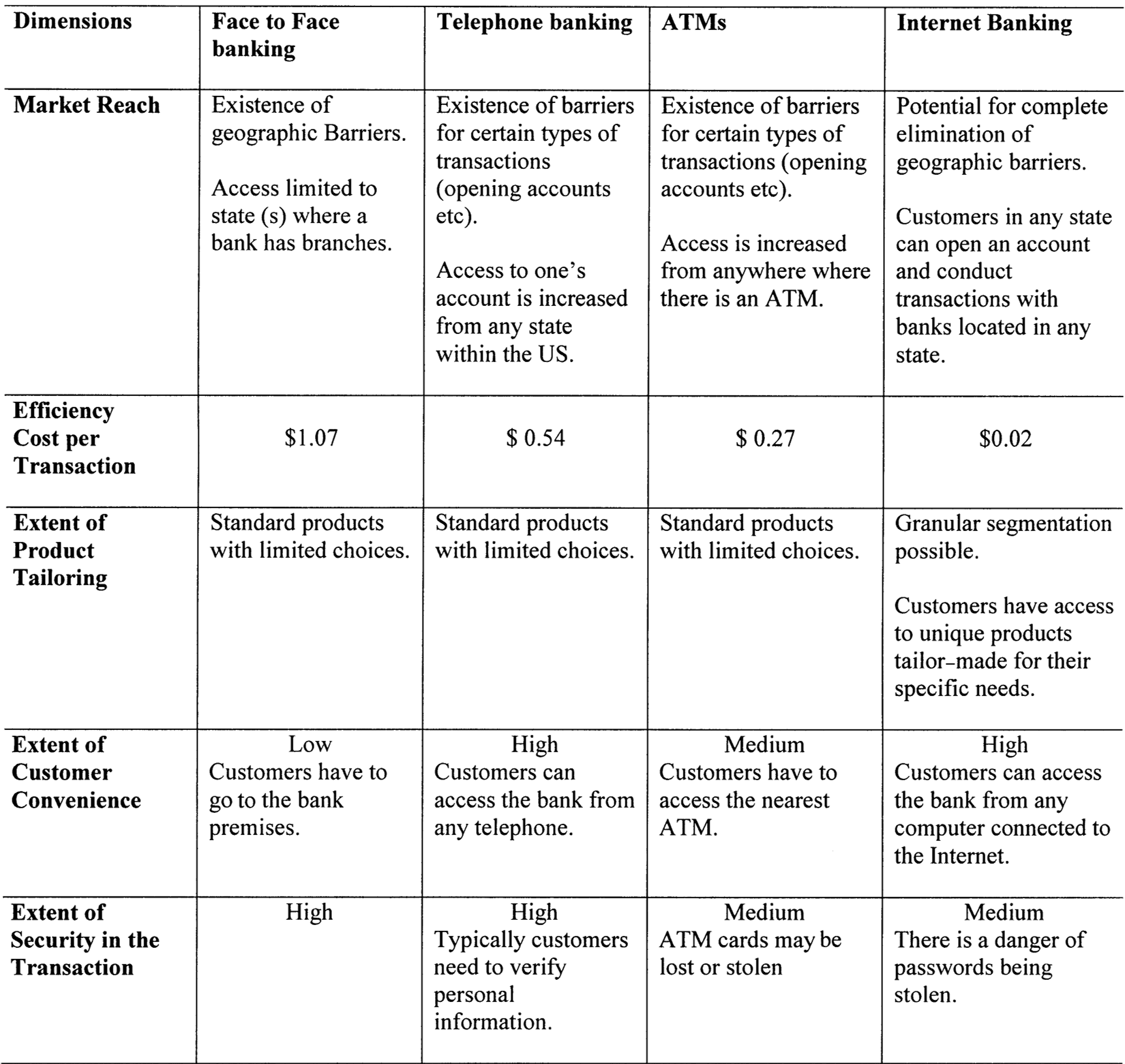
- Cost Efficiency: Internet transactions cost a mere 1.07 for face-to-face services.
- The Profitability Gap: Large banks with Internet services are more profitable than non-Internet banks. However, small Internet-only banks were significantly less profitable, proving that technology alone isn't a silver bullet—it requires scale and trust.
Critical Analysis & Conclusion
The "death of the branch" was greatly exaggerated. The paper concludes that the "Click and Mortar" model is the ultimate winner. Complex transactions (mortgages, business loans) still require the "Richness" of human interaction, while simple ones (transfers) demand the "Reach" of the Internet.
Future Outlook: As we move into the era of AI and Decentralized Finance (DeFi), the lessons of this paper remain relevant: technology adoption is not just about the code; it’s about the ecosystem, the industry's existing power structures, and the strategic courage to reorganize the firm around the new medium.