
The Anatomy of a Thriving Digital Tribe: Multilevel Lessons from a 2.5-Year Ethnographic Study
15084_A multilevel analysis of sociability, usability, and community dynamics in an online health community.
This research presents a 2.5-year longitudinal ethnographic study of "Bob’s ACL WWWBoard," a thriving online health support community. Using multilevel analysis including Group Membership Roles and Interaction Process Analysis (IPA), the study validates that traditional social science tools can effectively measure online group dynamics and underscores the synergy between sociability and usability.
TL;DR
In a world obsessed with AI-driven moderation and shiny UI, this seminal 2.5-year study of "Bob’s ACL WWWBoard" reminds us that the bedrock of any online community is reliability, reciprocity, and a narrow purpose. By applying traditional social psychology tools like Interaction Process Analysis (IPA) to a digital forum, the researchers proved that online groups can mirror the depth and structural complexity of face-to-face support groups, even with "primitive" technology.
Decoding the Motivation: Why Do Digital Communities Live or Die?
Back in the early 2000s, the "Cues Filtered-Out" theory suggested that text-based communication was too thin to support "real" community. Maloney-Krichmar and Preece challenged this by diving into a community that had already survived for eight years. They wanted to know: How does a group with no formal rules, no "state-of-the-art" features, and an undifferentiated interface become a life-changing resource for its members?
Methodology: Bringing Social Science to the Web
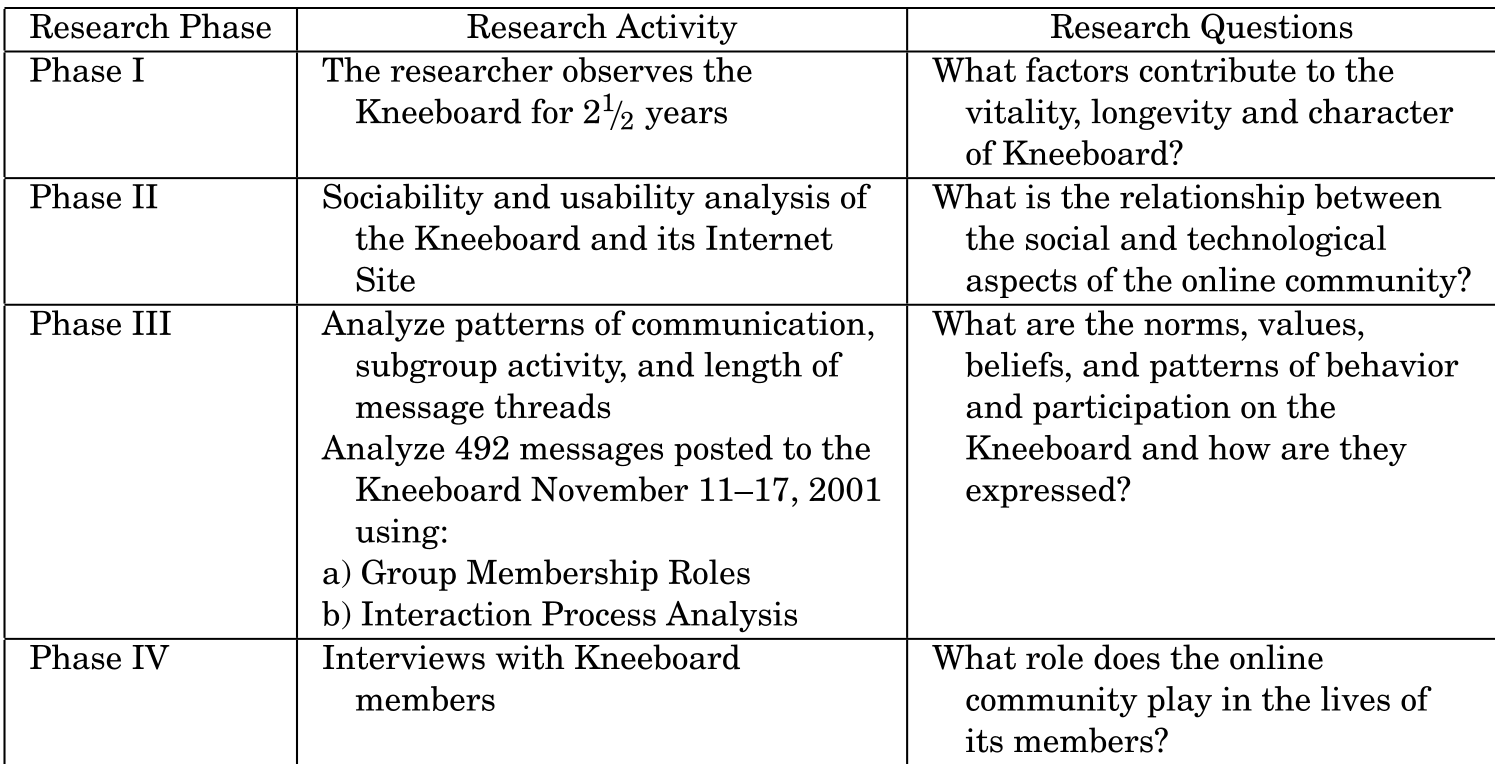
The researchers didn't just look at logs; they lived (virtually) within the community for 30 months. They performed a Multilevel Analysis across four phases:
- Ethnographic Observation: Understanding the "culture" of knee-injury recovery.
- Sociability & Usability Audits: Comparing the site against standard HCI heuristics.
- Group Dynamics Analysis: Coding 492 messages using established social psychology frameworks.
- Deep Interviews: Connecting the online behavior to offline life outcomes.
Core Insight 1: Role Differentiation is Software-Agnostic
One of the most profound findings was the mapping of Group Membership Roles. Despite the limited bandwidth of the 2005-era web, members naturally self-organized into 17 distinct roles.
- Task Roles (70%): Information-givers and opinion-givers who acted as the community "encyclopedias."
- Socio-Emotional Roles (28%): The "Encouragers" who provided the "social glue" through empathy.
- Individualistic Roles (2%): Minimal "trolling" or self-aggrandizement, thanks to the high signal-to-noise ratio provided by a narrow topic (ACL injuries).
Core Insight 2: Predictable Technology > Innovative Features
The community's "Kneeboard" was technically simple. In fact, it lacked a statement of purpose, registration policies, and modern moderation tools.
Surprisingly, the researchers found that usability failures on the site didn't kill the community, but server downtime did. Members reported feeling "isolated" and "unable to breathe" when the server broke. This suggests that for health communities, the interface should be a "transparent window" rather than a feature-heavy distraction.
The "Club" Effect: Subgroup Vitality
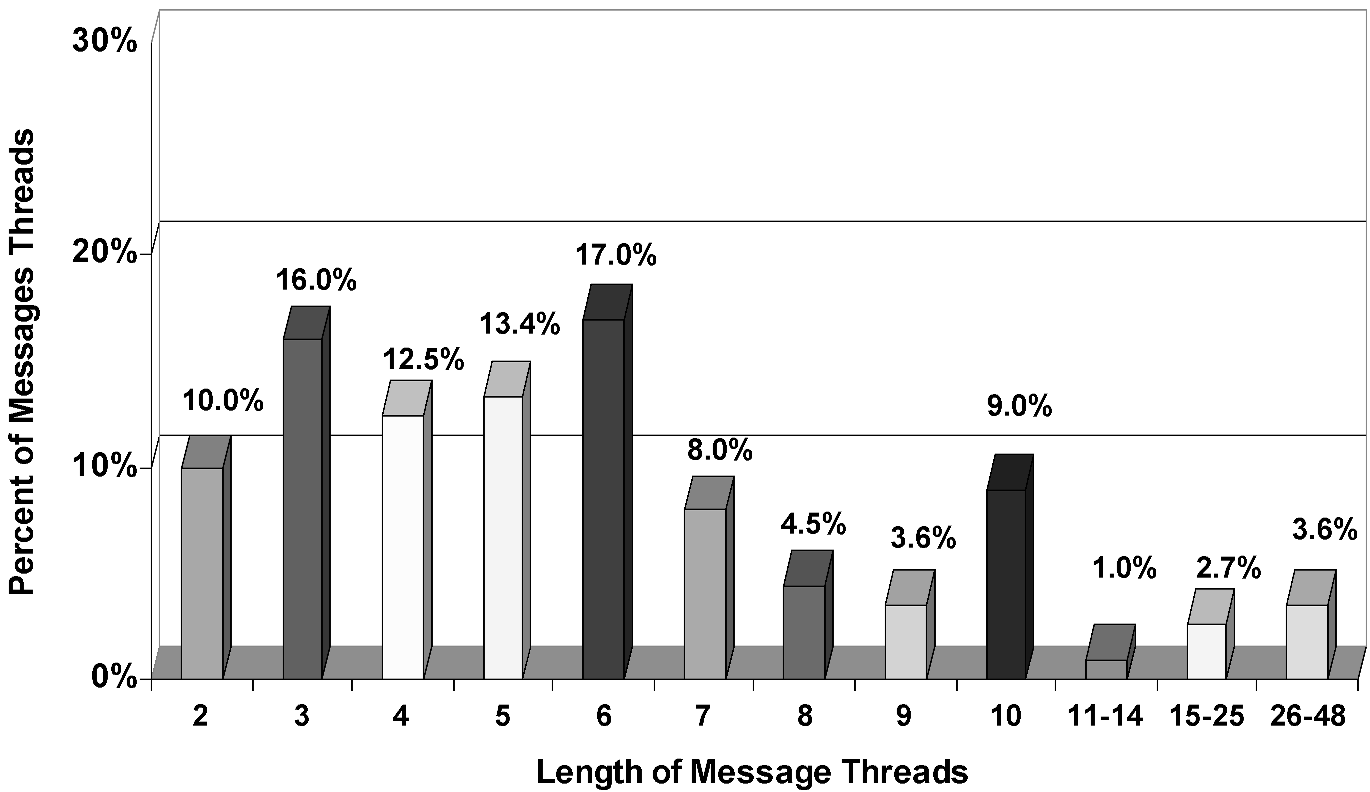
The study identified "Clubs" (like the WiseA$$ Club or ACL Boyz) that formed organically. These subgroups acted as high-density clusters of social capital. They had "porous borders"—allowing newcomers to drift in for support and veterans to stay for companionship. This architecture of "overlapping circles" provided the community its long-term stability.
Critical Analysis & Takeaways
The paper offers a masterclass in Sociability Design. It argues that:
- Branding as Purpose: You don't need a 500-word "About Us" page if your name and content index (the "Branding") immediately signal your focus.
- Governance via Norms: High trust and reciprocity (Social Capital) can replace heavy-handed moderation.
- The Offline Impact: Participation reduced the "burden of care" on members' real-world families, as the forum became the primary outlet for "obsessing" over recovery details.
Conclusion: Bob’s ACL community succeeded not because of its code, but because it facilitated a Human-to-Human Protocol of mutual aid. For today’s product managers and UX researchers, the message is clear: focus on reliability and the facilitation of organic roles, and the community will govern itself.