
A Fuzzy-Semantic Hybrid: Tackling the Ambiguity of Multilingual Twitter Data
A multilingual fuzzy approach for classifying Twitter data using fuzzy logic and semantic similarity
The paper introduces a hybrid multilingual sentiment analysis framework for Twitter that combines fuzzy logic with semantic similarity measures using WordNet. By integrating information retrieval (IRS) concepts and parallelizing the process via Hadoop MapReduce, it achieves a SOTA classification rate of 86% across multiple languages.
TL;DR
Social media sentiment is rarely binary; it is filled with linguistic nuances and cultural "gray areas." This paper proposes a hybrid approach that uses Fuzzy Logic to model this ambiguity and Semantic Similarity (via WordNet) to score tweets. By implementing this within the Hadoop ecosystem, the authors achieved an 86% classification rate, effectively bridging the gap between human-like reasoning and big-data processing.
The Motivation: Why "Black-and-White" Logic Fails
Most sentiment classifiers treat polarity as a crisp set—a tweet is either "0" or "1." However, human emotions are inherently fuzzy. For example, a tweet like "The movie was okay, but a bit long" belongs to multiple sentiment classes simultaneously.
Prior works using Machine Learning (ML) or standard lexicon methods often fail because:
- They ignore the vagueness of sentiment terms.
- They struggle with multilingual inputs without heavy feature engineering.
- They face scalability bottlenecks when processing millions of tweets.
Methodology: Quantifying the In-Between
The authors' workflow is divided into three major architectural phases:
1. Semantic Scoring (The IRS Perspective)
Instead of simple keyword matching, the system treats sentiment analysis as an Information Retrieval (IRS) problem.
- Positivity and Negativity Measures: Each tweet is compared against two reference documents— (positive words) and (negative words).
- Leacock-Chodorow Similarity: This measure uses the shortest path between word synsets in WordNet to calculate a semantic distance, which is then averaged across the tweet's tokens.
2. The Fuzzy Logic System (FLS)
Once the crisp "positivity" and "negativity" scores are calculated, they enter the FLS:
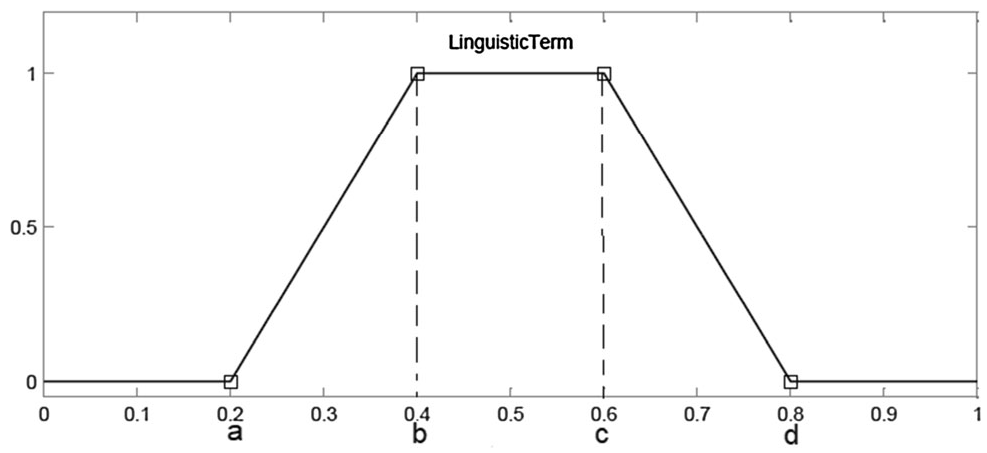
- Fuzzification: Converts scores into degrees of belonging (Low, Moderate, High) using Trapezoidal Membership Functions.
- Rule Inference: 9 IF-THEN rules (e.g., IF Positivity is High AND Negativity is Low THEN Sentiment is Positive) govern the decision logic.
- Defuzzification: The Centroid method converts the fuzzy output back into a single crisp value to categorize the tweet.
3. Big Data Integration
To handle the "Velocity" and "Volume" of Twitter, the entire classification algorithm is parallelized using Hadoop MapReduce. Data is fetched via Apache Flume, stored in HDFS, and processed line-per-line across a cluster.
Experiments & SOTA Results
The researchers evaluated their model using the Sentiment140 and Thinknook datasets (covering ~1.5 million tweets).
Key Findings:
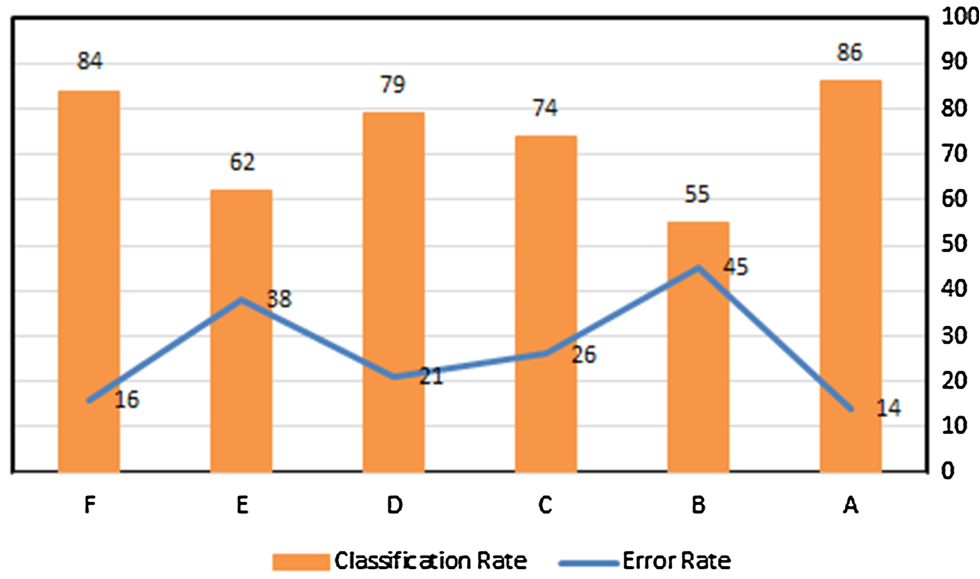
- Optimal Combination: The use of Trapezoidal MF combined with the Centroid defuzzification method yielded the lowest error rate (14%).
- Superiority over ML: The hybrid approach (86% CR) outperformed standalone semantic similarity (74%) and traditional dictionaries like AFINN (64%).
When benchmarked against recent hybrid works (e.g., Appel et al. and Dragoni et al.), this method showed a distinct advantage in Accuracy (95%) and Precision (88%), proving that the specific integration of IRS-based semantic similarity provides a richer input for the fuzzy controller.
Deep Insight & Conclusion
The core takeaway of this research is that Logic beats Labels when the data is noisy. By moving away from purely token-based counts and toward a fuzzy semantic comparison, the system mimics the human brain’s ability to "weigh" conflicting sentiments.
Limitations: While powerful, the system relies heavily on the WordNet hierarchy and the quality of the "opinion documents." Future work will likely look into Deep Learning (CNNS/LSTMs) to automatically learn these semantic features while retaining the interpretability of Fuzzy Logic.
Keywords: Sentiment Analysis, Fuzzy Logic, Hadoop, WordNet, Semantic Similarity, Big Data.