
Random Forest vs. Short Texts: Mastering Multilingual Twitter Identification
Multilingual Short Text Analysis of Twitter Using Random Forest Approach
The paper introduces a machine learning framework for language identification of microblogging content, proposing a Random Forest and Weighted Ensemble approach specifically for short texts like Tweets. By leveraging optimized 2-gram profiles and a novel scalar language score, the system achieves SOTA performance across four European languages (English, French, Spanish, German).
TL;DR
This research tackles the challenge of identifying languages in the "wild west" of social media—Twitter. By moving beyond simple probability and implementing Random Forest and Weighted Ensemble models, the authors achieved an accuracy boost of up to 33% over standard baselines. Their secret weapon? A combination of optimized 2-gram profiles and a specialized "language score" designed to resolve ambiguity in texts under 280 characters.
Problem & Motivation: The Brevity Trap
Language identification is often treated as a solved problem for long-form text (like Wikipedia articles). However, the "Brevity Trap" of Twitter makes traditional models stumble.
- Context Scarcity: In a 10-word tweet, there aren't enough statistical markers for traditional Naive Bayes to be confident.
- Linguistic Overlap: Short sequences of characters are often shared across similar languages (e.g., Spanish and Italian), leading to high "collision rates" in n-gram profiles.
- Noise: Slang, typos, and URLs further dilute the signal.
The authors argue that we need a model that can handle the non-linear complexity of these short bursts of data while weighting the importance of specific character pairs more heavily.
Methodology: The Ensemble Architecture
The proposed pipeline transforms raw, noisy tweets into a structured feature space using four distinct stages:
1. Optimized N-Gram Profiling
Instead of using all possible character pairs, the system generates 2-gram profiles (e.g., "th", "ei", "en") and prunes those with low frequency across English, French, Spanish, and German. This dimensionality reduction helps the model focus on the most "discriminative" character sequences.
2. The Language Score Innovation
This is the core insight of the paper. Beyond just counting how many times a bigram appears, the authors introduce a scalar language score. This score represents the "importance" of the text's n-grams relative to a specific language, acting as a tie-breaker when two languages share similar character distributions.
3. Model Architecture
The paper evaluates four primary classifiers, culminating in the Random Forest approach:
- Naive Bayes & Logistic Regression: Serving as the baseline.
- Weighted Ensemble: A hybrid voting classifier that weights the predictions of the above models based on their historical accuracy.
- Random Forest: A multitude of decision trees that capture complex interactions between n-gram frequencies and language scores.
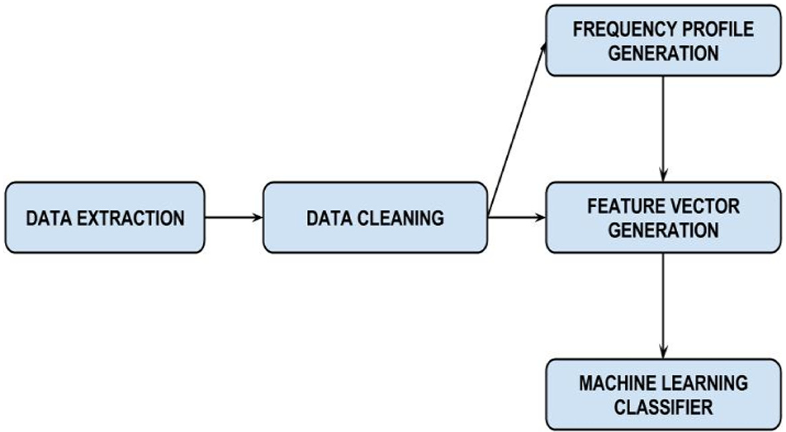 Figure 1: The proposed language recognition system workflow.
Experiments & Results: Why Random Forest Wins
The study utilized a massive dataset of 125,000 tweets. The results were decisive:
| Technique | Overall Accuracy |
|---|---|
| Naive Bayes | 45.15% |
| Logistic Regression | 49.00% |
| Random Forest | 68.00% |
| Weighted Ensemble | 56.00% |
Key Findings:
- The Ensemble Advantage: Random Forest outperformed Naive Bayes by a relative 19.64%.
- Language-Specific Performance: For English, Random Forest achieved 80% accuracy, significantly higher than the Weighted Ensemble's 60%.
- Why Weighted Ensemble Failed to Beat RF: The authors noted that since the base models (Naive Bayes/Logistic) were relatively weak, the ensemble's weighted average was "pulled down," whereas Random Forest's internal sampling allowed it to find a more robust global solution.
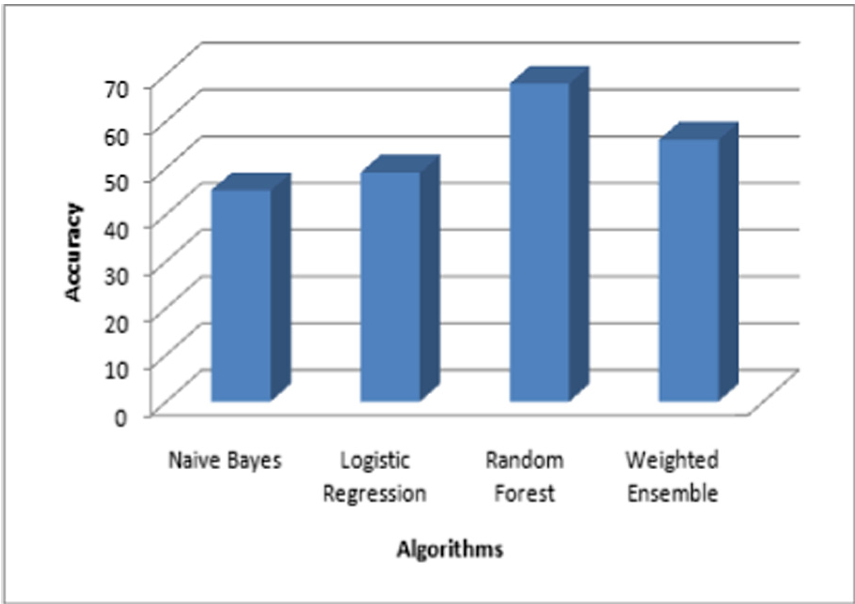 Figure 2: Comparative performance across different ML techniques.
Critical Analysis & Conclusion
Takeaway
The success of this approach highlights that for short-text problems, feature engineering (the Language Score) and model variance reduction (Random Forest) are more important than just having "more data."
Limitations
- Character Set: Currently restricted to Roman alphabets (a-z), excluding logographic systems like Chinese or Japanese.
- N-gram Limit: The study relied on 2-grams (bigrams); expanding to trigrams (3-grams) could further reduce ambiguity.
Future Outlook
The next logical step is the integration of modern automated frameworks. While Random Forest provides a strong classical baseline, the industry is moving toward Subword Embeddings and Transformers. However, for resource-constrained environments or high-throughput real-time filtering, the n-gram ensemble approach remains a highly efficient and explainable choice.
Author's Note: This research serves as a vital reminder that in the era of LLMs, well-tuned classical ensemble methods still provide a formidable balance of speed and accuracy for specific sub-tasks like language identification.