
Viral Diffusion: Optimizing 5G Social Networks via Social-Aware D2D
Multimedia content diffusion approach for emerging 5G mobile social networks
This paper introduces a viral information diffusion approach for emerging 5G mobile social networks (MSNs). By integrating LTE-A unicast/multicast with Device-to-Device (D2D) communications and novel social metrics, the authors minimize the content dissemination time across large user groups.
TL;DR
Researchers have developed a viral information diffusion algorithm that bridges the gap between social behavior and 5G network engineering. By defining a new metric—Social Network Contact Time (SNCT)—and combining LTE-A multicast with D2D relays, they achieved up to a 48% improvement in content dissemination speed.
Background: The Shift from Throughput to "Diffusion Time"
Moving toward 5G, the challenge is no longer just about peak data rates; it's about how quickly a "viral" piece of multimedia content can saturate a social cluster. Standard multicast (CMS) is inefficient because it settles for the "lowest common denominator"—the user with the worst signal. Conversely, purely social models ignore the physical constraints of wireless interference. This paper introduces a hybrid methodology that treats social interaction as a delay variable in the physics of networking.
The Core Innovation: Social-Aware Metrics
The paper introduces the Expected Information Diffusion Time, a four-part equation that accounts for:
- BS-to-User Delay: Standard LTE infrastructure latency.
- User-to-User Transfer: Efficiency of D2D links.
- User Contact Time (UCT): Physical proximity frequency between friends.
- Social Network Contact Time (SNCT): The "human" factor—how often a user actually checks their device for notifications.
By modeling these as exponential distributions, the system can mathematically predict the fastest path for a data packet to travel through a crowd.
Methodology: Multicast Social Clusters (MSC)
The proposed algorithm operates in three distinct phases:
- Neighbor Profiling: The Base Station (eNodeB) builds a "Best Neighbor Matrix" using physical CSI and social SNCT data.
- Strategic Clustering: Users are grouped into Multicast Social Clusters (MSC). A Primary Bridge Node (PBN) is elected as the cluster head to receive the initial broadcast.
- Hybrid Relaying: PBNs use multicast for their immediate cluster, while Secondary Bridge Nodes (SBNs) use D2D links to "infect" nearby users who aren't in the main clusters, but only if it's faster than a direct BS unicast.
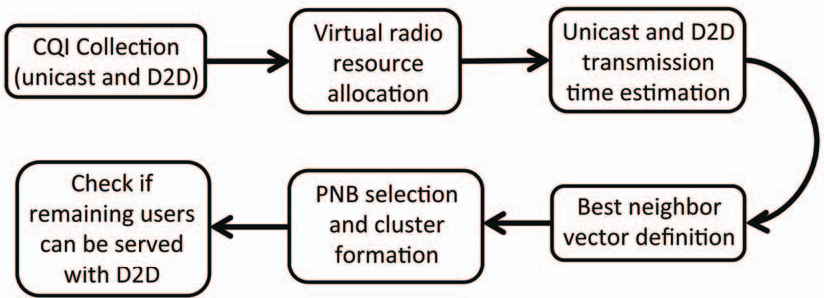 Figure 1: The Three-Step Viral Diffusion Workflow.
Experimental Performance
The researchers simulated a 500m cell radius with up to 500 users. The results show a clear dominance of the viral approach over SCC (Social Closeness Centrality) and CMS (Conventional Multicast).
- Scalability: As user density increases, the viral approach maintains a massive lead in diffusion time (reducing it by ~40% vs. SCC).
- Data Rate: By intelligently offloading users to the D2D tier, the average data rate per UE remains significantly higher, as shown in the cross-comparison below.
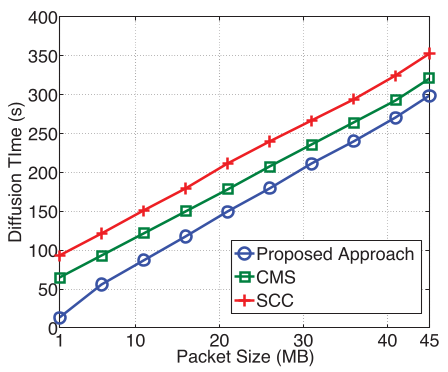 Figure 2: Information Diffusion Time vs. Number of Users.
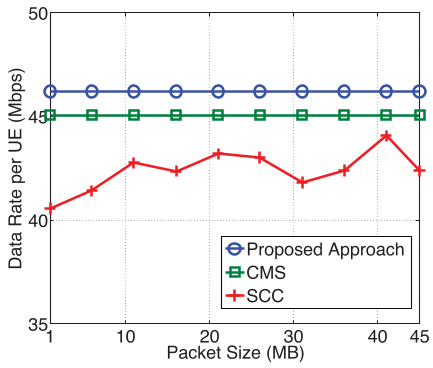 Figure 3: Data-rate per UE by varying the Packet Size.
Critical Insight & Future Outlook
The genius of this work lies in quantifying the waiting time to check a phone as a network parameter. In the 5G and 6G era, network logic must move toward this "Human-Centric" design.
Limitations: The study assumes centralized control by the eNodeB for D2D resources. In high-mobility or decentralized scenarios (like high-speed transit MSNs), the overhead of maintaining the "Best Neighbor Matrix" might become a bottleneck. Future work should investigate how federated learning could allow users to form these clusters autonomously without constant BS signaling.
Conclusion
By integrating social metrics like SNCT into the LTE-A framework, this paper provides a blueprint for "Viral Networking." It proves that the shortest path for information isn't always a straight line from a cell tower, but rather a sequence of hops between socially connected peers.