
Preserving Mexican Heritage: A Multimedia Platform Designed for Verification and Security
A Multimedia Platform for Mexican Cultural Heritage Diffusion
The paper introduces a specialized Multimedia Web Platform designed for the dissemination of Mexican cultural heritage. It employs a Kerberos-based authentication architecture to facilitate secure collaboration between specialized researchers and the general public, aiming to preserve historical identity through high-quality, verified digital content.
Executive Summary (TL;DR)
Preserving a nation’s cultural identity in the digital age requires more than just a wiki or a blog; it requires a trusted repository. This paper proposes a Multimedia Web Platform specifically for Mexican cultural heritage. Its core innovation lies in creating a secure, collaborative bridge where specialized researchers generate authenticated content, while the general public enjoys free, high-quality access. By utilizing the Kerberos protocol, the system ensures data integrity without sacrificing the "Web 2.0" interactivity we expect today.
The Challenge: Usability vs. Security in Cultural Archives
Most existing cultural portals face a "Trust Gap." Information is either crowdsourced (and thus potentially inaccurate) or strictly institutional (and thus difficult to update). Furthermore, developers often face a zero-sum game:
- Rigid Security: Protecting the platform from unauthorized edits often makes it too cumbersome for researchers to use.
- High Usability: Making it easy to post content often leads to redundancy and misinformation.
The authors argue that for Mexico's vast heritage—from Pre-hispanic ruins to Muralism—the solution must be a distributed system that handles multimedia (video, audio, text) while enforcing strict authentication.
Methodology: The Architecture of Trust
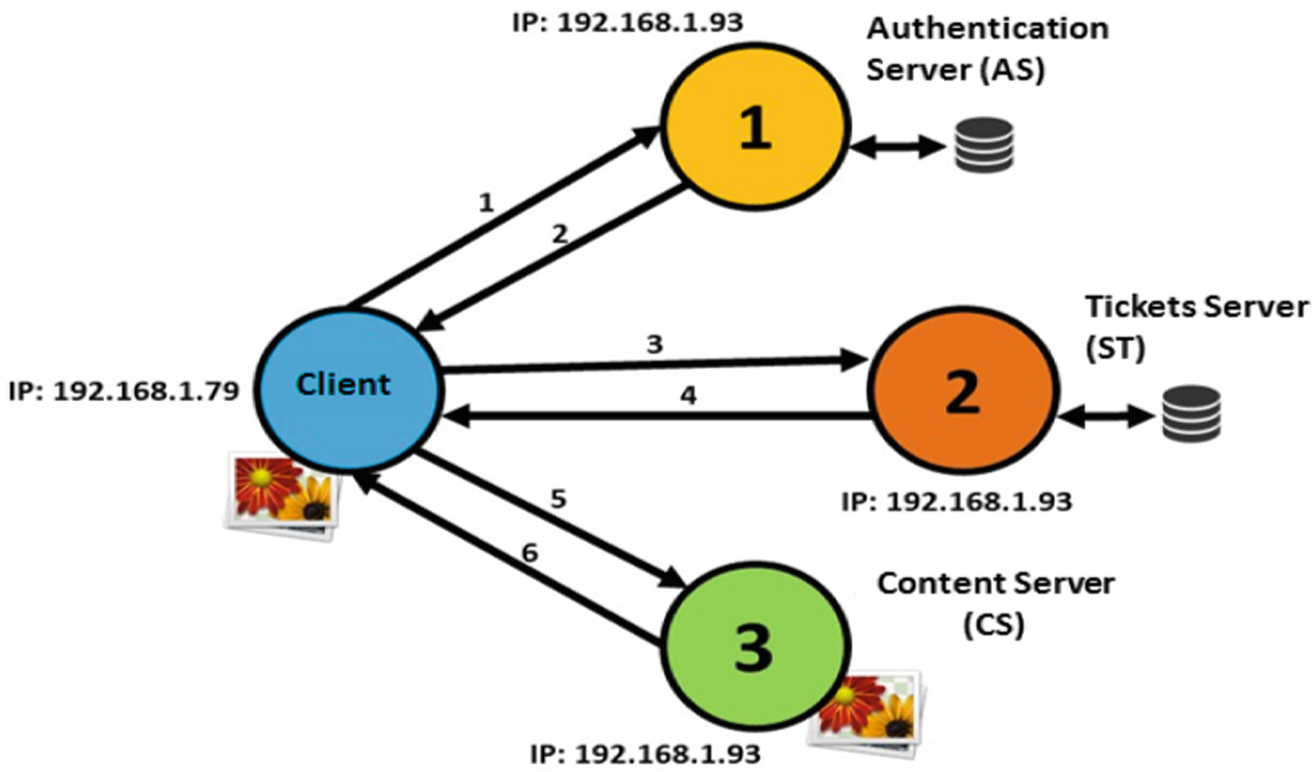
The platform's heart is a Three-Node Authentication Mechanism based on Kerberos. This ensures that only authorized specialists can modify the historical record.
1. The Security Loop
Unlike simple password-entry systems, the proposed model follows a sophisticated ticket-exchange process:
- Step 1-2: Client validates credentials with an Authentication Server.
- Step 3-4: Client uses a "Ticket to Get Tickets" (TGS) to request specific content IDs.
- Step 5-6: The system generates a Service Ticket (TKC) that allows the final content server to release the files.
2. Eliminating Redundancy
To keep the archive clean, the authors propose a triple-layer control system:
- Human Expertise: Administrator oversight by category experts.
- Semantic Analysis: NLP-driven checks for textual overlap.
- Multimedia ML: Machine learning algorithms to detect duplicated videos or images before they are stored.
Prototype and Real-World Application
The implementation stack uses JSP (Java Server Pages) for the backend and MySQL for persistence. The frontend, designed in Axure and implemented via JS/CSS, allows users to explore Mexican history chronologically (Pre-hispanic, Colonial, Independent).
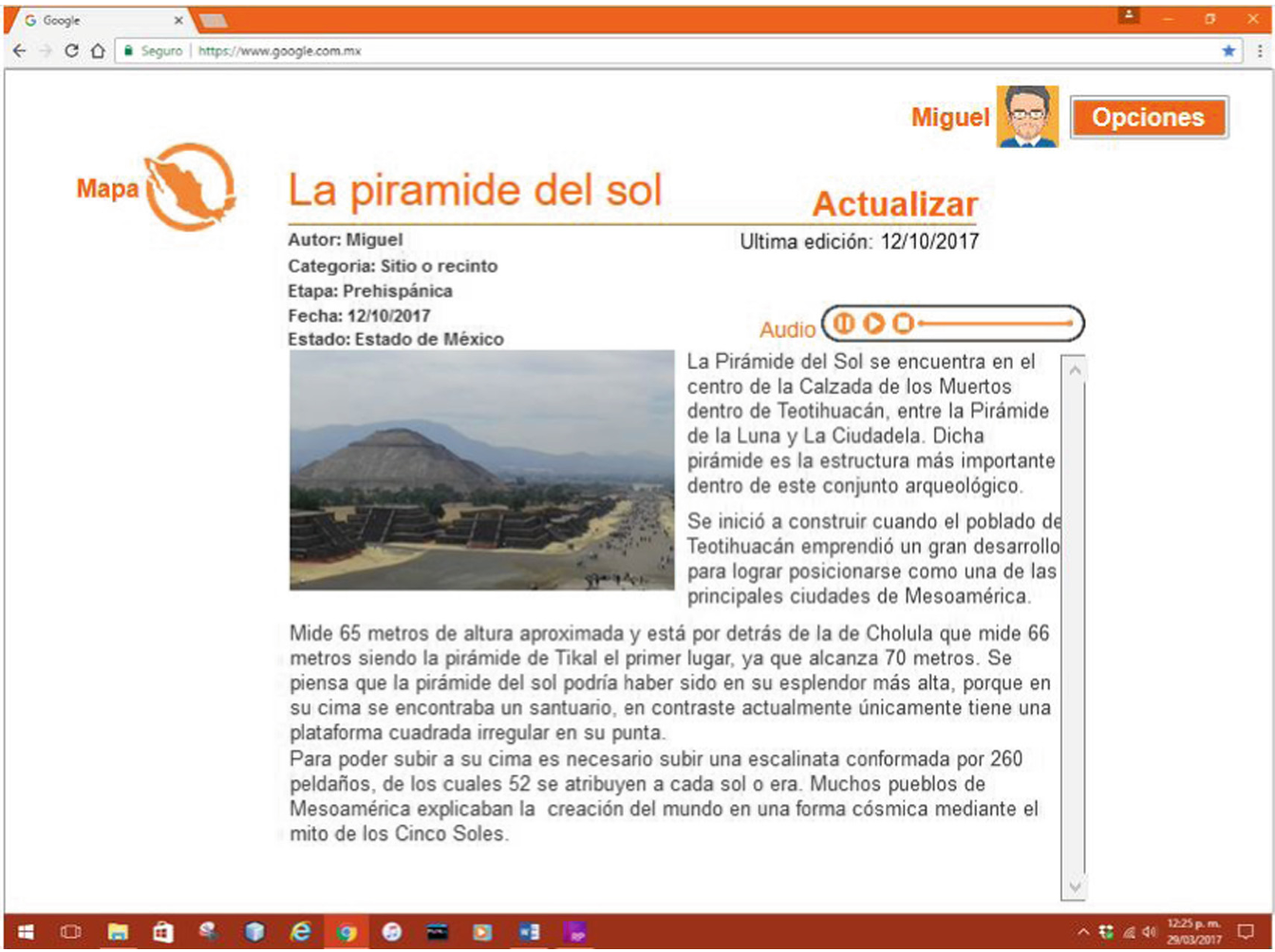 Figure: The prototype showcasing a multimedia entry for the Teotihuacan culture.
Experimental Evidence
Preliminary tests were conducted with the Thematic Network of Digital Technologies for the Dissemination of Cultural Heritage. Results indicated that:
- Role-based Access: Users like "Miguel" (an archeologist) can contribute validated data that other specialists can then peer-review.
- Navigation: The categorization (Museums, Monuments, Traditions) significantly reduced the search time for general users compared to standard web searches.
Critical Insight: The Academic Position
This work represents a vital "theoretical repair" in the field of digital humanities. By moving away from the "open-access-only" model toward a "verified-access" model, the authors address the increasing danger of digital historical revisionism.
Limitations: While the prototype is robust, the paper notes that automatic semantic analysis is still in early development. Future iterations will need to optimize these machine learning algorithms to ensure they don't increase the processing time during high-volume uploads.
Conclusion
The project successfully demonstrates that high-level security protocols usually reserved for corporate networks can be repurposed to protect a nation's cultural soul. As Mexico continues to digitalize its history, platforms like this will be essential in ensuring that the digital versions of our monuments are as enduring as the stone they are built from.