
Bridging the Age Gap: Using MR and 3D Printing to Revolutionize IoT Design for the Elderly
Multimodal Coexistence Environment Design to Assist User Testing and Iterative Design of HiGame Emotional Interaction Design for Elderly
This paper introduces a Multimodal Coexistence Environment designed to facilitate usability testing and iterative design for the "HiGame" emotional interaction system for the elderly. By combining Mixed Reality (MR) via Microsoft HoloLens with 3D-printed physical prototypes, the authors enable real-time "dynamic feedback" and co-design between elderly users and designers.
TL;DR
Testing complex Internet of Things (IoT) systems often feels like a choice between expensive, rigid physical prototypes or "floaty" virtual ones that lack tactile reality. This paper presents a Multimodal Coexistence Environment for HiGame—an emotional interaction tool for the elderly—that merges HoloLens-based Mixed Reality (MR) with 3D printing. The result? A co-design process where elderly users can "move" virtual furniture and resize objects with hand gestures, providing designers with instant, parametric data for iteration.
The Problem: The High Cost of Iteration
Designing for the elderly presents a unique set of challenges. Traditional Usability Testing relies heavily on:
- Static Feedback: Surveys and interviews that are often disconnected from the actual moment of interaction.
- Physical Prototypes: Building interactive watering systems or smart lighting for every design tweak is prohibitively expensive and slow.
For the elderly, describing a feeling about a device is often more difficult than actually showing how it should be adjusted. This communication gap leads to design iterations that are both "complex and time-consuming."
Methodology: The "Coexistence" Framework
The authors propose a hybrid approach termed a Physical and Virtual Coexistence Environment.
1. The Tangible Core
Because touch is vital for the elderly, the central object—a smart potted plant—is 3D-printed. This provides the "haptic anchor" for the experience.
2. The Virtual Shell
The surrounding IoT ecosystem (watering devices, special lighting, sensors) is rendered through Microsoft HoloLens. Using Rhino and Grasshopper, the designers created a system where these virtual objects aren't just static images; they are programmable entities.
3. Dynamic Feedback Loop
The breakthrough is the "Dynamic Feedback" mechanism. Instead of answering "Is this light too close?", the user simply reaches out, grabs the virtual light, and moves it. The system records the new coordinates and scale parameters directly.
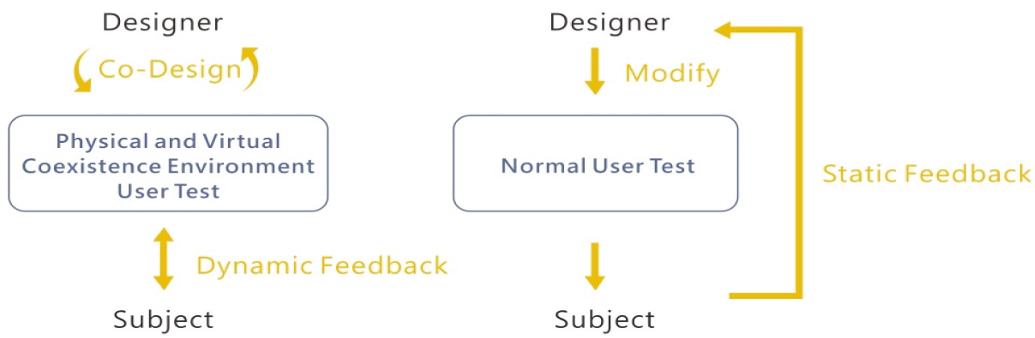 Figure 1: The framework of the MR-assisted iterative design process.
Real-World Application: HiGame 2.0
HiGame is designed to connect elderly people living alone with their distant families through "shared horticulture." Families care for the plant via an app, and the elderly user experiences the care through the plant's growth and IoT environmental changes.
During testing, the elderly subjects used HoloLens to:
- Adjust Positioning: Change where plant care objects were located in their living space.
- Scale Objects: Adjust the size and proportion of the interface elements through a virtual menu.
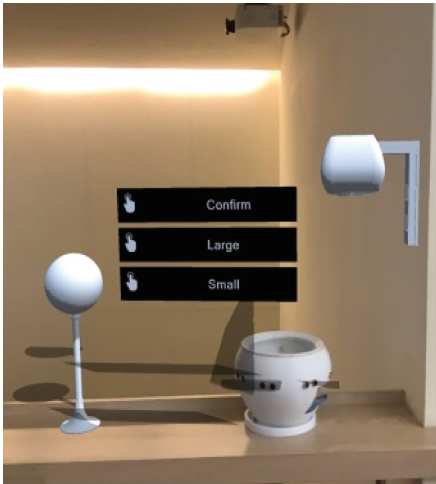 Figure 2: An elderly subject using HoloLens to interact with the coexistence environment.
Key Results & Insights
- Reduced Interaction Cost: By bypassing the need for dozens of physical models, the "cost of failure" in the design process dropped significantly.
- Communication Accuracy: The "generation gap" in communication was bridged. Subjects who struggled with technical jargon could easily express their preferences through spatial manipulation.
- Immersive Validity: Users reported that the combination of virtual visuals and physical touch (from 3D-printed parts) felt "real," validating the usability metrics gathered.
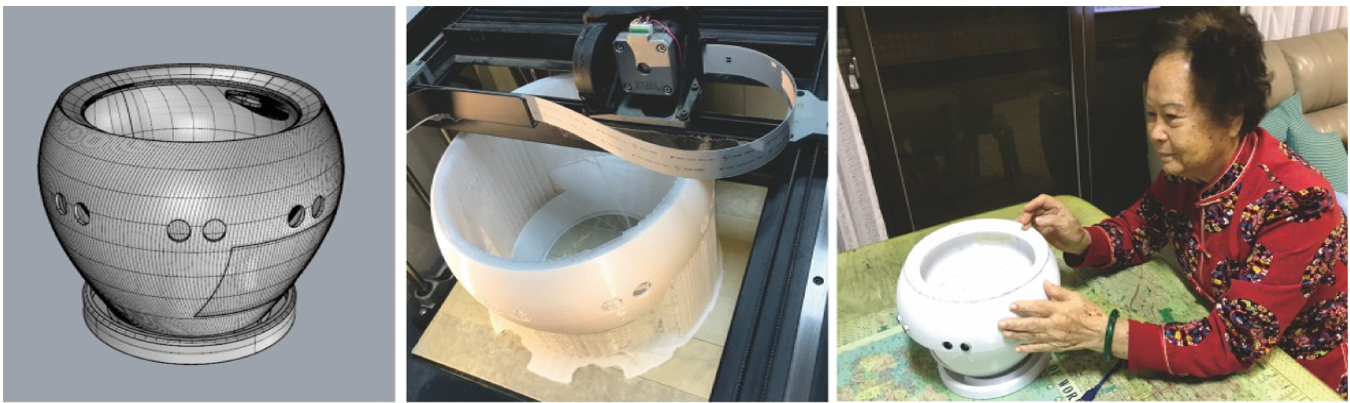 Figure 3: 3D printing used to materialize the final iterative design for physical retesting.
Critical Analysis & Conclusion
This work demonstrates that Mixed Reality is no longer just for gaming or industrial maintenance; it is a powerful social research tool. By turning the user from a passive test subject into an active "co-designer," we get products that fit the specific ergonomic and emotional needs of the elderly.
Limitations: The study notes that the HoloLens's field of view (FOV) can be a distraction. Furthermore, the reliance on high-quality Wi-Fi can lead to latency, which might break immersion for sensitive users.
Future Work: The next step involves simulating dynamic effects—like the visual flow of water or the changing colors of LED growth lights—entirely within the virtual layer to further reduce prototyping overhead.
Takeaway for Designers: Stop asking what they want; give them a virtual world and let them build it themselves.