
Beyond Words: An Algebraic Approach to Multimodal Emotion Recognition
Multimodal Approach for Emotion Recognition Using an Algebraic Representation of Emotional States
The paper introduces a multimodal approach for emotion recognition using a formal algebraic representation of emotional states based on Plutchik's theory. By integrating data from physiological signals (EEG, EDA, etc.), facial expressions, and speech into a multidimensional vector space, the system achieves a more robust and reliable estimation of human affect than unimodal models.
TL;DR
The paper presents a sophisticated framework for emotion recognition that treats emotional states not as mere labels, but as vectors in an algebraic space. By fusing multiple data sources—such as physiological signals (GSR, respiration) and facial expressions—the model can detect complex, masked, or simultaneous emotions. It achieves a superior classification rate of 66.34%, outperforming traditional unimodal and fusion-based baselines.
Context: Why "Words" are Not Enough
In the realm of Affective Computing, we have long struggled with how to represent "how a human feels." Previous standards like EARl or EmotionML often use strings (e.g., <emotion category='joy'>). The authors argue this is a linguistic limitation—it captures the word, not the concept. Furthermore, humans are experts at "masking": your face might show calm while your heart rate betrays intense anger. Unimodal systems (looking only at the face) are easily fooled.
The Insight: Emotions as Dimensions
The core of this work is the algebraic representation. Drawing from Plutchik’s theory, the authors define a basis consisting of 8 primary emotions: joy, sadness, trust, disgust, fear, anger, surprise, and anticipation.
Any human state is expressed as a linear combination: where represents intensity. This allows the model to represent an "infinity of emotions"—for instance, "Love" is not just a label, but a vector sum of Joy and Trust.
Methodology: The Fusion Engine
The system follows a two-stage pipeline:
- Unimodal Extraction: Using signal processing (Hanning windows, gradient calculation, and "PPZ" peak detection), features are extracted from specific sensors. A K-Nearest Neighbor (KNN) classifier then generates a probability model for each class.
- Multimodal Fusion: This is the "Secret Sauce." Instead of simple averaging, the authors use a vector addition operator based on the maximum coefficient.
Why the Maximum?
If heart rate detection suggests fear at 0.8 intensity, but facial analysis suggests 0.2, the model retains 0.8. This acknowledges that specific modalities are "better" at detecting specific physiological markers, effectively bypassing "masked" expressions by prioritizing the most salient signal.
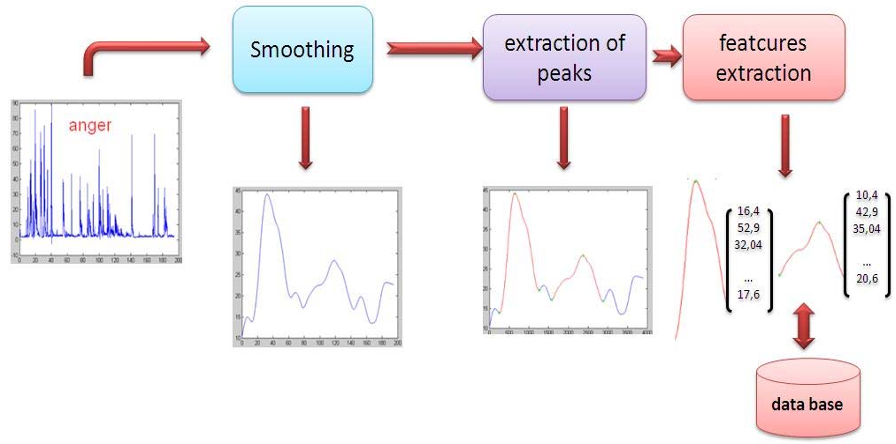 Figure 4. The global scheme for feature extraction and signal processing.
Experiments: Breaking the SOTA
The authors validated their approach using the MIT Media Lab dataset, which includes 20 days of recordings of four physiological signals (EMG, BVP, GSR, RESP).
- Unimodal vs. Multimodal: The leap is significant. For "Reverence," accuracy jumped from 50% (unimodal) to 82% (multimodal).
- Benchmarking: The proposed algebraic fusion achieved 66.34%, beating Kim’s method (61.2%) and HHT-based fusion (62%).
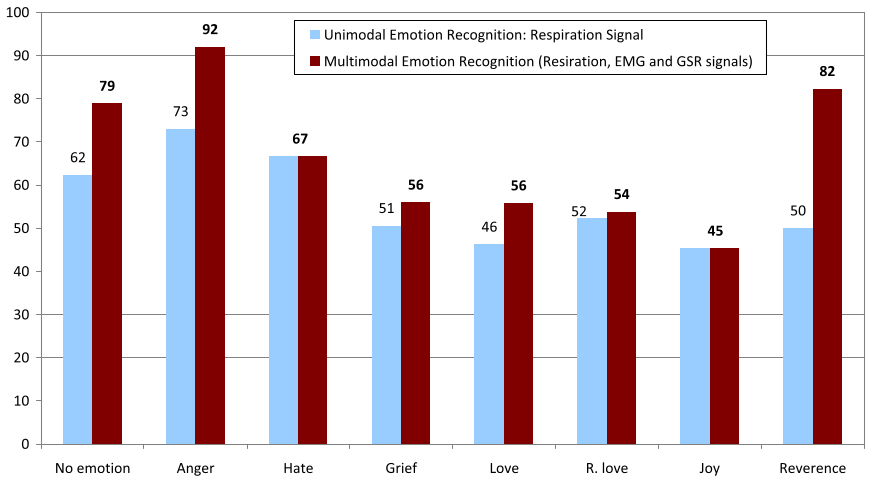 Figure 6. Accuracy gains across different emotional categories.
Critical Insight & Conclusion
The true value of this paper lies in its mathematical rigor. By moving from categorical labels to a vector space, it provides a "mathematical toolset" for emotion processing.
Limitations: While the algebraic model is elegant, the reliance on KNN classification might struggle with larger, more noisy real-world datasets compared to modern Deep Learning architectures (like LSTMs or Transformers).
Future Outlook: Integrating this algebraic "Maximum Fusion" logic into a Neural Network's attention mechanism could provide a powerful way to handle conflicting signals in multimodal LLMs or AI therapists of the future.
Takeaway: Treat emotions as a coordinate system, not a dictionary.