
Beyond the Museum Glass: A Multimodal Leap into the Paintings of Palazzo Steri
A Multimodal Guide for Virtual 3D Models of Cultural Heritage Artifacts
The paper presents a multimodal guide for navigating virtual 3D cultural heritage environments, specifically the historical Palazzo Steri in Palermo. By integrating eXtensible 3D (X3D) with XHTML+Voice (X+V), the system allows users to explore intricate 14th-century ceiling paintings via synchronized visual navigation and natural language vocal interaction.
TL;DR
Researchers from the University of Palermo have developed a multimodal system that allows users to virtually explore the 14th-century ceiling of the Palazzo Steri. By combining X3D (Extensible 3D) for immersive visuals and XHTML+Voice for conversational assistance, the system creates a "talking guide" that explains complex painted narratives while the user navigates a high-fidelity 3D reconstruction.
Contextualizing the Challenge
Cultural heritage preservation often faces a paradox: the more we want to show an artifact, the more we risk deteriorating it. In the case of the Palazzo Steri’s Aula Magna, the paintings are located on a ceiling so high that physical visitors can barely see the details.
Previous virtual tours often felt clinical and detached—users could look but not "ask." The authors identified that true immersion requires a multimodal interface where visual exploration is enriched by natural language interaction, breaking the "point-and-click" monotony.
Methodology: The Architecture of Interaction
The system sits on a robust client-server architecture that leverages open standards to ensure longevity and web-accessibility.
1. The Visual Core (X3D)
Unlike proprietary formats, X3D offers an XML-based, extensible framework for 3D content. The researchers modeled the historical room with high-resolution textures, focusing on the "Trojan Cycle" painted on the rafters.
2. The Vocal Core (X+V)
To manage human-computer dialogue, the team used XHTML+Voice. This allows the integration of:
- ASR (Automatic Speech Recognition): Capturing user queries.
- TTS (Text-to-Speech): Synthesizing historical descriptions.
- Dynamic Grammar: Instead of hard-coding every response, they built an algorithm that generates speech grammars automatically from a SQL database of keywords like "character," "background," and "scene."
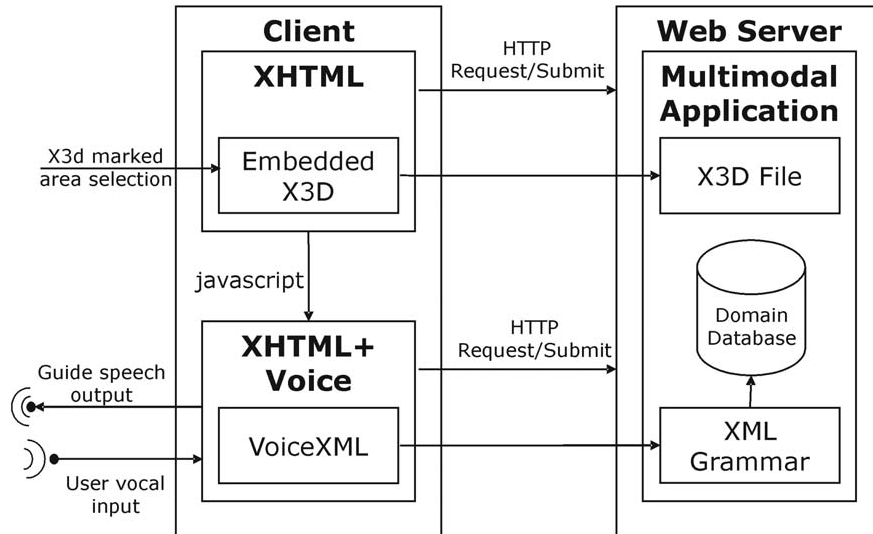 Figure 1: The dual-channel architecture processing visual events and vocal dialogue.
Bridging the Gap: The JavaScript Bridge
How does a click on a 3D rafter trigger a vocal explanation? The system uses Anchor Nodes within the X3D environment. When a user clicks a "zone of interest," it executes a JavaScript function that interrupts the vocal guide's standby state, switches the 3D viewpoint to a zoomed-in perspective, and begins the relevant narration.
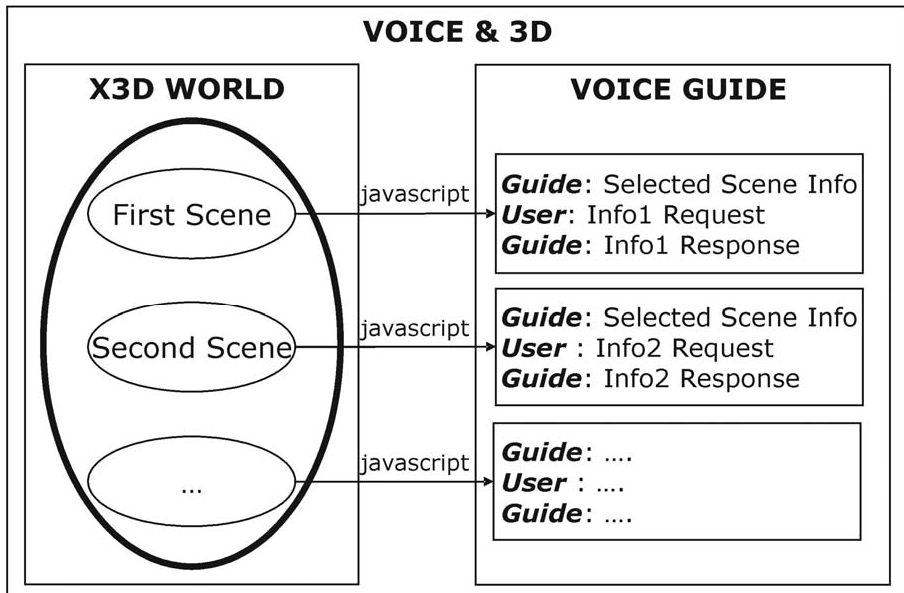 Figure 2: The conceptual flow between 3D navigation and vocal content management.
Experiments & Real-World Application
The case study focuses on the Trojan Cycle paintings. The system doesn't just display a image; it understands the hierarchy of the art.
- Rafter View: Provides a summary of a specific wooden beam.
- Scene View: Zooms into a specific episode of the Trojan War.
- Detail View: Allows users to ask, "Who is this character?" or "What happened before this scene?"
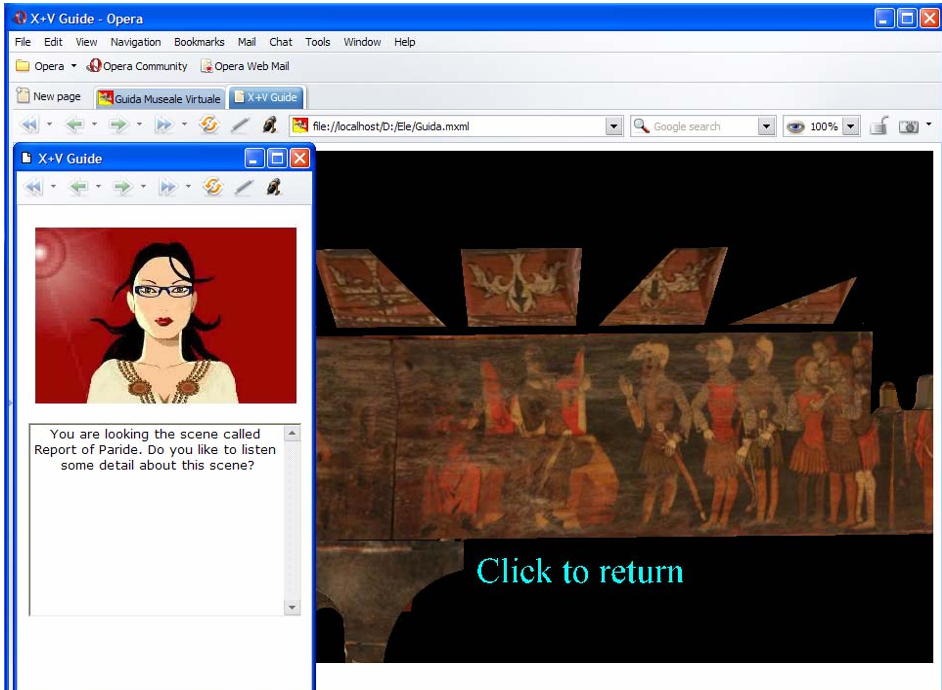 Figure 3: The final web-based interface showing the 3D room and the guide dialogue box.
Critical Insight: Why This Matters
The most impressive part of this work isn't the 3D modeling—it's the cognitive accessibility. By utilizing voice, the system allows the user to keep their eyes fixed on the artwork while receiving information, mimicking a real-life human guide. This reduces the "split-attention effect" common in traditional multimedia applications where users must constantly toggle between reading text and looking at the object.
Limitations and Future Horizons
While the system bridges vision and voice, the authors admit that vocal navigation (e.g., "Take me to the scene with Achilles") was not fully implemented in the current prototype. Future iterations aim to replace the mouse entirely, allowing for a fully hands-free, immersive flight through history.
Conclusion
The Palazzo Steri project serves as a blueprint for the future of digital museums. By anchoring meta-information directly into 3D space through natural dialogue, the research transforms a static 3D model into an interactive educational partner.