
Beyond the Mouse: Multimodal Immersion in the Siege of Syracuse
Multimodal Interfaces for Educational Virtual Environments
This paper presents a Multimodal Multi-User Virtual Environment (MUVE) designed to teach the history of the Siege of Syracuse through an interactive battle simulation. By integrating Natural User Interfaces (NUI) and VR technology, it achieves high student engagement and successful historical knowledge transfer.
TL;DR
This research tackles the "gimmick" problem in educational Virtual Reality by integrating historical simulation with advanced Natural User Interfaces (NUI). By recreating the 212 BC Siege of Syracuse and allowing students to control Archimedes' war machines via body movements and voice, the study proves that natural interaction significantly lowers the barrier to entry for non-gamers while boosting educational retention.
Motivation: Learning Through Play, Not Just Gadgets
For years, Multi-User Virtual Environments (MUVEs) like Second Life or Active Worlds have existed, but their translation to the classroom has been clumsy. Educators often view high-tech controllers as distractions. The author identifies a critical gap: Existing educational software fails to use new interaction devices to create new forms of gameplay.
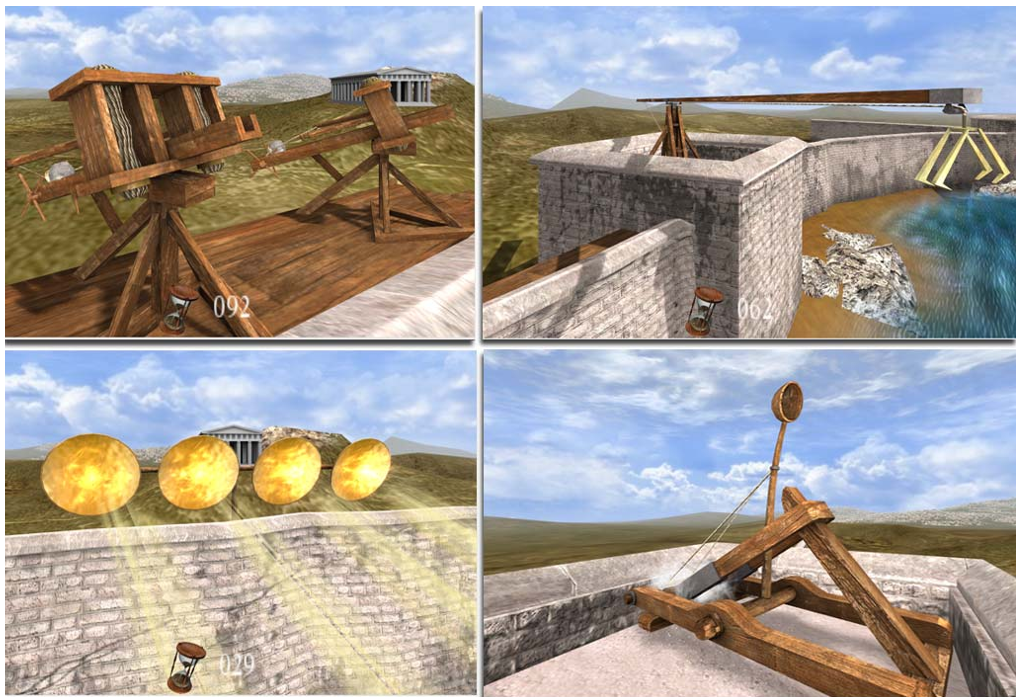
The goal wasn't just to "show" history, but to let students embody it. By assuming the roles of Roman or Syracusan generals, students engage with physics and history simultaneously.
Methodology: The Architecture of Natural Interaction
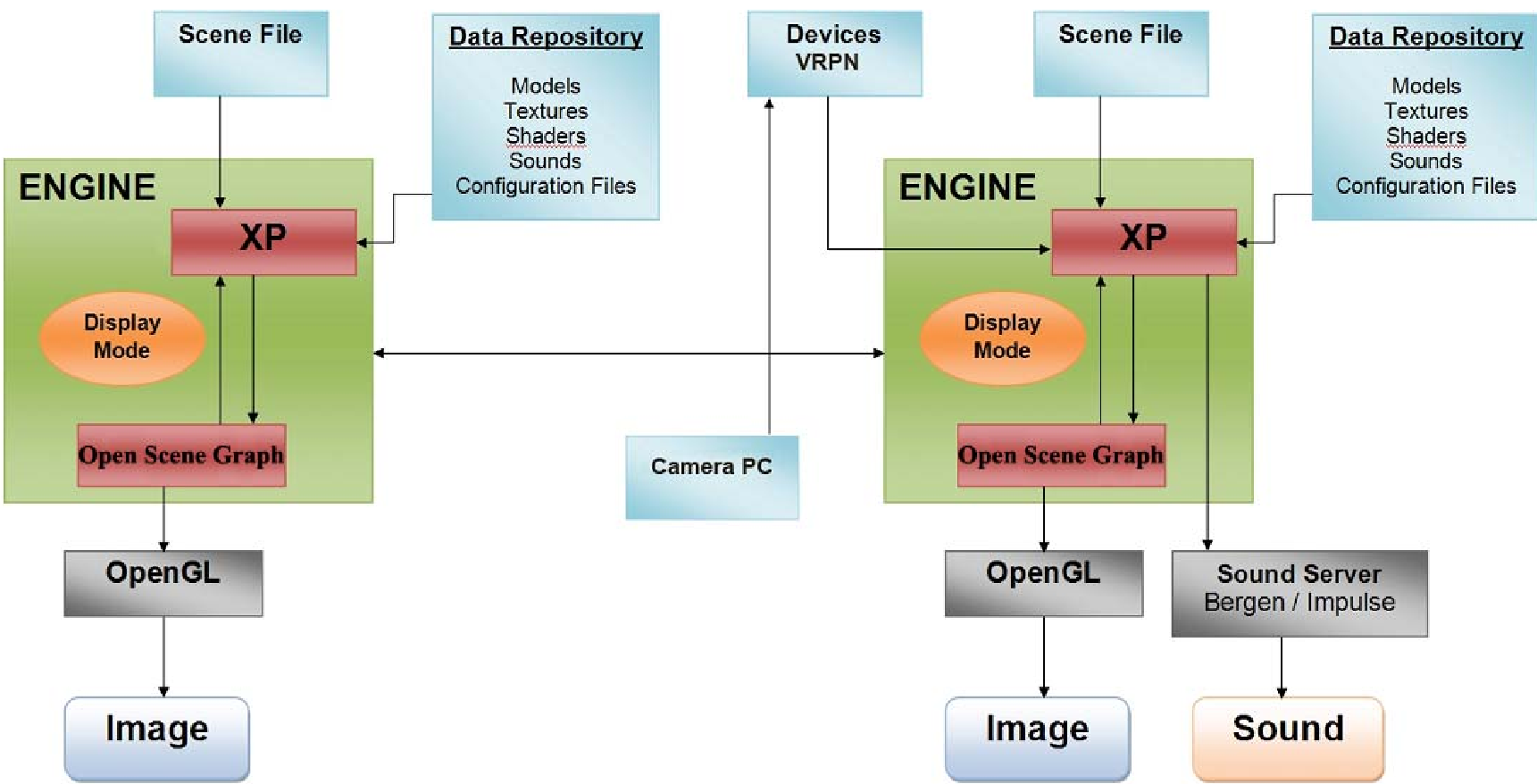
To make this a reality, the team built a robust, deterministic multi-user architecture. They needed to solve three core problems: Timing, Identification, and Determinism.
1. The VRPN Abstract Layer
The most impressive technical feat is the use of the Virtual-Reality Peripheral Network (VRPN) protocol. By creating a server-side abstraction, the game remains "unaware" of whether the user is pressing a button on a joystick or waving their hand in front of an optical sensor. This modularity allows the system to support:
- Optical Motion Tracking: Stepping left/right to move ships.
- Voice Commands: To fire catapults.
- Marker Tracking: Using physical objects to aim weapons.
2. Pedagogical "Crowd Control"
Teaching 9-15-year-olds in VR is chaotic. To manage this, the authors used a brilliant psychological trick:
- The Roller Coaster: A "dazzling ride" sequence at the start helps students release excess energy and excitement.
- The Archimedes Avatar: A virtual guide that builds an emotional bond and provides the "voice of instruction" during the heat of battle.
Experiments: Breaking the "Gamer Advantage"
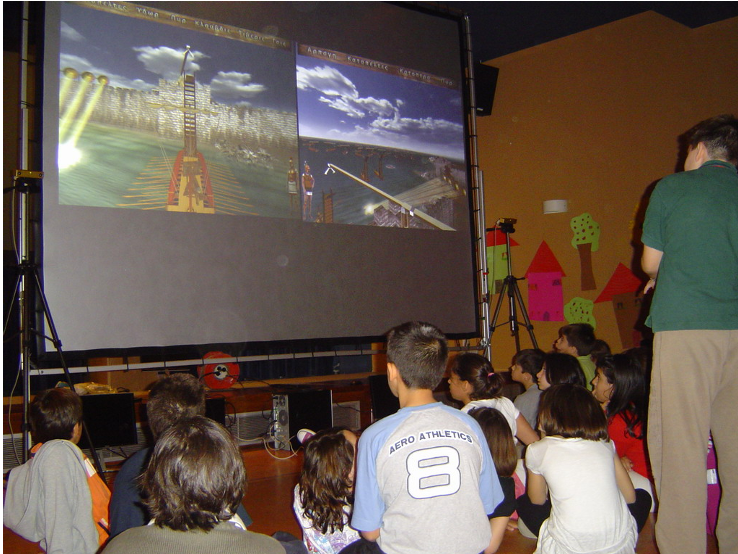
The study involved 78 students across three classes. The most striking finding was in the adaptation period.
While 89% of users adapted to the interface within 5 minutes, the Natural User Interfaces (NUI) acted as a great equalizer. Students with no prior gaming experience—who often struggle with the abstract complexity of a gamepad—were able to perform on par with "hardcore" gamers when using body movements.
Key Datapoints:
- Learning Curve: 85% found tasks easy to learn via the provided interface.
- Self-Correction: 77% could correct gameplay mistakes without human guide intervention.
- Immersion: 89% rated the setup as both fun and immersive.
Critical Insights & Conclusion
The study concludes with a philosophical distinction between familiar and natural devices. While a mouse is familiar to an office worker, it is not "natural" to the human body. Swinging a bat (or a virtual claw) is a primal, intuitive action.
Limitations & Future Work
While the system succeeded in engagement, the paper leaves open questions about long-term knowledge retention compared to traditional textbooks. However, as an proof-of-concept for edutainment, it demonstrates that when we stop treating VR interfaces as "gadgets" and start treating them as "natural extensions of the body," the educational potential is limitless.
Takeaway: The future of EdTech lies in interfaces that require no manual—where the interaction is as intuitive as the history is compelling.