
Harmonizing the Digital Pulse: A Deep Dive into Multimodal Medical Signal Fusion
A comprehensive survey on multimodal medical signals fusion for smart healthcare systems
This paper provides a comprehensive survey (2014-2020) of multimodal medical signal fusion techniques within Smart Healthcare and Internet of Medical Things (IoMT) frameworks. It categorizes fusion methodologies into data, feature, and decision levels, highlighting SOTA achievements in disease diagnosis, emotion recognition, and patient monitoring.
TL;DR
As diseases grow in complexity, single-sensor monitoring is no longer sufficient. This survey explores how the Internet of Medical Things (IoMT) and multimodal fusion are revolutionizing smart healthcare. By combining 1D signals (ECG, EEG) with medical imaging (MRI, CT), researchers are achieving unprecedented accuracy—up to 99% in disease detection—while leveraging 5G and Edge Computing to solve the latency bottleneck.
Context: Beyond the Single Sensor
In the traditional clinical setting, a doctor looks at an ECG for heart rhythm, a blood test for chemistry, and an MRI for structure. In the world of Smart Healthcare, these streams must be fused automatically. The challenge? These data types are fundamentally different. An ECG is a fast, rhythmic 1D wave; an MRI is a static, high-resolution 3D volume. "Fusing" them isn't just about putting them in the same folder—it's about finding the hidden correlations between them to identify pathologies that no single sensor could see.
The Architecture of Fusion: How It Works
The paper breaks down the evolution of fusion into a three-tier hierarchy, moving from raw data to high-level intelligence.
1. The Three Levels of Integration
- Data-Level (Early Fusion): Raw signals are synchronized and normalized. This is crucial for real-time monitoring of sleep apnea, where oxygen saturation and respiratory belts must be perfectly aligned in time.
- Feature-Level (Intermediate Fusion): The most active area of research. Features are extracted (often using CNNs or LSTMs) and concatenated into a "joint latent space." For instance, combining the spectral features of EEG with the fiducial peaks of ECG to recognize mental stress.
- Decision-Level (Late Fusion): Multiple independent classifiers make their own calls, and a final "meta-classifier" or voting system makes the final diagnosis. This is robust against sensor failure; if one sensor is noisy, the others can override it.
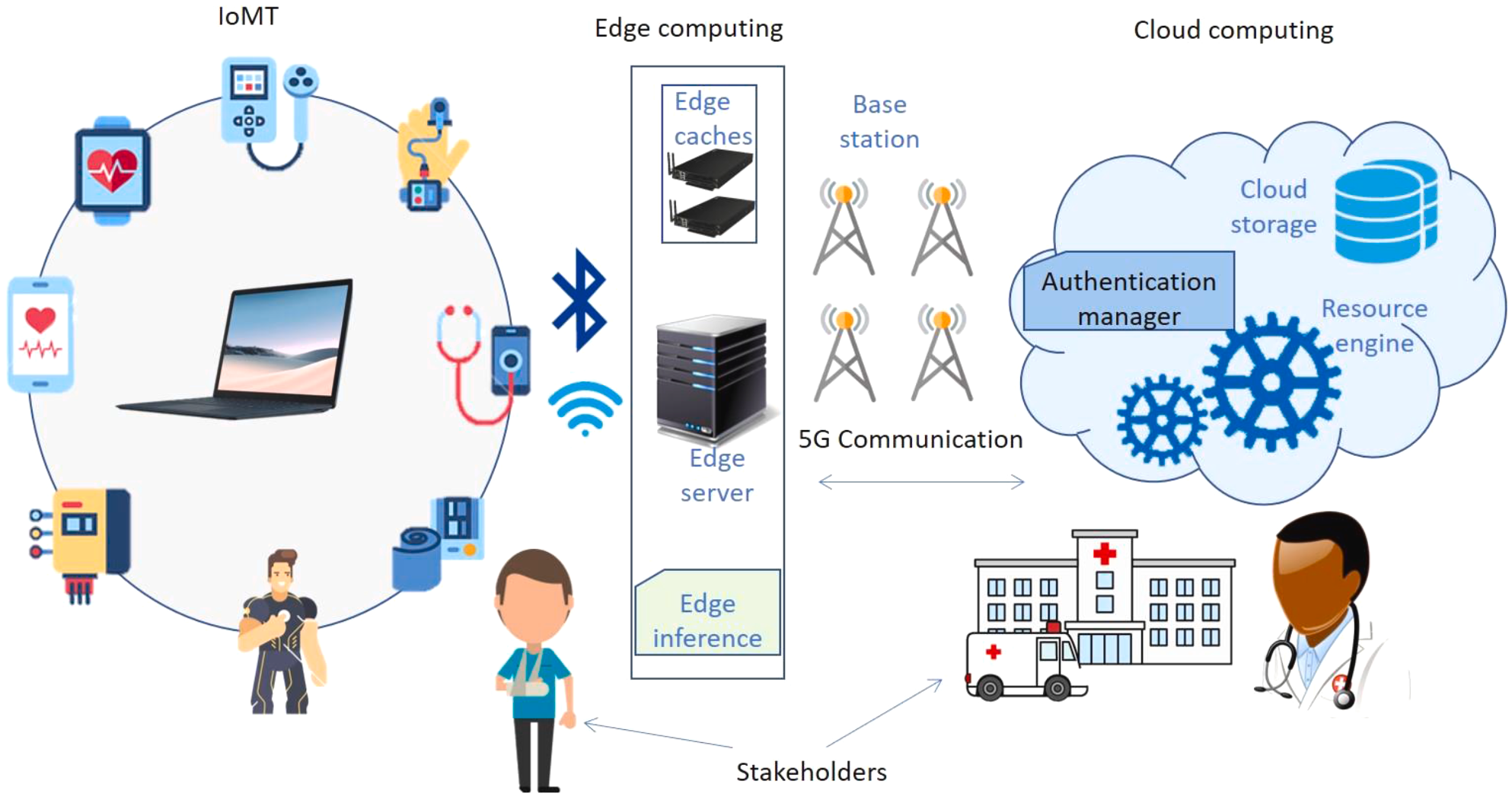 Figure 1: The standard 3-layer architecture: Device/Perception, Fog/Edge, and Cloud tiers.
Key Performance Benchmarks
The survey highlights several "hard-won" SOTA achievements that demonstrate the power of multimodal approaches:
- Emotion Recognition: By fusing facial video, speech, and physiological signals via 5G, researchers reached 99.87% accuracy.
- Chronic Disease: In diabetes management, using smart clothing features fused with hospital records achieved a 94% diagnostic accuracy.
- Neuroimaging: Fusing PET (Functional) and MRI (Structural) data allows for the precise localization of brain tumors that are invisible on either modality alone.
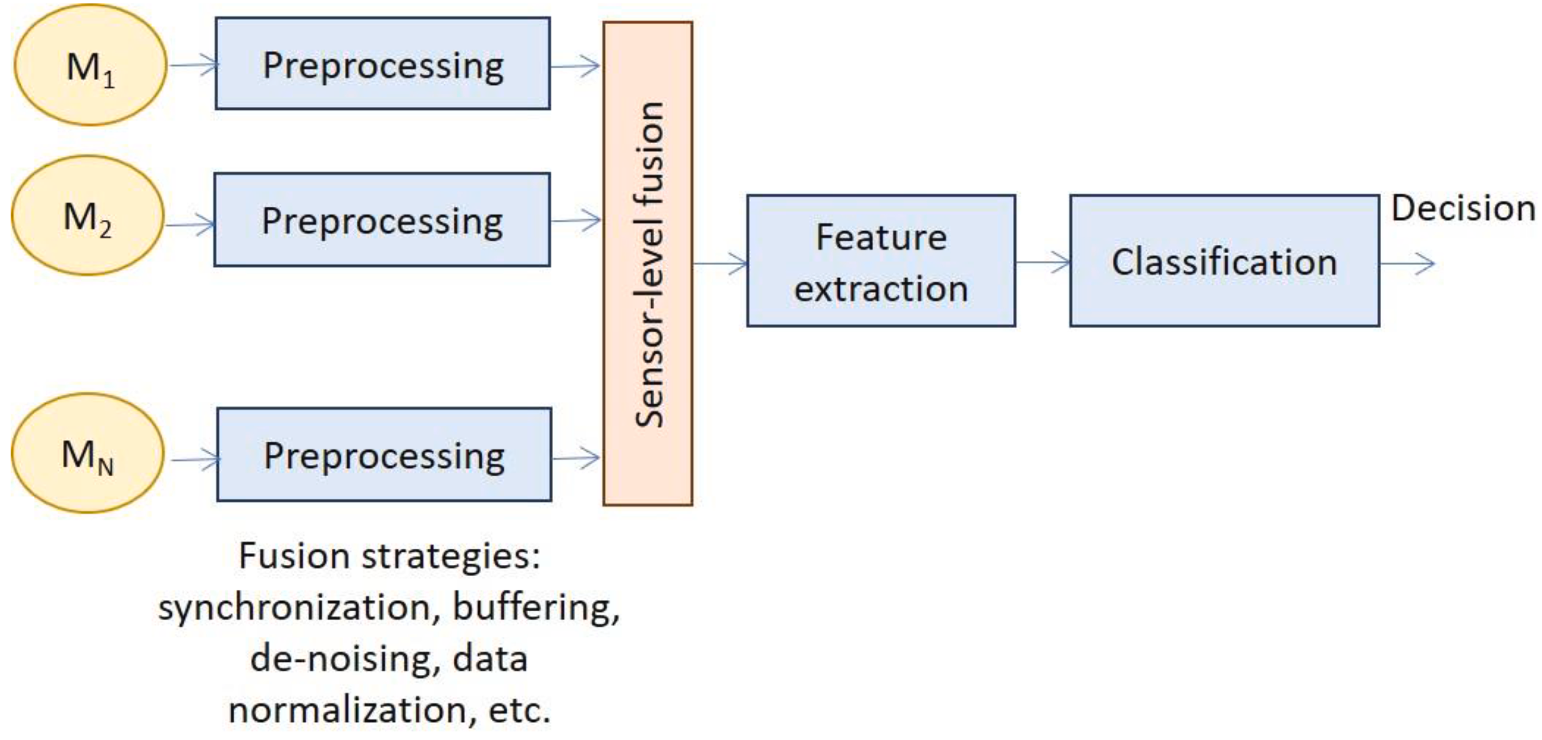 Figure 2: Comparison of Data, Feature, and Decision level fusion strategies.
The "Edge" Advantage: Solving for Latency
A critical insight from the authors is the role of Edge Computing. Medical sensors generate massive amounts of data. Sending raw high-res EEG data to the cloud causes latencies that could be fatal in emergency scenarios. By processing the "Fusion" at the Edge (on a gateway or local server), the system can filter noise and compress data, sending only the critical "diagnostic features" to the cloud.
Critical Analysis & The Future
While the results are promising, the authors identify several "Elephant in the room" problems:
- Interoperability: There is still no "universal language" for IoMT devices. A Philips monitor and a Fitbit don't talk to each other natively.
- Explainability (XAI): A deep learning model might say "98% Heart Failure Risk," but a surgeon needs to know why. Feature-level fusion often creates a "black box" that is hard to audit.
- Power Constraints: Most wearable sensors are battery-limited. Complex fusion algorithms must be optimized for "Green AI" to prevent frequent recharging.
Final Takeaway
The future of healthcare is not just "connected"—it is "integrated." The transition from single-modality silos to multimodal fusion is the key to moving from reactive care to preventative smart healthcare. Researchers should now focus on making these fusion models more "interpretable" and "energy-efficient" for the next generation of wearables.