
Beyond the Surface: Decoding Personality through Collaboration Dynamics
Multimodal Personality Recognition in Collaborative Goal-Oriented Tasks
2016-01-27
Summary
Problem
Method
Results
Takeaways
Abstract
This paper presents a multimodal framework for automatic personality recognition across all Big Five traits using simple non-verbal acoustic and visual features. The researchers investigate the "Map Task" across two distinct environments: Human-Machine Interaction (HMI) and Human-Human Interaction (HHI), while introducing controlled collaboration levels to elicit specific behavioral responses.
## TL;DR
The quest for machines that "understand" us just took a leap forward. This paper investigates how humans reveal their **Big Five personality traits** (Extraversion, Agreeableness, Conscientiousness, Emotional Stability, and Creativity) not just by *what* they say, but by *how* they move and talk when faced with different levels of cooperation. By manipulating how helpful a "partner" (human or machine) is, researchers found they could trigger and thus identify specific personality markers with high accuracy.
## The Core Intuition: Personality is Contextual
Most personality AI research treats your personality as a static broadcast. However, the authors of this study argue that personality is *reactive*. You might seem perfectly "Agreeable" when a system works well, but your "Emotional Stability" (or lack thereof) only truly manifests when the system starts being uncooperative or aggressive.
The researchers used the **Map Task**—a goal-oriented exercise where one person guides another through a landscape—to create a "behavioral pressure cooker."
## Methodology: The "Collaboration Level" Trigger
The researchers didn't just record people; they manipulated the interaction using four **Collaboration Levels (CLs)**:
1. **CL1 (Fully Collaborative):** Enthusiastic and trusting.
2. **CL2/CL3 (Intermediate):** Polite but neutral or slightly incompetent.
3. **CL4 (Non-Collaborative):** Aggressive, offensive, and blaming the user.
By extracting 21 non-verbal features (visual motion vectors and acoustic cues like pitch and intensity), they trained Support Vector Machines (SVM) to classify users into "High" or "Low" scores for each trait.
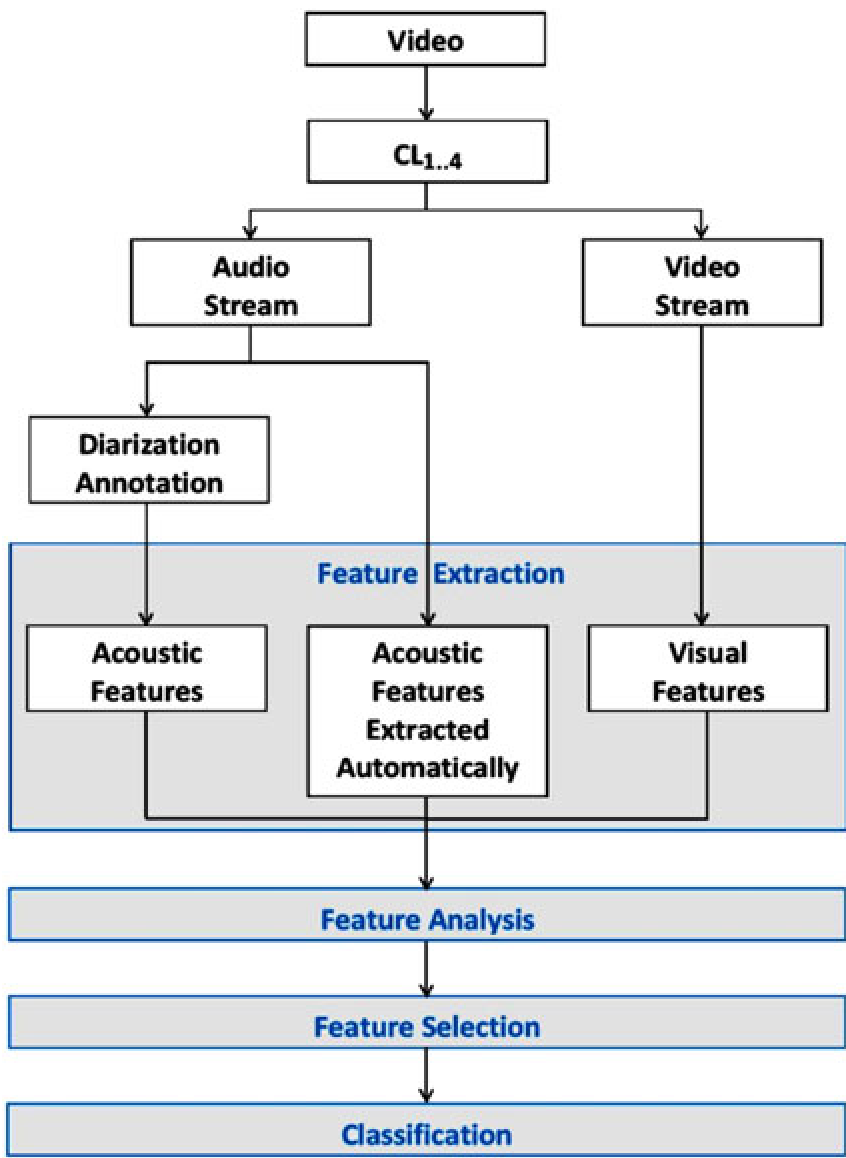
*Fig 1: The analytical workflow from raw multimodal data to trait classification.*
## Discovery 1: HMI vs. HHI Difference
One of the most profound insights was that humans behave differently when they think they are talking to a computer versus a human:
* **HMI (Human-Machine):** Users are more "literal." **Extraversion** and **Emotional Stability** were the easiest to detect here (Accuracy > 80%).
* **HHI (Human-Human):** Users exhibited more **Creativity**. When the partner got lost, humans used more imaginative and diverse ways to explain the map to another human than they did for a machine.
## Discovery 2: The Collaboration Level Effect
The data suggests that **non-collaborative behavior (CL4)** acts as a mirror for Emotional Stability. When the machine became aggressive, the subjects' vocal intensity and pitch stability became primary indicators of their neuroticism or stability. Conversely, **Extraversion** was consistently visible through body motion and speech overlaps across most collaborative settings.

*Fig 2: Classification accuracy across different Collaboration Levels in HMI.*
## Deep Insight: Why This Matters for the Future
This work moves us away from "Black Box" personality testing toward **Contextual Affective Computing**.
* **Assistive Robotics:** Robots can now "stress test" a user's personality to adapt their rehabilitation style.
* **Intelligent Tutoring:** Systems can detect if a student's frustration stems from a lack of Conscientiousness or a dip in Emotional Stability and adjust the "Collaboration Level" of the interface to keep them engaged.
## Limitations & Outlook
The study points out that "Agreeableness" remains a difficult trait to "catch in the wild," as it often requires longer social grooming than a 5-minute map task affords. Furthermore, the HHI scenario showed that humans might be "holding back" creative communication when interacting with machines due to perceived technical limitations.
In the future, as LLMs make HMI feel more like HHI, the distinctions found in this paper may blur, leading to even higher classification accuracies for traits like Creativity and Agreeableness in digital agents.
## Conclusion
Personality isn't just about who we are; it's about how we react to the world around us. By proving that non-verbal cues under pressure are reliable markers, this research provides a blueprint for the next generation of socially intelligent machines.