
Deep Sentiment: Decoding the Multi-Layered Structure of Human Emotion via Tumblr
Multimodal Sentiment Analysis To Explore the Structure of Emotions
The paper introduces "Deep Sentiment," a multimodal deep learning framework for sentiment analysis that combines visual features from a fine-tuned Inception network with textual features from a GloVe-embedded LSTM. It shifts the task from binary polarity prediction to inferring latent emotional states using 15 self-reported emotion word tags from a large-scale Tumblr dataset.
TL;DR
Researchers from Oxford and Imperial College London have moved beyond simple "thumb-up/thumb-down" sentiment analysis. By training a deep neural network on a massive dataset of Tumblr posts, they created Deep Sentiment: a model that combines what we see (images) with what we say (text) to predict 15 distinct emotional states. The result? A model that not only picks up on subtle feelings but also validates—and sometimes challenges—long-standing psychological theories.
Beyond Polarity: The Motivation
Most sentiment analysis tools are "shallow"—they tell you if a sentence is positive or negative. However, human emotion is a complex manifold. A picture of a sunset might be "Happy," "Calm," or "Optimistic," depending on the accompanying caption.
The authors argue that current SOTA methods fail because:
- Modality Gap: They ignore the interplay between text and images.
- Label Noise: They use artificial labels rather than "self-reported" emotions.
By using Tumblr, where users tag their own "inner state" (e.g., #pensive, #annoyed), the researchers tapped into a "gold standard" of psychological data: the self-report.
Methodology: The Fusion of Sight and Syntax
The architecture of Deep Sentiment is a masterclass in pragmatic deep learning fusion:
- Visual Path: They fine-tuned a 22-layer Inception network. Instead of just identifying "objects," the network learns to extract features like color palettes and compositions that represent the "structure" of an image.
- Textual Path: Using GloVe embeddings trained on Twitter-like data, words are fed into a Long Short-Term Memory (LSTM) network. This allows the model to understand context—crucial for catching how a single word like "not" can flip the entire emotional meaning of a sentence.
- The Fusion: The outputs are concatenated and passed through a dense layer to produce a probability distribution over 15 emotions.
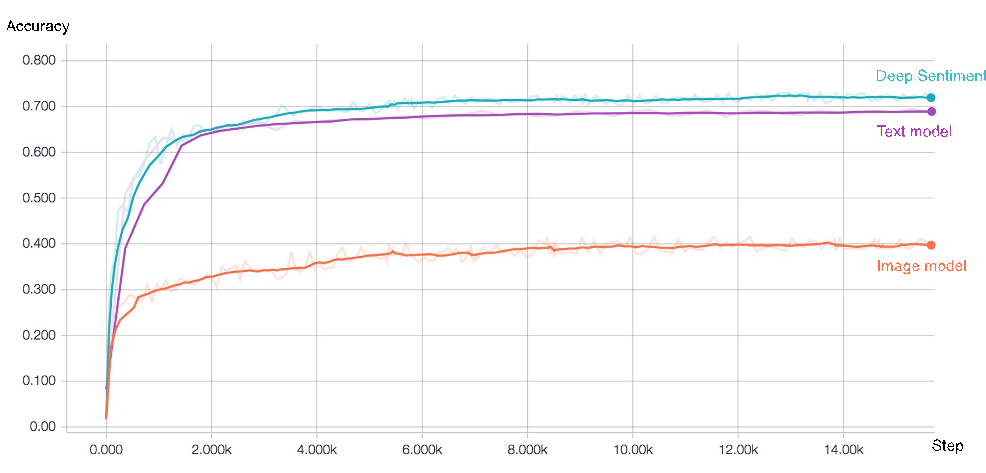 Figure 4: The Deep Sentiment structure showing the integration of Inception and LSTM paths.
Experiments & Psychological Validation
The model reached 72% test accuracy. While the text was a stronger predictor than images (69% vs 36%), the combined multimodal approach yielded the best performance, proving the "McGurk effect" in AI: we interpret text differently when we see the associated image.
The Clustering of Feelings
One of the paper's most fascinating contributions is the Hierarchical Clustering of emotions. The model naturally grouped "Excited," "Happy," and "Love" (Positive Valence) together, while creating distinct clusters for negative emotions based on "Arousal" (e.g., "Bored/Sad" vs. "Angry/Annoyed").
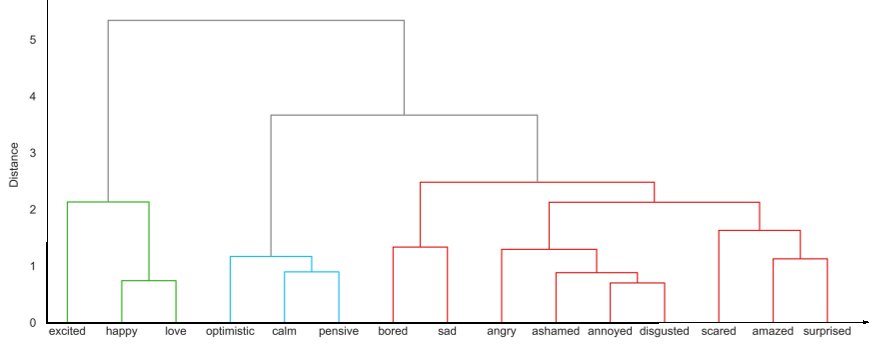 Figure 7: Dendrogram showing how the AI perceives the proximity between different human emotions.
Testing on OASIS
To prove this wasn't just "overfitting" to social media slang, they tested the model on the Open Affective Standardized Image Set (OASIS)—a dataset used in clinical psychology. The model's first principal component (PC1) correlated at 58% with human valence ratings, confirming that the AI had truly learned the "vibe" of happiness vs. sadness.
Critical Insight: The "Woke" Discovery
A unique takeaway was the model's ability to discover "modern" emotional markers. The word "woke" appeared in the top 10 markers for "Scared" and "Amazed." Traditional psychological tools (like LIWC) categorized "woke" merely as a verb; Deep Sentiment saw it as a nuanced indicator of social awareness and associated anxiety.
Conclusion & Limitations
Deep Sentiment proves that multimodal learning is the key to moving AI from "calculators" to "empathizers." However, the authors acknowledge a critical bias: Performative Emotion. People on Tumblr post how they want to be seen, not necessarily how they actually feel.
Future work looks to integrate daily temporal trends—understanding how our collective "Tumblr mood" shifts from Monday mornings to Friday nights.
Takeaway for the Industry: For any product involving user-generated content, sentiment analysis must be multimodal and psychologically grounded to understand the "Why" behind the "What."