
Beyond the Star Rating: Leveraging Social Ties for Precision Recommendations
A multiple criteria approach integrating social ties to support purchase decision
The paper proposes a novel Multiple Criteria Decision Analysis (MCDA) framework for personalized e-commerce recommendations. It integrates social tie analysis (trust/strength) with additive value functions to model the heterogeneous preferences of a user's social circle, effectively turning "fragments" of social interactions into personalized purchase support.
TL;DR
In the era of information overload, we trust our friends more than "faceless" algorithms. This paper introduces a sophisticated framework that mines your social circle's interactions (smiles, votes, comments) to build a multi-attribute decision model. By combining social network analysis with preference disaggregation, it delivers product recommendations that aren't just accurate, but credible and interpretable.
Problem & Motivation: The Paradox of Social Choice
E-commerce giants like Amazon and Taobao have integrated social functions, yet these remain "dumb" tools. We see a friend liked a laptop, but we don't know why. Was it the price? The processor speed?
Existing systems face two major hurdles:
- Noise and Inconsistency: Friends have conflicting values. One prioritizes battery life; another wants raw power.
- Cognitive Overload: You can’t manually weight 50 different opinions against 5 criteria (Price, RAM, Weight, etc.).
The authors argue that a recommendation is only useful if it respects the Contextual Trust we place in our referrers and the Multi-Attribute nature of products.
Methodology: The Core Engine
The framework operates on a "Social-to-Criteria" pipeline:
1. Behavior Mapping
The model translates "smiles" and "votes" into Pairwise Comparisons (). If a friend votes for Planet A over B, the system registers a mathematical constraint where the utility of A must exceed B.
2. Contextual Trust Analysis
Not all friends are equal. The researchers define trust via two dimensions:
- Tie Strength: Measured by overlapping common friends (Jaccard Index) and interaction frequency.
- Expertise Level: Calculated using Information Entropy. If a friend's preferences consistently point to a specific ranking, they have high expertise; if their opinions are vague, their influence is discounted.
3. Clustering and Preference Modeling
To handle the fact that your "gamer friends" have different needs than your "office friends," the model uses hierarchical clustering.
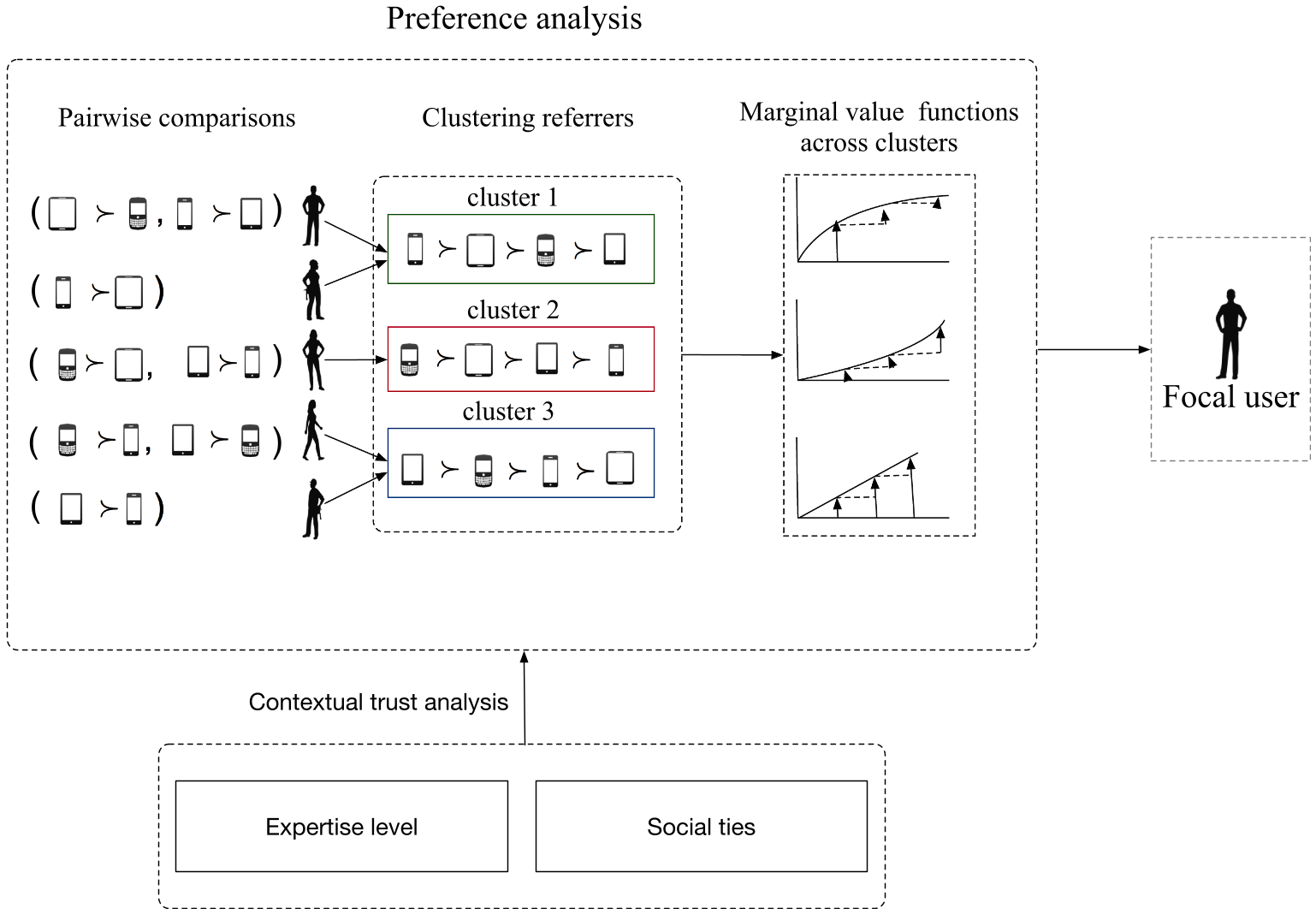 Fig 1: The architecture of the social-integrated decision support system.
For each cluster, a Mixed Integer Linear Programming (MILP) model finds the "Representative Value Function" that best fits that group's collective wisdom.
Experiments & Results: The Laptop Case Study
The authors tested the model on 48 referrers helping a user ("Andy") buy a laptop.
- Heterogeneity found: The algorithm identified three distinct clusters.
- Interpretable Marginal Values: Unlike a simple "8.5/10" rating, the model produces Marginal Value Functions.
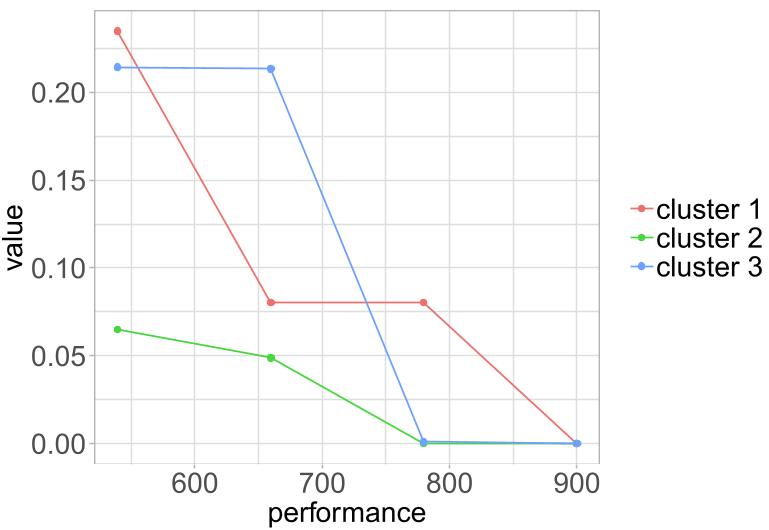 Fig 2: Marginal utility curves for different clusters, showing varying sensitivities to Price and RAM.
Key Outcome: The system recommended different laptops for different "vibe" groups. Cluster 2 was RAM-heavy and price-insensitive, recommending high-end machines, while Cluster 1 prioritized value-for-money.
Critical Insight & Conclusion
The real value of this work lies in Interpretability. Instead of a black-box recommendation, a user can see: "My tech-savvy friends recommend Laptop A because they value Processor Speed above all else."
Limitations & Future Work
While robust, the model assumes "Search Goods" where attributes are clearly defined. Extending this to "Experience Goods" (like fashion or food) would require advanced Natural Language Processing (NLP) to extract subjective criteria like "comfort" or "style" from comments.
Takeaway: The future of e-commerce is not just about having the most data; it's about having the most trusted data. By bridging the gap between social networks and formal decision theory, we can finally make social commerce "intelligent."