
Multiple-World GA: Why Copying Your Successful Neighbors is a Bad Strategy in Complex Networks
Multiple-World Genetic Algorithm to Identify Locally Reasonable Behaviors in Complex Social Networks
This paper introduces the Multiple-World Genetic Algorithm (MWGA), a novel evolutionary network analysis method designed to identify locally optimal strategies for agents in complex social networks. By creating parallel "worlds" of a fixed network, it allows agents to coevolve diverse, location-specific behaviors, successfully achieving higher fitness and strategy diversity compared to conventional GA-based methods.
TL;DR
In complex social networks, "one size fits all" strategies don't work. A celebrity's posting habits would fail a regular user. This paper proposes the Multiple-World Genetic Algorithm (MWGA), which allows agents to coevolve unique, location-aware strategies by competing against their own "parallel-world versions" rather than their neighbors. The result? A 97% improvement in fitness and a vibrant diversity of behaviors.
Perspective: The Trap of Universal Dominance
In traditional evolutionary network analysis (ENA), we assume a simple rule: Imitate those who are doing better than you. If your neighbor has a higher payoff, you copy their "genes."
However, the authors point out a fundamental flaw: Network Topology is Destiny. In scale-free networks (like Twitter or the Internet), a Hub (celebrity) and a Leaf (normal user) live in different worlds. If a normal user copies a hub's strategy of infrequent posting but high engagement, they fail because they lack the hub's underlying connectivity. Standard GAs often lead to a "converged" strategy that is only optimal for a tiny fraction of the population, leaving the rest with negative utility.
The Solution: Parallel Universes (Multiple-World GA)
The core Innovation of this paper is the move from Spatial Selection to Cross-World Selection.
1. The Architecture
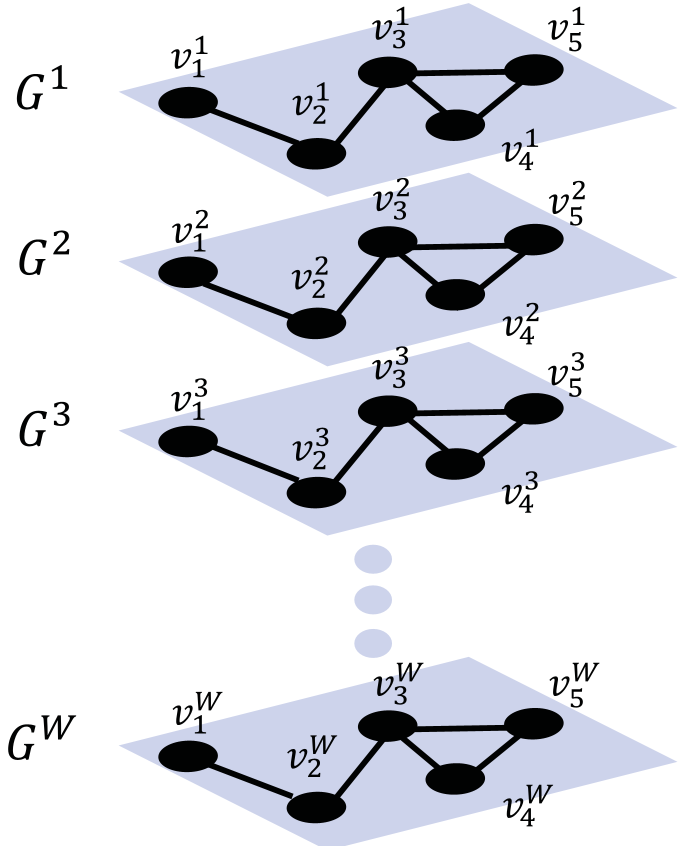
The method clones the master network into identical copies (Worlds).
- In each world, neighbors are the same, but their strategies (genes) are initialized differently.
- Agents interact within their specific world to calculate fitness.
2. Sibling Competition
Unlike traditional GA, where you look at your neighbors to find parents, in MWGA, an agent looks at its siblings (the same node in other worlds). This shifting of the selection pressure is profound: it forces the agent to ask, "Which version of ME performed best in my specific social position?" rather than "Which of my neighbors is the richest?"
Experimental Proof: The SNS Game
The researchers tested this using the diminishing Marginal Utility Rewards Game (dMRG). In this model, posting articles and comments costs energy but yields social rewards.
Key Findings:
- Fitness Gains: Almost every agent (97%) achieved higher rewards under MWGA.
- Emergent Diversity:
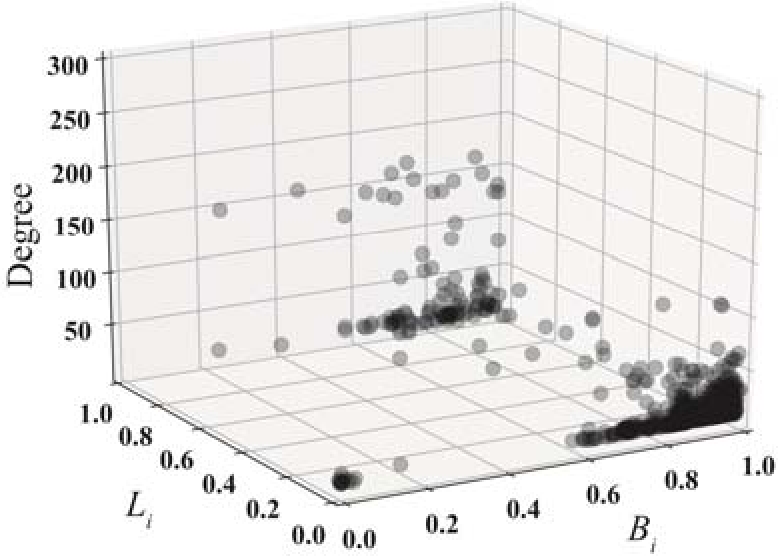
- Conventional GA (Fig 4) showed a boring cluster where everyone tried to act the same.
- MWGA (Fig 5) showed a rich spectrum: Hubs evolved high-engagement "commentator" roles, while normal users found various niches for posting frequency.
Deep Insight: The Value of
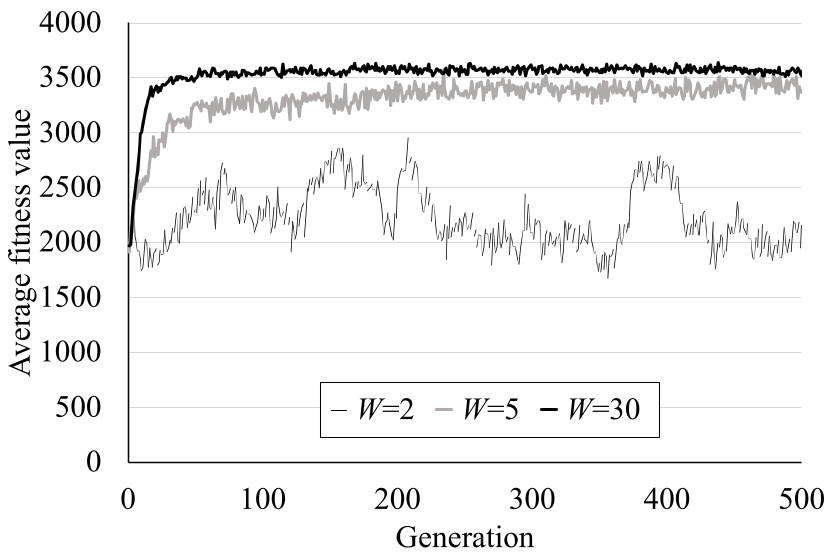
The study highlights a trade-off between computational cost and solution quality. As the number of worlds () increases, the search space expands, allowing agents to experience more diverse interactions. The authors found that increasing from 2 to 30 significantly stabilized the fitness of both hubs and normal agents.
Critical Analysis & Conclusion
The Multiple-World GA is a strike against the "homogenization" of agent-based models. It recognizes that in a complex system, "reasonable behavior" is purely local.
Limitations:
- Computational Overhead: Running copies of a million-node network is expensive, though the authors rightly note this is "embarrassingly parallel."
- Static Topology: The network structure is fixed. Future work should explore how MWGA handles dynamic networks where links appear and disappear.
Final Takeaway: This work provides a robust framework for preserving diversity in evolutionary systems. It proves that to find the best version of a system, you shouldn't just look at who is winning—you should look at the different ways everyone could have played their specific hand.