
Beyond Edges: Harmonizing Landmark and Corner Detection via Isotropic Bandpass Filters
10419_Multiresolution feature detection using a family of isotropic bandpass filters.
The paper proposes a unified framework for detecting image landmarks and corners using a family of multiscale isotropic bandpass filters. By leveraging Gabor, Hermite transform, STFT, and Wavelet-based designs, the method achieves superior feature enhancement and localization across diverse applications including gesture recognition and IR landmine detection.
TL;DR
Detection of salient points is a cornerstone of computer vision, yet traditional methods often stumble when clear edges are missing. This paper introduces a unified framework using Multiscale Isotropic Bandpass Filters. By treating corners and landmarks as local frequency anomalies rather than mere edge junctions, the authors achieve robust detection in challenging environments like IR landmine sensing and gesture analysis, featuring an automatic scale selection mechanism to bridge the gap between "seeing" a feature and "pinpointing" it.
The Core Insight: Why Isotropic Bandpass?
Most classical corner detectors (like Kitchen-Rosenfeld or CSS) are "edge-dependent"—they first find boundaries and then calculate curvature. But what happens in low-resolution IR imagery or soft facial landmarks where boundaries are fuzzy?
The authors argue that landmarks and corners share a fundamental spectral property: they are orientation-independent (isotropic) local signal variations that disappear in the low-pass band but persist across multiple frequency bands. By using a "ring-shaped" bandpass filter, the system effectively ignores DC bias (ambient lighting) and high-frequency noise while resonating with the spatial scale of the feature itself.
Methodology: The Unified Filter Family
The paper doesn't just propose one filter; it provides a recipe for a whole family. They categorize design into two schemes:
- Scheme A (Difference of Low-Pass): Similar to the "Difference of Gaussians" (DoG), creating a bandpass effect by subtracting two isotropic low-pass kernels.
- Scheme B (Directional Averaging): Taking an anisotropic bandpass filter (like a Gabor filter) and averaging it across all orientations to force rotational symmetry.
Architecture & Multiscale Tracing
The "Uncertainty Principle" in signal processing states that you cannot have perfect resolution in both space and frequency. A wide filter is great for finding a faint landmine (Detectability) but terrible at saying exactly where it is (Localization).
The authors solve this with a Cascade Multiscale Detector:
- Coarse Scale: Higher SNR, used to find candidate regions.
- Fine Scale: Used to "trace back" the peak to its exact pixel coordinate.
 Figure 1: The general block diagram of the feature detector incorporating filtering, post-processing, and peak picking.
Experimental Validation
The framework was tested on five filter types: Gabor, Hermite, STFT, Wavelet, and Optimal FIR.
Key Results:
- IR Landmine Detection: In airborne IR images (180m altitude), where targets are just a few pixels wide, the proposed detector successfully identified manmade markers where edge-based CSS failed completely.
- Gesture Analysis: Successfully localized eyes, nose, and mouth on faces, and finger tips on hand gestures.
- Quantitative Edge: Scheme A (Difference of Low-pass) generally outperformed Scheme B, with Gabor and Hermite variants showing the lowest false alarm rates.
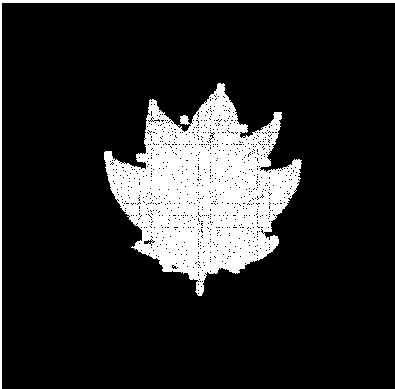 Figure 2: Performance in detecting landmines and markers in IR imagery. Note the high visibility of features in the processed output vs the raw IR input.
Critical Analysis & Takeaways
The brilliance of this work lies in its Unified Theory. Instead of having specialized algorithms for corners and separate ones for "blobs" or landmarks, it treats everything as a bandpass detection problem.
Strengths:
- Robustness: Works directly on raw intensity images without needing pre-segmented edges.
- Automation: The local SNR-based scale selection removes the "magic number" tuning often required in multiscale systems.
Limitations:
- Classification: The detector is too good—it finds any salient point, often requiring a follow-up classifier to distinguish between a "true" landmark and a "salient" piece of clutter (e.g., a stone).
- Threshold Sensitivity: The final peak-picking still relies on a threshold that can vary between image modalities.
Conclusion
This paper is a masterclass in applying classical signal processing theory to modern vision problems. It reminds us that before jumping to complex geometric models, a well-designed isotropic filter can solve many of the fundamental "uncertainties" of feature detection.