
SOFLC-DPI: Revolutionizing Multivariable Control with Evolution and Logic
Multivariable self-organizing fuzzy logic control using dynamic performance index and linguistic compensators
This paper introduces a model-independent decoupled control architecture for multivariable systems, featuring a new Self-Organizing Fuzzy Logic Control with a Dynamic Performance Index (SOFLC-DPI) and switching-mode linguistic compensators. It achieves SOTA robustness in biomedical drug delivery simulations (DOP/CO and SNP/MAP regulation), effectively handling varying dynamics and noisy environments without a priori model knowledge.
Executive Summary
TL;DR: This paper presents a breakthrough in multivariable control by combining on-line Genetic Algorithms (GA) with Self-Organizing Fuzzy Logic Control (SOFLC). By introducing a Dynamic Performance Index (DPI) table and an intelligent Switching-Mode Compensator, the authors eliminate the need for a priori system models. The resulting controller is remarkably robust against parameter variations and inaccurate gain estimations, outperforming standard fuzzy-neural benchmarks in highly interactive biomedical tasks.
Academic Positioning: This work bridges the gap between traditional Decoupled Control and Adaptive Intelligent Control. It is an evolutionary "re-patching" of the classical SOFLC framework, transforming it from a semi-heuristic method into a truly model-free, self-evolving system.
1. Problem & Motivation: The "Frozen" Intelligence Trap
In multivariable systems, such as regulating blood pressure through multiple interactive drugs, variables are tangled. Standard Decoupled Control attempts to untangle these using a Relative Gain Array (RGA).
However, existing solutions face two major bottlenecks:
- Fixed Heuristics: Traditional SOFLC relies on a Fixed Performance Index Table. This table acts as a coach telling the controller how to improve, but if the coach (the table) doesn't understand the specific system dynamics, the learning fails.
- Blind Decoupling: Most compensators try to eliminate all interactions. This is wasteful—some interactions actually help reach the set-point faster.
The authors' insight was simple: Why not let the "coach" evolve alongside the controller, and only intervene when the interaction is actually harmful?
2. Methodology: The SOFLC-DPI Architecture
The core innovation is a two-layered intelligence structure:
A. The Dynamic Performance Index (DPI)
Instead of a static matrix, the PI table is a collection of evolving GA populations. Each cell in the table represents a fuzzy rule and is linked to a small, independent Genetic Algorithm.
- On-line Evolution: At every sample, the system evaluates the current "best" rule.
- Credit Assignment: Using a reinforcement learning-style reward/penalty mechanism (as seen in the figures below), the GA refines the rules in real-time.
 Figure 1: The SOFLC-DPI architecture showing the dual-level control and GA-based optimization loop.
B. Switching-Mode Linguistic Compensators
The system doesn't just subtract the interaction. It predicts the "trajectory" of the error using: If the interaction from Channel B is helping Channel A move toward the set-point, the compensator switches off, allowing the "natural" physics of the system to assist the controller.
3. Experimental Battleground: Biomedical Drug Regulation
The authors tested the SOFLC-DPI on the DOP/CO (Dopamine/Cardiac Output) and SNP/MAP (Sodium Nitroprusside/Mean Arterial Pressure) regulation problem—a classic TITO (Two-Input Two-Output) challenge characterized by heavy coupling and time delays.
Key Results:
- Scaling Factor Robustness: The system maintained stability across a much wider range of scaling factors than standard SOFLC, which usually requires meticulous manual tuning.
- Dynamic Adaptivity: When parameters were shifted by 10%, the SOFLC-DPI adjusted its internal rules within seconds, whereas fixed-table systems exhibited significant oscillation.
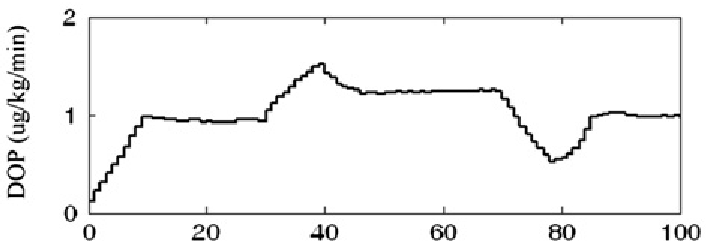 Figure 2: Tracking performance of CO and MAP. Notice the rapid convergence despite the initial "zero-knowledge" state.
The "Aha!" Moment: Selective Compensation
The activation history (Fig. 8 in the paper) reveals that the compensators are frequently deactivated during transient phases. This confirms the hypothesis that "constructive interaction" exists and can be exploited to speed up set-point tracking.
4. Critical Analysis & Takeaways
Why does it work?
The SOFLC-DPI succeeds because it decouples Performance Evaluation from Control Action. While the GA optimizes the strategy (how much to correct), the Fuzzy Logic handles the execution (applying the correction). This separation prevents the "catastrophic forgetting" common in pure neural-network controllers.
Future Outlook
While the system is model-free, the GA-based optimization introduces a computational overhead proportional to the number of cells in the PI table. Future research should look into Sparse PI tables or Hierarchical GA to apply this to higher-dimensional systems (e.g., 6-DOF industrial robots).
Conclusion: This paper is a masterclass in hybrid control design. It proves that by letting go of fixed expert knowledge and embracing on-line evolution, we can build controllers that are not only smarter but also significantly more resilient to the "noise" of the real world.