
Mutual Assent vs. Unilateral Nomination: Why the Intersection Rule Wins in Sparse Networks
Mutual assent or unilateral nomination? A performance comparison of intersection and union rules for integrating self-reports of social relationships ଝ
This paper evaluates the performance of the Intersection rule (I-LAS) and Union rule (U-LAS) for integrating self-reported social relationships. By analyzing eight organizational datasets and employing a Bayesian Network Accuracy Model (BNAM), the authors demonstrate that the Intersection rule consistently outperforms the Union rule in typical social network settings, achieving superior accuracy in inferring the true underlying network structure.
TL;DR
When building a social network from surveys, you often get two conflicting answers for one relationship. Should you trust if either person says yes (Union), or only if both agree (Intersection)? This research proves that for almost all real-world social networks, the Intersection rule is significantly more accurate. The secret lies not in how much people forget, but in the inherent sparsity of social life.
The Problem: The Informant Accuracy Gap
Since the 1980s, sociologists have known that "people don't know who their network connections are" with perfect accuracy. When we ask Person A and Person B if they are friends, they often disagree.
- Prior Work: Most researchers chose between the Union rule (liberal; maximizes ties) and the Intersection rule (conservative; requires consensus) based on "gut feeling" or specific research goals.
- The Intuition Trap: Many assumed that since people are forgetful (False Negatives), we should use the Union rule to "catch" those missed ties. This paper argues that this intuition ignores the mathematical reality of network density.
Methodology: Sparsity as the Deciding Factor
The authors utilize the Bayesian Network Accuracy Model (BNAM) to estimate the "true" network from a collection of error-prone reports.
The Formal Logic
The authors define the expected Hamming Error (the number of wrong bits in the adjacency matrix). The critical insight is the comparison of opportunities:
- False Positive Opportunities: Every pair of people who are not connected.
- False Negative Opportunities: Every pair of people who are connected.
In a sparse network (where density < 0.3), there are exponentially more chances to "accidentally invent" a tie than to "forget" one.
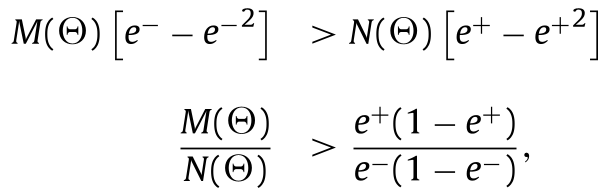 The mathematical threshold proving that if the ratio of non-edges to edges is high, Intersection wins.
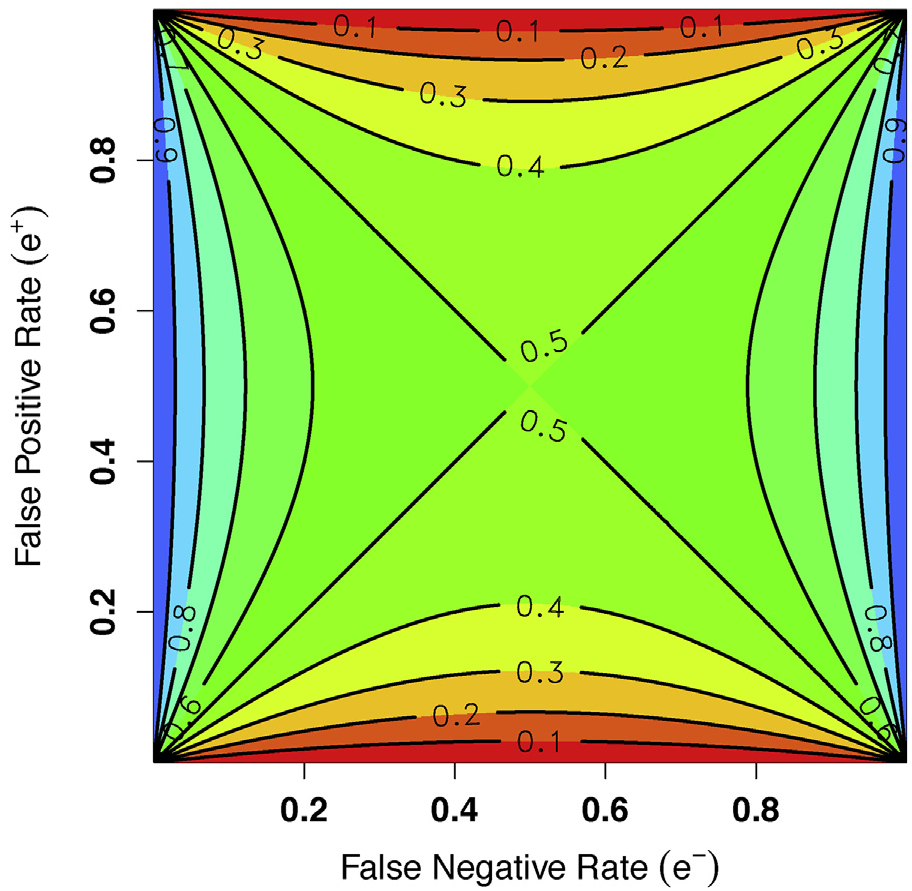 Fig 2: As network density drops, the Intersection rule (I-LAS) dominates even with higher error rates.
Experiments & Results
The study analyzed 8 networks across 4 settings (High-tech managers, Italian universities, etc.), focusing on "Advice" and "Friendship" ties.
Key Findings:
- Consistency: In 100% of the studied cases, the Intersection rule resulted in lower Hamming Error than the Union rule.
- Magnitude of Success: In the "Italian University - Advice" network, the Union rule had a mean error of 91, while the Intersection rule dropped it to 27.
- Self vs. Proxy: Interestingly, informants are much better at reporting their own ties than reporting on the ties of others (proxy reports), yet they still succumb to errors that the Intersection rule best mitigates.
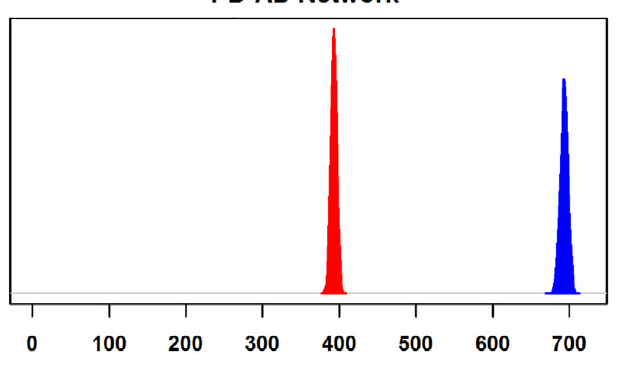 Fig 6: This visualization highlights the stark contrast in accuracy, where the blue bars (Intersection) are consistently closer to zero error than the red bars (Union).
Critical Insight & Conclusion
The study’s most profound takeaway is that sparsity is a feature, not a bug. Because social networks are naturally sparse, the "opportunity cost" of a False Positive is much higher than a False Negative.
Takeaway for Researchers: If you are limited to self-report data and cannot use complex Bayesian modeling, always use the Intersection (Mutual Assent) rule. It is the most robust heuristic against the high number of false-positive opportunities inherent in sparse human structures.
Limitations: The study focuses on Hamming Error (overall accuracy). If your specific research goal is sensitive to finding every possible tie (e.g., disease contact tracing), the Union rule might still be substantively preferred despite its higher overall error rate.