
Efficiency Meets Emotion: Scaling FER to Light-Weight Devices via Mutual Information
Mutual-Information-based Feature Selection for Facial Emotion Recognition on Light-Weight Devices
2019-12-01
Summary
Problem
Method
Results
Takeaways
Abstract
This paper introduces a mutual-information-based feature selection method for Facial Emotion Recognition (FER) specifically designed for light-weight devices. By utilizing Hierarchical Agglomerative Clustering (HAC) and a Genetic Algorithm-inspired filtering mechanism, the authors reduced the required facial landmarks from 130 to just 6, achieving state-of-the-art accuracy with significantly lower overhead on a Raspberry Pi 3.
## TL;DR
Researchers from the State University of New York at Binghamton have developed a method to slash the computational cost of Facial Emotion Recognition (FER) by **63.5%**. By distilling 130 facial landmarks down to just 6 key points using **Mutual Information (MI) clusters** and a **Genetic Algorithm-inspired filter**, they achieved accuracy levels that rival—and even stabilize—full-scale models on hardware as modest as a Raspberry Pi.
## The Overhead Bottleneck
Modern FER is a resource hog. Most SOTA models rely on tracking a dense mesh of 68 to 130 landmarks. While this works on a high-end GPU, it is a "battery killer" for smartphones and smart home monitors. The core intuition of this paper is that many facial movements are **informational duplicates**. If your inner eyebrow moves up, the surrounding skin likely follows suit. Identifying these "informational clusters" allows us to ignore 95% of the data without losing the emotional signal.
## Methodology: From Chaos to 6 Strategic Points
The authors' pipeline transforms raw coordinate jitter into a streamlined classification task:
1. **MI Distance Matrix**: Instead of simple Euclidean distance, the team used **Shannon’s Entropy** to measure how much information one landmark provides about another.
2. **Clustering (HAC)**: Using Ward’s method, they grouped 130 landmarks into 6 distinct clusters based on their movement patterns.
3. **Feature Filtering (FF)**: Using a GA-inspired "survival of the fittest" selection, they iteratively tested landmark combinations from these clusters, keeping only those that maximized SVM accuracy.
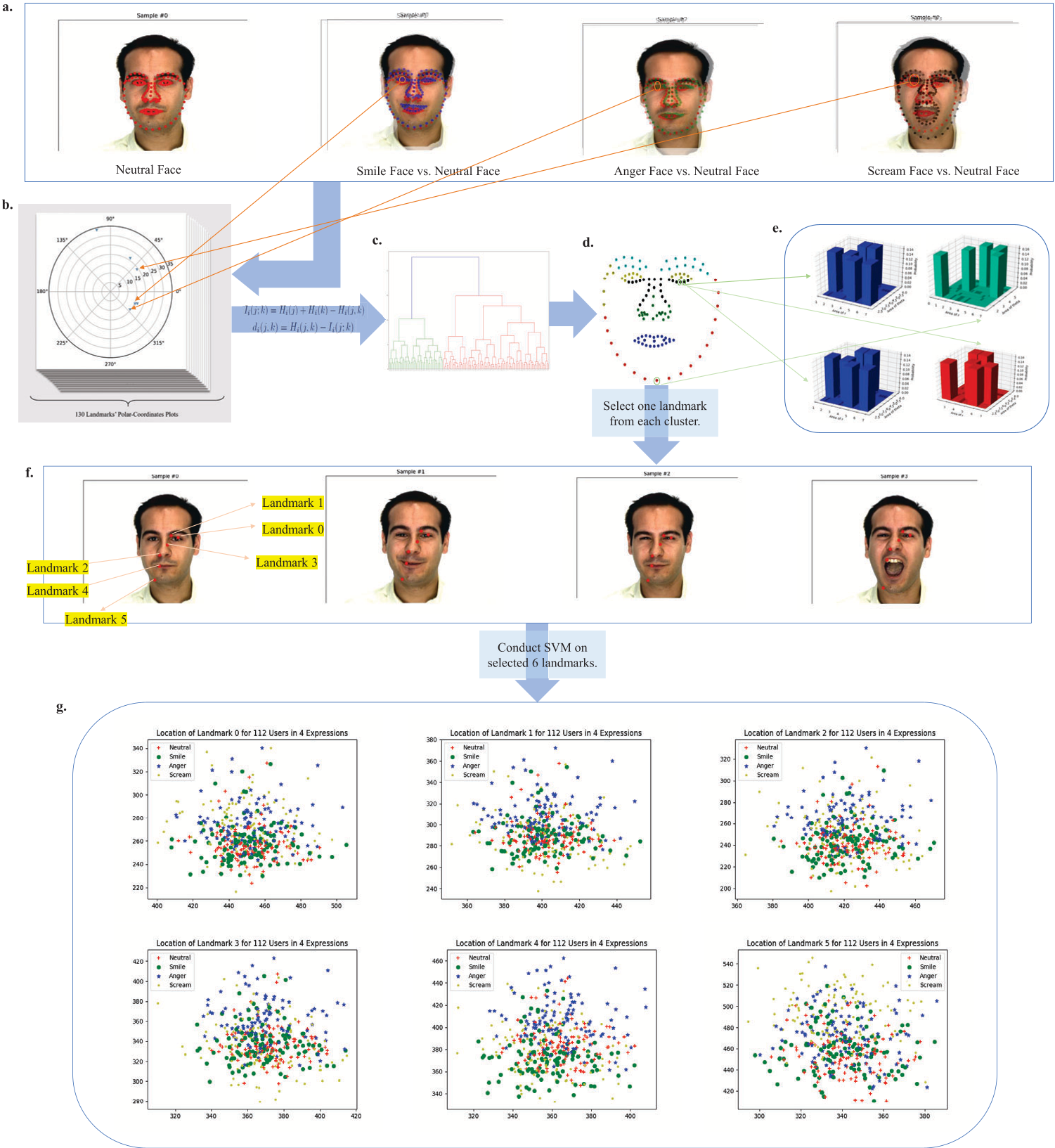
*Fig 1: The proposed workflow—from 130 noisy landmarks to 6 optimized features.*
## Visualizing Movement Distributions
The paper highlights that landmarks like the iris or the nose root have unique "movement footprints." By binning these movements into polar coordinates, the researchers could calculate the joint probability distributions needed for MI.
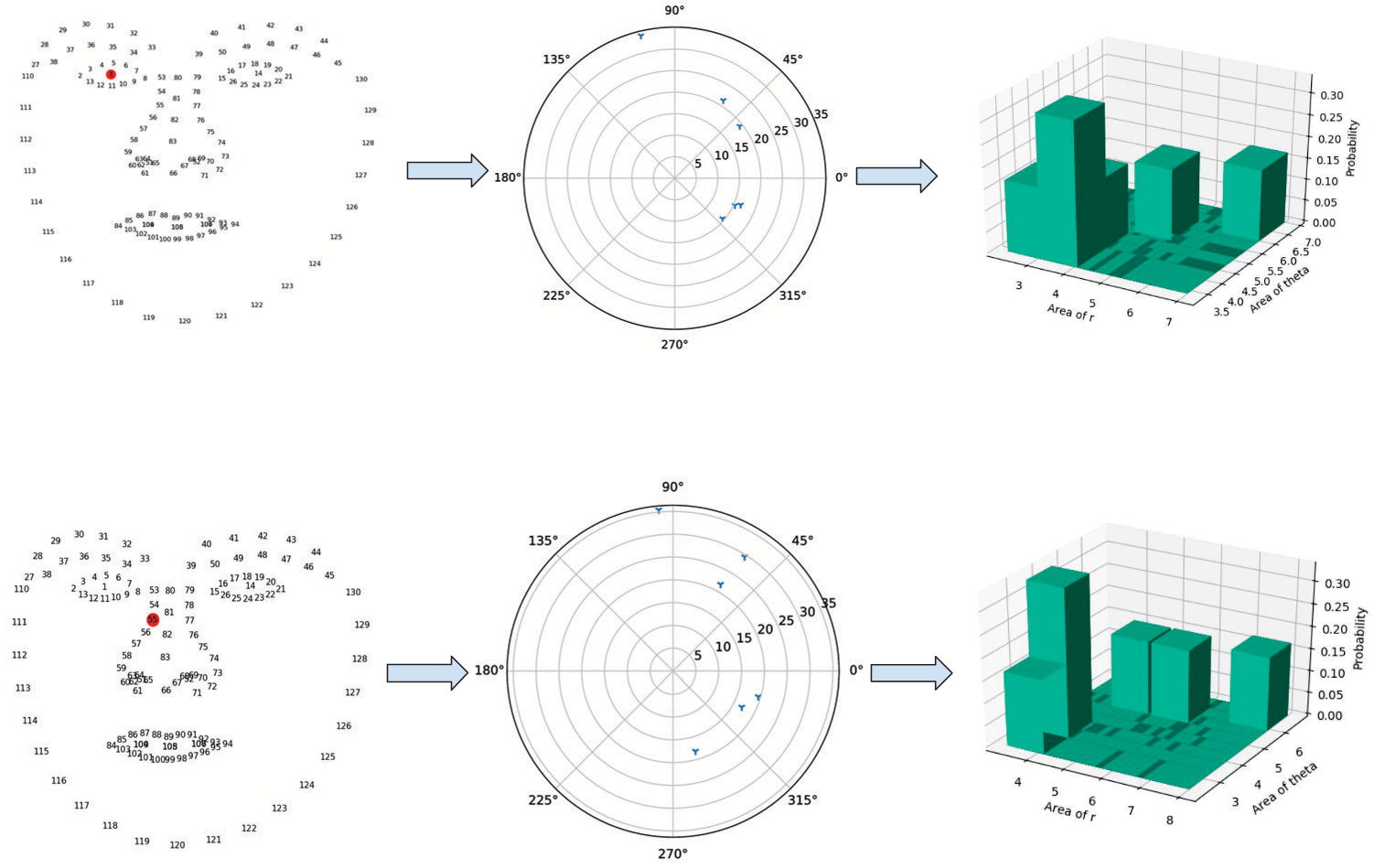
*Fig 2: Discretized probability distributions for two different facial landmarks.*
## Performance: Less is More
The results are a masterclass in the "Less is More" philosophy of edge computing. The **FF on S6** (Feature Filtering on 6 Clusters) method didn't just match the full 130-landmark model; it surpassed it in **robustness**.
* **Baseline (130 landmarks)**: 88.21% accuracy (High variance).
* **FF on S6 (6 landmarks)**: 88.76% accuracy (Low variance).
* **Speedup**: 63.5% reduction in latency on Raspberry Pi 3.
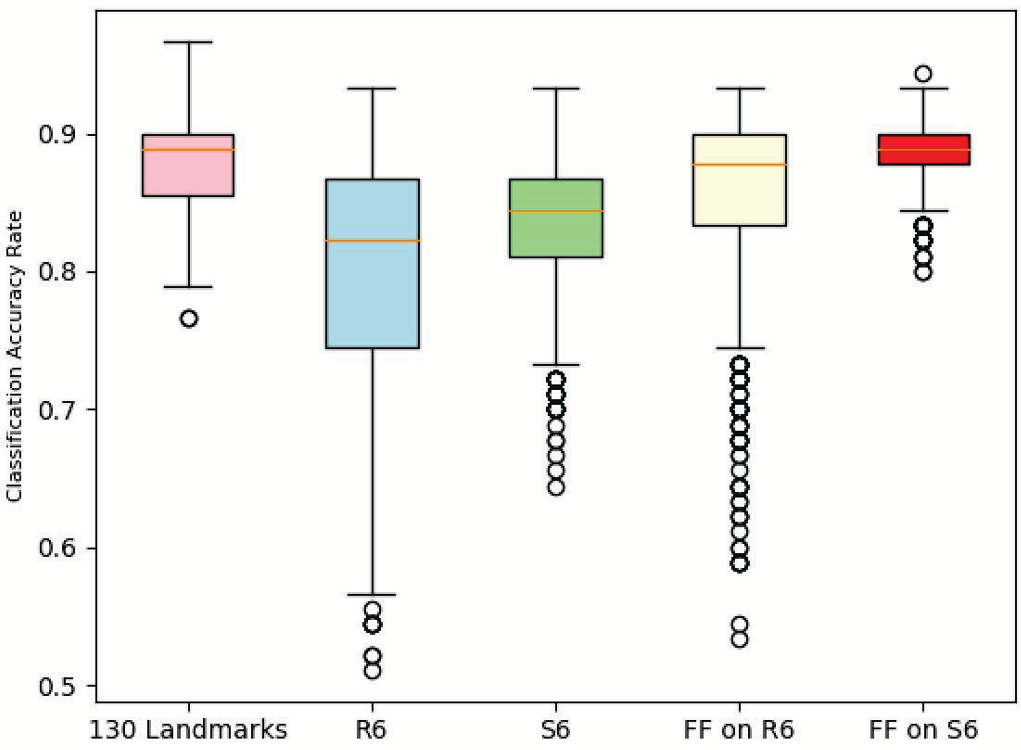
*Fig 3: Accuracy distributions. Note how FF on S6 (far right) is both higher and "tighter" than the 130-landmark baseline.*
## Critical Insights & Future Outlook
Why does 6 landmarks perform better than 130? The answer lies in **Overfitting and Noise**. By using all landmarks, the SVM likely picks up on subject-specific idiosyncrasies or manual annotation noise. By forcing the model to look at only 6 "representative" landmarks across different clusters, the authors introduced an **Inductive Bias** that focuses on the core mechanics of "Smile," "Anger," and "Scream."
**Limitations**: The study utilized the AR Face Database, which is relatively small. Future work must validate if these 6 specific landmark locations hold true across more diverse populations and 3D sensor data.
## Conclusion
This research provides a blueprint for "Green AI" in the wearable and IoT space. It proves that with the right information-theoretic lens, we can strip away massive amounts of redundant data, making sophisticated HCI accessible to the most budget-friendly devices.