
MvGTDA & TS-DLF: Decoding Human Emotion Through Significant Brain Region Selection
Selection of Significant Brain Regions Based on MvGTDA and TS-DLF for Emotion Estimation
This paper introduces a novel emotion estimation framework using functional brain images (fMRI), proposing Multiview General Tensor Discriminant Analysis (MvGTDA) and Tensor-Based Supervised Decision-Level Fusion (TS-DLF). The method successfully identifies significant Brodmann areas and achieves SOTA performance in classifying "positive" vs. "negative" emotional states elicited by visual stimuli.
TL;DR
Researchers from Hokkaido University have developed a sophisticated framework to estimate human emotions (Positive vs. Negative) from fMRI scans. By introducing Multiview General Tensor Discriminant Analysis (MvGTDA), the system automatically identifies which Brodmann areas are truly "significant" for emotional processing. Unlike previous methods that struggle with the high-dimensionality of brain data, this approach combines regional selection with Tensor-based Supervised Decision-Level Fusion (TS-DLF), pushing accuracy to an impressive 75.5%.
The "Voxel Curse": Why Emotion Estimation is Hard
In the world of neuroimaging, we face a classic "Small Sample Size" problem. A single fMRI scan contains tens of thousands of voxels (3D pixels), yet we usually only have a few dozen samples per subject. Using the whole brain for machine learning leads to:
- Extreme Overfitting: The model learns noise instead of neural patterns.
- Information Dilution: Critical activation in areas like the Amygdala or Visual Cortex gets lost in the "static" of irrelevant brain regions.
Previous SOTA methods tried whole-brain dimensionality reduction, but they often missed the spatial nuance of the brain's functional blocks—the Brodmann areas.
Methodology: The Power of Tensors and Views
The authors' core "Insight" is to treat the brain not as a flat vector, but as a tensor (3D array) and to treat different Brodmann areas as multiple views of the same emotional state.
1. MvGTDA (Significant Area Selection)
MvGTDA uses a combination of discriminant analysis and -norm regularization. It assigns an "importance score" () to each Brodmann area. If an area doesn't contribute to distinguishing between "positive" and "negative" labels, its score is crushed to zero (thanks to the penalty).
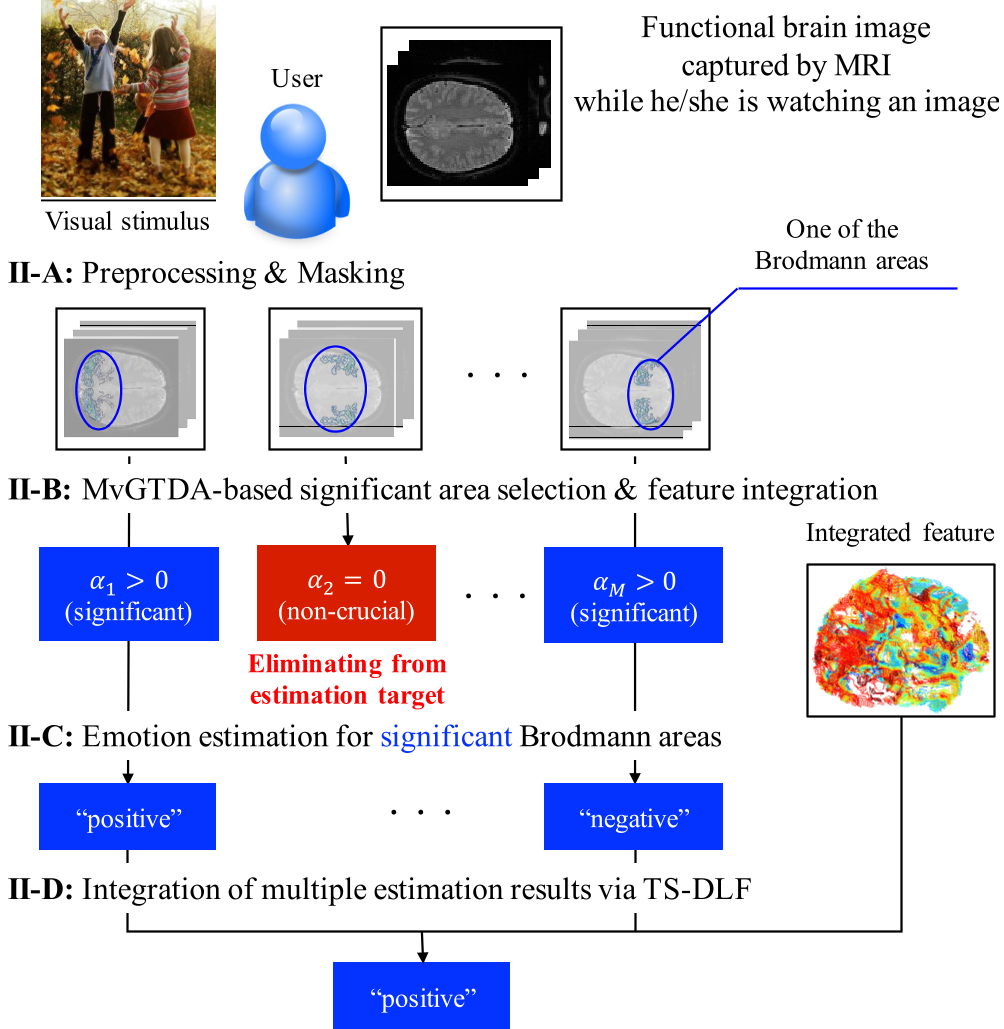 Figure 1: The two-stage contribution: MvGTDA for area selection and TS-DLF for fusion.
2. TS-DLF (Intelligent Fusion)
Once the significant areas (like the frontal lobe or occipital lobe) are selected, independent SVM classifiers are trained for each. But how do you combine their votes? Rather than simple majority voting, TS-DLF considers the "reliability" (sensitivity and specificity) of each area's classifier, using a tensor-based likelihood function to reach a final consensus.
Experimental Results: Proving the Concept
The researchers tested five subjects using artistic images (Amusement, Awe vs. Anger, Disgust).
Key Findings:
- Identified Regions: The model successfully highlighted the frontal lobe (Brodmann areas 9, 10, 46) and the visual cortex (18, 19) as highly significant—matching established neuropsychological theories of emotion.
- Accuracy Leap:
- Whole Brain (SVM): 56.9%
- Previous Tensor Method (GTDA+TS-DLF): 64.8%
- Current Proposed (Ours): 75.5%
 Figure 2: Performance comparison across different methodologies.
Critical Analysis
The strength of this work lies in its Inductive Bias. By forcing the model to select specific Brodmann areas (biological priors), it naturally resists the overfitting that plagues whole-brain models.
Limitations:
- The study only looked at binary "Positive vs. Negative" states. Real human emotion is a spectrum (e.g., distinguishing "Excitement" from "Contentment").
- The sample size of subjects (5) is small, which is typical for fMRI studies but requires further validation on larger datasets.
Future Outlook
This work paves the way for more robust affective Brain-Computer Interfaces (aBCIs). If we can accurately pick the "channels" (brain regions) that matter most for a specific user, we can build more responsive systems for neuro-rehabilitation, mental health monitoring, and personalized content recommendation.
Conclusion (Takeaway)
The shift from "Whole Brain" analysis to "Significant Regional Fusion" via tensors represents a major step forward. By leveraging the physical structure of the brain (Brodmann areas) as a mathematical constraint, MvGTDA provides a blueprint for high-accuracy emotion decoding.