
MVP: Identifying High-Value Insights in the Chaos of Financial Social Networks
MVP: Finding the Most Valuable Posts in Financial Social Networks
This paper introduces MVP, a financial post retrieval system that utilizes a Language Model with Dynamic Pseudo Relevance Feedback (DPRF) to identify high-value information in social networks like StockTwits. By detecting temporal bursts and expanded query terms, the system achieves SOTA performance in financial event retrieval.
TL;DR
In the fast-paced world of financial social networks like StockTwits, investors are often overwhelmed by the sheer volume of "noise." This paper proposes MVP, a retrieval framework using Dynamic Pseudo Relevance Feedback (DPRF). By understanding when an event happens, the model expands vague queries into rich, context-aware searches, boosting retrieval precision by up to 67% over traditional keyword matching.
The "Vague Query" Problem in Finance
When a major event hits—like a Tesla delivery report or an earnings miss—most investors simply search for the ticker symbol (e.g., $TSLA). Traditional Information Retrieval (IR) systems rely on term frequency, but social media posts are:
- Short and Fragmented: Limited by character counts (formerly 140 on StockTwits).
- Context-Shifting: A user might discuss "Model 3 reservations" without mentioning "Tesla."
- Burst-Driven: Value is concentrated around specific time windows (bursts).
Standard models like Lucene or KL-divergence treat all documents equally across time, leading to a flood of irrelevant historical data or missing key "slang" terms used during a specific event phase.
Methodology: Bringing Time into the Language Model
The core innovation is the Dynamic Pseudo Relevance Feedback (DPRF). Instead of assuming every top-ranked document is equally likely to be relevant, the authors adjust the "prior probability" based on Burst Period Detection.
1. Burst Detection
The system identifies time intervals where query terms appear more frequently than usual using a "bursty score." These peaks represent the "heart" of a financial event.
2. Temporal Distribution Modeling
The authors tested three ways to model how relevance decays around these bursts:
- Mixture Gaussian: Assumes relevance is normal around peak event dates.
- Local Power: Restricts relevance to the immediate neighborhood of a burst.
- Skewed Linear: Accounts for the "long tail" of discussion that usually follows a major announcement.
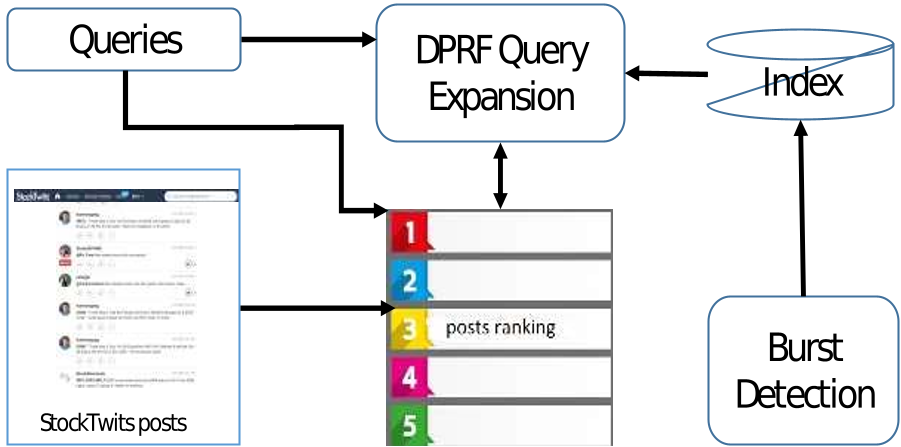 Figure 1: The architecture of the MVP retrieval system, showing the pipeline from query to burst-enhanced results.
Experiments & Real-World Impact
The researchers evaluated the model against a dataset from StockTwits (2015-2016). They used Precision@10 (P@10)—measuring how many of the top 10 results were actually valuable to a human investor.
| Method | Precision @ 10 |
|---|---|
| Apache Lucene | 0.31 |
| KL-Divergence | 0.36 |
| Rocchio (Traditional PRF) | 0.43 |
| DPRF (Proposed) | 0.52 |
DPRF outperformed the baseline Lucene by a massive margin, proving that Time + Context is the winning formula for social media IR.
Case Study: The Tesla Surge
When searching for "Tesla stock," the model identified a major burst on March 31, 2016—the day Model 3 reservations opened. It automatically expanded the query to include terms like "share," "model," "electrical," and "vehicle." This allowed the system to find valuable posts that never even mentioned the word "Tesla," but were clearly about the company's biggest event of the year.
Critical Insight & Conclusion
The genius of this work lies in its Inductive Bias: the realization that in finance, relevance is a function of time. By mathematically modeling the "burstiness" of human conversation, the authors bridge the gap between what a user types (a ticker symbol) and what they want (insights into an ongoing event).
While the paper focuses on text, the future of this tech likely lies in combining these temporal language models with real-time price volatility data to create a truly predictive investment assistant.
Takeaway: If you are building search for dynamic environments (news, stocks, sports), stop treating your corpus as a static pile of documents. Embrace the "burst."