
MySnapFoodLog: Bridging the Cultural Gap in AI-Driven Dietary Research
MySnapFoodLog: Culturally Sensitive Food Photo-Logging App for Dietary Biculturalism Studies
This paper introduces MySnapFoodLog, a cross-platform mobile application (Flutter) designed to study "dietary biculturalism" among Filipino immigrants. Utilizing a custom Single Shot Detector (SSD) model trained on a novel Filipino food dataset, the app aims to automate food logging and provide culturally sensitive dietary insights for cardiovascular health research.
TL;DR
Immants to the U.S. often undergo "dietary biculturalism," mixing traditional ethnic foods with Western diets—a shift linked to increased chronic disease risk. MySnapFoodLog is a new mobile platform that uses custom AI to recognize Filipino foods, filling a critical gap where Western-centric apps fail. While achieving 79.0 mAP on validation sets, its journey into a real-world pilot study highlights a massive "reality gap" in food AI.
The Problem: The "Western Bias" in Digital Health
Standard health apps are excellent at identifying a hamburger or a Caesar salad, but they are practically "culturally blind" to ethnic staples like Buko Pandan or Adobo.
For researchers studying the Filipino American community—the second-largest Asian subgroup in the US—this lack of cultural sensitivity is a barrier to data accuracy. Traditional food journaling is too tedious for long-term use, and existing AI labels like "dish" or "cuisine" are too generic for nutritional analysis. The authors argue that if we can't measure what people are actually eating, we can't address the disproportionately high rates of hypertension and cardiovascular disease in these populations.
Methodology: Building a Culturally Sensitive Brain
The researchers moved beyond the generic Google ML Kit by building a custom detection pipeline.
1. The Filipino Food Dataset
Since no such dataset existed, the team scraped 2,887 images from Yelp, Instagram, and restaurant websites, focusing on popular foods in the Las Vegas area. This resulted in 56 specific food classes.
2. Architecture & Mobile Inference
The team evaluated three main architectures from the TensorFlow Object Detection API:
- Faster R-CNN (Inception-v2)
- SSD (ResNet-50)
- SSD (MobileNet-v1)
To keep the app lightweight and avoid constant updates, they hosted the models on Firebase ML Kit. To fit the 40MB limit, they used Post-Training Quantization, converting floating-point weights to integers, which slashed model size by up to 85% with minimal accuracy loss.
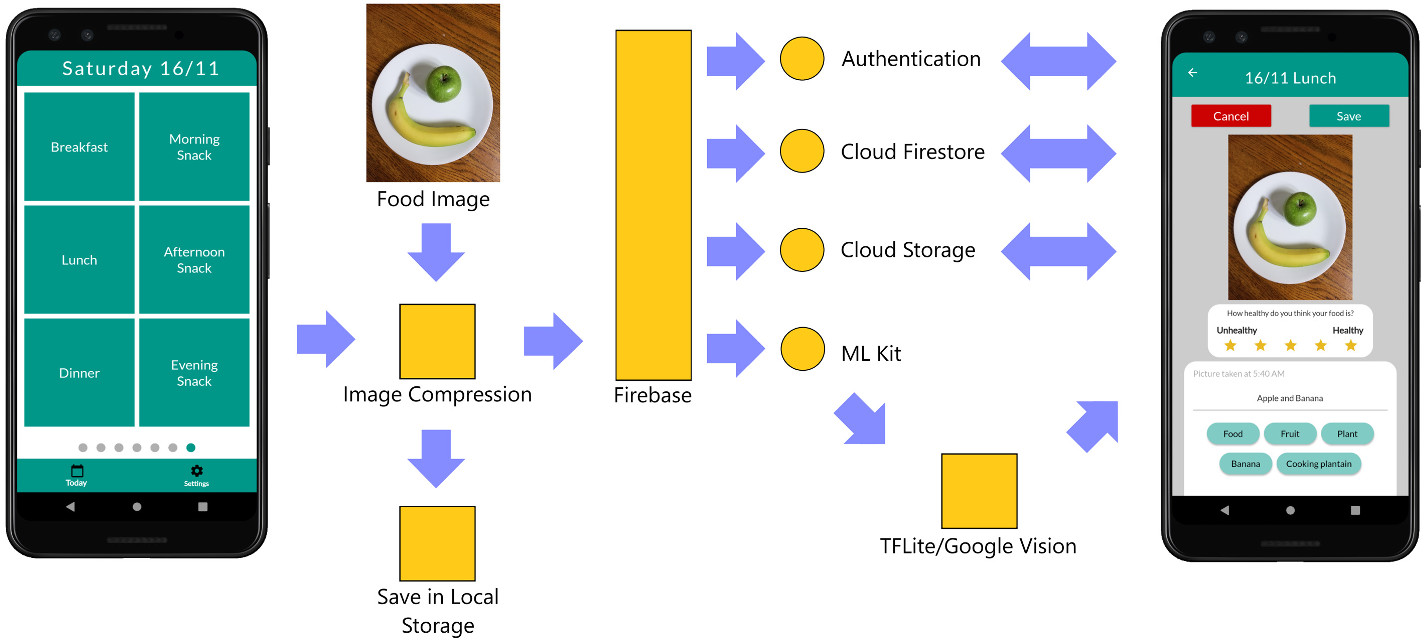 Figure 1: The MySnapFoodLog system architecture, showcasing the integration between the Flutter frontend and Firebase/AI backend.
Experimental Results: The Validation Triumph vs. Real-World Fatigue
In the controlled validation environment (90/10 split), the SSD ResNet-50 model performed admirably, reaching 79.0 mAP.
| Model | mAP (50:95) |
|---|---|
| SSD ResNet-50 (Full Retrain) | 79.0 |
| SSD MobileNet-v1 (Fine-Tune) | 75.2 |
| Faster R-CNN (Inception v2) | 46.6 |
However, when the app was deployed in a 50-participant pilot study, the performance plummeted to 32.2 mAP.
The "In the Wild" Challenge
Why the drop?
- Visual Noise: Web images are "professionally" plated. Pilot images featured food in plastic containers, blurry lighting, or multiple dishes on one table.
- Label Mismatch: There was only a 22% overlap between what the web dataset expected (restaurant food) and what people actually ate at home.
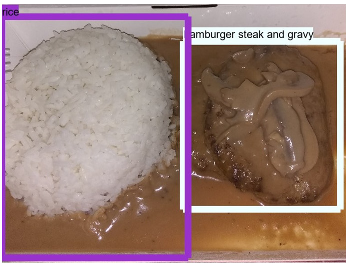 Figure 2: Examples of low-quality, real-world pilot images (blurry, complex scenes) that confused the detector.
Critical Analysis & Conclusion
Takeaway
MySnapFoodLog proves that cross-platform frameworks like Flutter combined with cloud-hosted ML can create powerful research tools. However, the study serves as a cautionary tale for AI practitioners: Web-scraped data (the "Social Media" view of food) is an insufficient proxy for real-life consumption.
Limitations & Future Work
The app currently ignores Western foods that are part of the bicultural diet. Future iterations need to merge the Filipino-specific models with broader datasets and utilize the "messy" pilot data to retrain models, making them robust to standard "home-cooked" visual artifacts like Tupperware and steam-blurred lenses.
Ultimately, this work is a vital step toward inclusive health tech, ensuring that the benefits of AI-assisted nutrition are available to all, regardless of their cultural palate.