
Deciphering the Digital Runway: How NLP Reveals the Competitive Logic of High-End Fashion
Analyzing social media marketing in the high-end fashion industry using Named Entity Recognition
This paper utilizes Named Entity Recognition (NER) and Natural Language Processing (NLP) to analyze the social media marketing strategies of 76 high-end fashion brands. By categorizing Instagram content into "informative" versus "brand-building" advertising, the researchers uncover distinct behavioral patterns governed by brand leadership and competitive similarity.
TL;DR
Is a brand's Instagram post about a "lifestyle" or a "leather tote"? This research uses Named Entity Recognition (NER) to decode the social media strategies of 76 luxury brands. It finds that while "Follower" brands blast more product info as competition heats up, "Leader" brands follow a complex U-shaped strategy, shifting between abstract prestige and concrete product information depending on how much their rivals are mimicking them.
The "Informative" vs. "Brand-Building" Paradox
In high-end fashion, the value of a product isn't just in the silk or the cut; it's in the aura. Marketing literature distinguishes between:
- Informative Advertising: Facts about the product (e.g., "100% cashmere", "A-line silhouette").
- Brand-Building Advertising: Creating an emotional or status-based connection (e.g., "The spirit of summer").
The researchers noticed that while Instagram is a visual medium, the textual metadata (captions) reflects a brand's strategic response to competitive pressure. But how do you measure "competition" in an industry defined by subjective "vibes"?
Methodology: Engineering a Fashion Sense for AI
The authors bridged the gap between economics and NLP by building a specialized fashion lexicon.
1. The Fashion Symbol Glossary
They created a glossary of 2,925 fashion-related words categorized into 12 dimensions (Material, Cut, Decoration, etc.). This allows the NER model to identify "Fashion Symbols" within text.
2. Defining Leadership and Similarity
- Leadership: By scanning 15 years of Vogue runway reviews, they identified which brands were the first to mention specific symbols that later became popular.
- Similarity: By comparing symbols in online retail listings (e.g., Saks, Bergdorf Goodman), they quantified how "close" one brand's product line is to another.
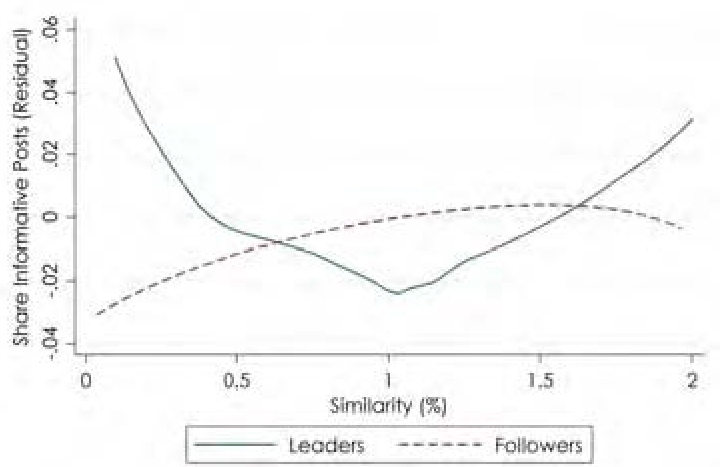 Table 1: The multi-modal data approach integrating Vogue reviews, retail listings, and Instagram posts.
The Core Finding: The Leader's U-Curve
The most striking result of the study is the divergence in how brands react when the market starts to look like them.
- Follower Brands: As their products become more similar to others, they increase their Informative Posts. Because they lack the "aura" of a leader, they must compete on the tangible merits of the product—effectively saying, "We have the same trendy features as the big names."
- Leader Brands: They exhibit a U-shaped response.
- When similarity is low, they focus on the brand image.
- When imitation starts, they double down on brand-building to distinguish themselves as the "original."
- However, when similarity becomes extreme, they pivot back to informative posts to emphasize the technical superiority or specific details of their designs that imitators can't match.
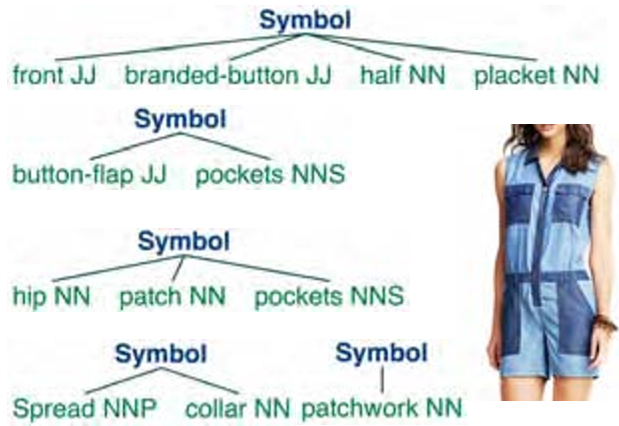 Fig 2: Visualization of the content strategy shift. Leaders (curved) vs. Followers (linear).
Critical Insight: Why Does This Matter?
This paper moves beyond the "what" of social media and dives into the "why" of industrial strategy. It proves that Competitive Pressure is a primary driver of content creation.
Strategic Implications:
- For Brands: If you are an industry innovator, your social media should shift toward "brand-building" to insulate yourself from imitators.
- For Analysts: NLP provides a powerful tool to "quantify the qualitative." We can now measure brand identity through the footprint of the symbols they deploy.
Future Outlook
While this study focuses on text, the authors acknowledge that the next frontier is Multimodal Analysis. Combining these NER insights with Image Recognition (e.g., using CLIP or ResNet to identify patterns in photos) would create an even more robust "Fashion Intelligence" system.
Summary of Value
- Methodological: A new way to measure competitive pressure via product listings.
- Sector-Specific: The first large-scale quantitative study of luxury brand behavior on Instagram.
- Theoretical: Validation of the "Marketing Life Cycle" theory in a 21st-century social media context.