
NDRA: Automating Disaster Resilience and Defeating Sybil Attacks in Social Networks
Natural Disaster Resilience Approach (NDRA) to Online Social Networks
The Natural Disaster Resilience Approach (NDRA) is a three-tiered framework designed to automate and accelerate disaster recovery using images from Online Social Networks (OSNs). It integrates Sybil (fake) user prevention, a specialized TensorFlow-based 'D'-attributed image classifier, and the Advanced Sybil Node Prediction Algorithm (ASYNPA) to achieve a 99.84% accuracy in identifying malicious nodes.
Executive Summary
TL;DR: The Natural Disaster Resilience Approach (NDRA) is a multi-layered framework that automates the prioritization of disaster help requests by verifying both the user's identity and the authenticity of the visual evidence they provide. By combining biometric identity link-ups, deep learning image classification, and a novel clustering-based trust algorithm (ASYNPA), the system achieves near-perfect Sybil detection (99.84%) and drastically reduces false alarms.
Market Positioning: This work moves beyond traditional graph-based Sybil detection by introducing content-aware inspection and identity-bound verification, shifting disaster management from a social-dependent process to a prioritized, automated government-response pipeline.
The Core Problem: Speed vs. Authenticity
When natural disasters like the 2016 Chennai floods occurs, Online Social Networks (OSNs) become vital communication hubs. However, two critical bottlenecks exist:
- Visibility: Help requests are often visible only to a user's local network (friends), who may themselves be incapacitated.
- Sybil Pollution: Malicious users (Sybils) can flood the system with fake images or help requests to divert resources, spread misinformation, or degrade the network's performance.
Prior SOTA methods like VoteTrust rely on the sociological assumption that Sybils have fewer links to honest users. However, "vote collusion"—where Sybils provide high ratings for each other—easily bypasses these defenses, leading to high False Positive (FP) rates.
Methodology: The Three-Tiered NDRA Framework
The authors propose a "Defense-in-Depth" strategy across three distinct tiers:
Tier-1: Identity Prerequisite Engine
To prevent the mass creation of fake profiles (the "Dark of SN"), NDRA proposes a mandatory link to a country-specific Unique Identity (UIDEN), such as India's Aadhar. This ensures a 1:1 ratio between physical citizens and digital profiles, immediately raising the "cost of entry" for attackers.
Tier-2: 'D'-Attributed Image Classifier
Not all disaster posts are real. NDRA utilizes Inception-v3, a deep Convolutional Neural Network (CNN), to verify images.
- Mechanism: Users must enable a 'D' (Disaster) checkbox.
- Verification: The image is passed through a TensorFlow-trained classifier specialized in disaster visual features (flood, tsunami, fire). Irrelevant or spam images are discarded before they ever reach emergency responders.
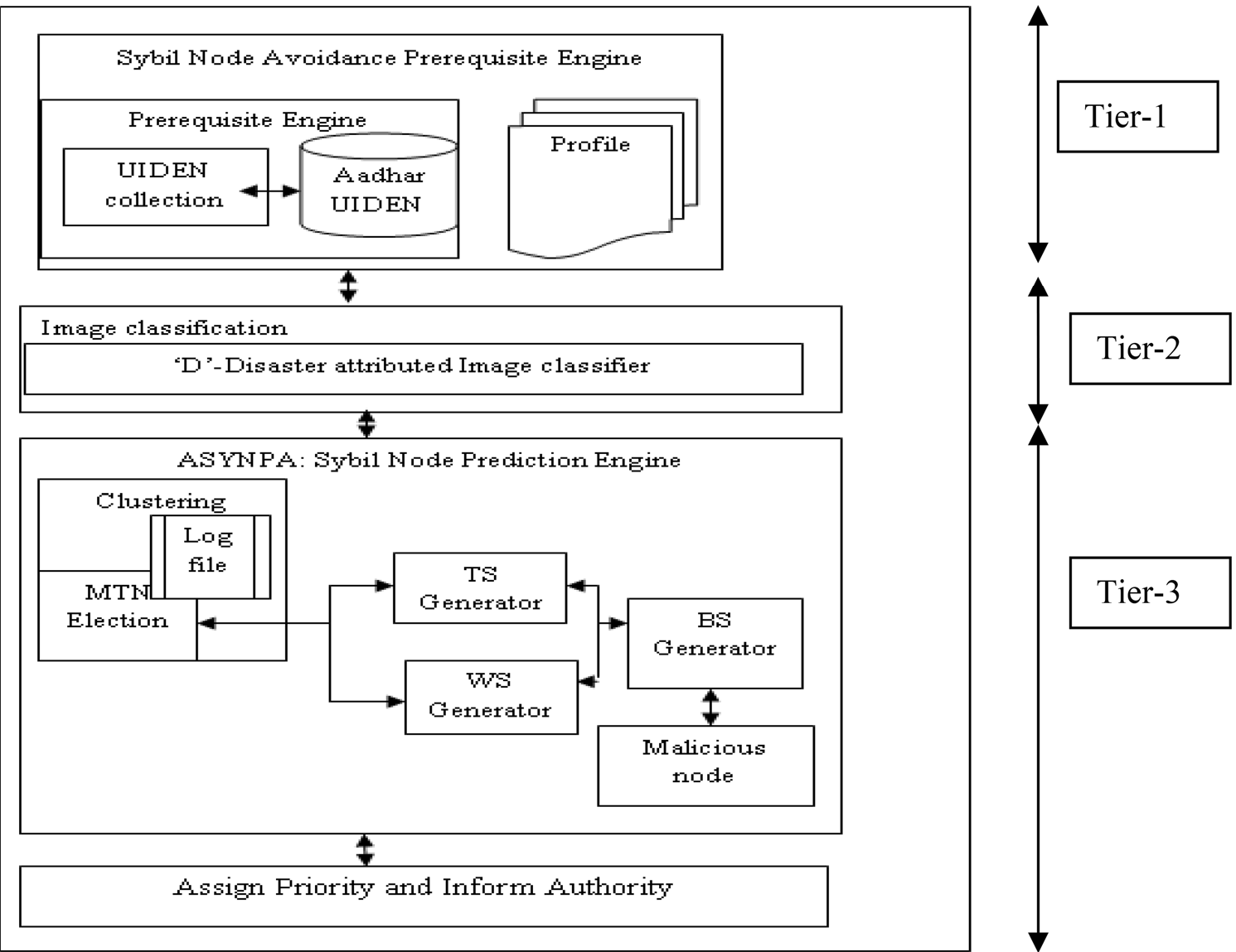 Figure 1: The Three-Tier Architecture of NDRA including the Image Classifier and ASYNPA phase.
Tier-3: ASYNPA (Advanced Sybil Node Prediction Algorithm)
This is the algorithmic heart of the system. Unlike previous methods, ASYNPA uses a tiered voting structure:
- MTN Election: Each cluster elects a Most Trusted Node (MTN) based on high in-degree and low out-degree (indicating genuine popularity without aggressive "friending" behavior).
- Refined Weighting: Only the MTN assigns initial Trust Scores. Then, only users with high trust scores are allowed to vote on others, effectively neutralizing Sybil voting blocs.
- Belief Score (BS): A final BS determines the priority in the First Come First Serve (FCFS) queue for the National Disaster Management Authority (NDMA).
Experimental Results & Performance
The system was tested on the Advogato dataset (6,541 nodes, 51,127 edges).
- Sybil Detection Accuracy: NDRA reached 99.84%, outperforming VoteTrust (96.35%).
- False Positive Reduction: The manual inspection of 1,000 users showed a complaint rate of only 0.0023%, significantly lower than previous benchmarks.
- Precision & Recall: Across varying user counts (100 to 400), NDRA consistently maintained precision near 0.9991, while competitors like SyMon and SybilShield showed significant volatility.
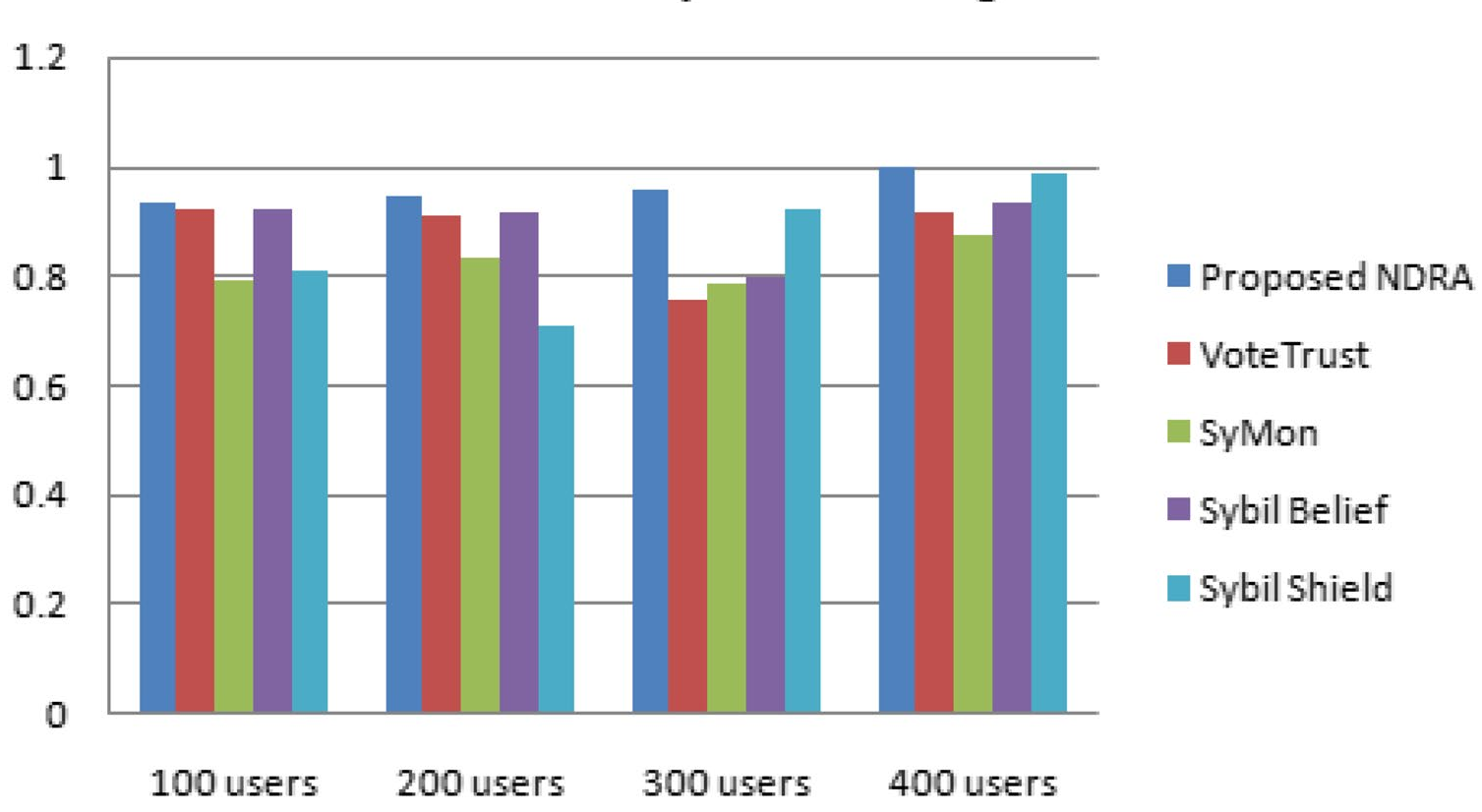 Figure 2: Precision comparison showing NDRA's stability compared to Sybil Belief and Sybil Shield.
Critical Analysis & Future Outlook
Takeaways: NDRA proves that Sybil detection is no longer just a graph-theory problem; it is a multi-modal problem. By combining identity (Tier-1), content (Tier-2), and behavior (Tier-3), we can create resilient systems for high-stakes environments.
Limitations:
- Privacy Concerns: The requirement for Aadhar-level identity in OSNs raises significant surveillance and privacy questions.
- Dataset Realism: While Advogato is a standard benchmark, real-time adversarial attacks might evolve to bypass CNN-based image filters (e.g., via adversarial examples).
Future Work: Integrating "Right of Way" pedestrian modeling and GPS-based crowd tracking could further enhance the system's ability to manage "crowd disasters" during mass pilgrimages or events.