
NatureNet: Redefining Citizen Science Through Crowdsourced Interaction Design
NatureNet: An Interaction Design with a Focus on Crowdsourcing for Community
NatureNet is a multi-platform citizen science framework designed to foster informal learning and environmental sustainability through a dual-crowdsourcing model. Unlike traditional platforms, it integrates both scientific data collection (biodiversity observations) and "Crowdsourced Design," where community members actively shape the software's features and UI through iterative feedback.
TL;DR
NatureNet is more than just a biodiversity app; it is a socio-technical experiment that transforms citizens from "data sensors" into "co-designers." By integrating a feedback loop where users suggest and vote on technical features, the project creates a dynamic platform that evolves with its community’s needs in environmental sustainability.
The Gap: Why Data Collection Isn't Enough
Most citizen science projects (e.g., eBird) operate on a contributory model: scientists define the task, and the crowd provides the data. While effective for scaling observations, this model often suffers from low community retention and a "black box" design process where users have no say in how the tools they use are built.
NatureNet's core motivation is to solve the User-Designer Disconnect. If a park visitor in North Carolina has different needs than one in Colorado, a static, one-size-fits-all application fails to foster a deep sense of local community.
Methodology: The Two Pillars of NatureNet
The researchers leverage a dual-crowdsourcing architecture based on Vuković’s taxonomy of Crowdsourced Function and Mode.
1. Crowdsourced Function (The 'What')
NatureNet supports two primary functions:
- Scientific Data Gathering: Traditional photo vouchers and species identification.
- Design Participation: A unique "Design Ideas" section where users propose new features or modifications.
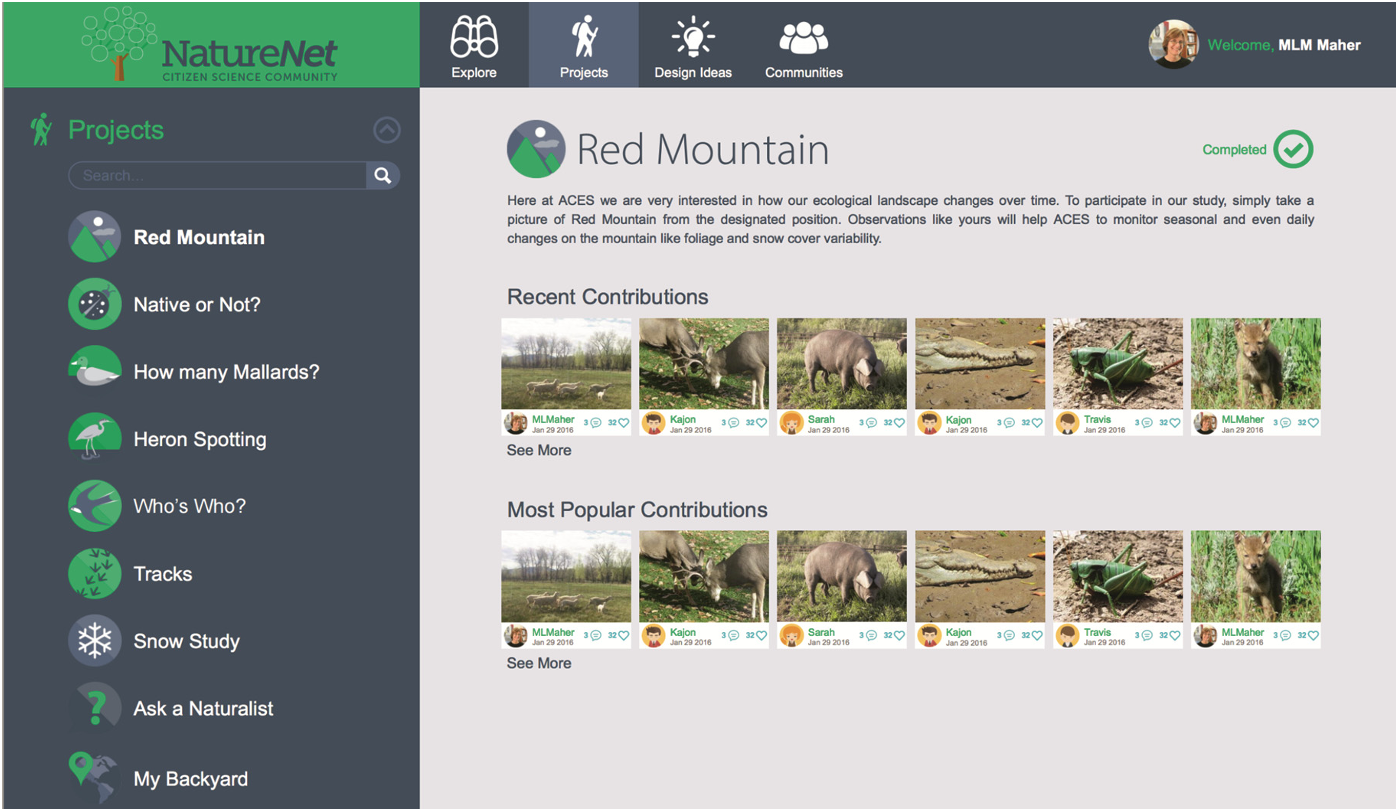 Figure 1: The NatureNet Web Interface showing the synthesis of project contributions and community interaction.
2. Crowdsourced Mode (The 'How')
This refers to how the community evaluates these contributions. Through voting, liking, and commenting, the crowd acts as a filter. High-resonance ideas (the "Crowdsourced Mode") signal to the design team which features are most desired, allowing the system to be "dynamic and open."
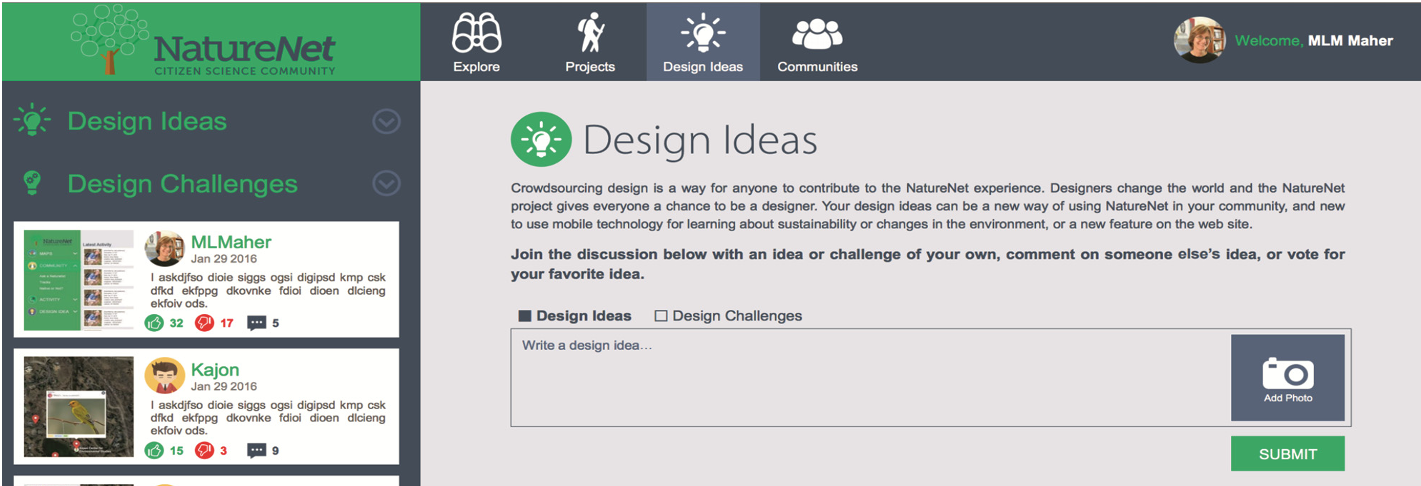 Figure 2: The "Design Ideas" section allows non-designers to upload photos and descriptions to express their ideas.
Experiments & Community Impact
NatureNet was deployed in three diverse ecological settings:
- ACES: Aspen Center for Environmental Studies (Colorado).
- AWS: Anacostia Watershed (Maryland).
- Reedy Creek: Park visitors (North Carolina).
By analyzing the interaction data, the authors found that the Interactive Map (Fig. 2 in the paper) served as a vital motivator, making global environmental issues feel "perceptible and local."
Quantitative Insights:
- Cohesion: Engagement was higher when users felt they had "a say" in the system's design.
- Knowledge Transfer: Naturalists used the "likes" on observations to gauge the crowd's understanding, allowing them to tailor educational content in real-time.
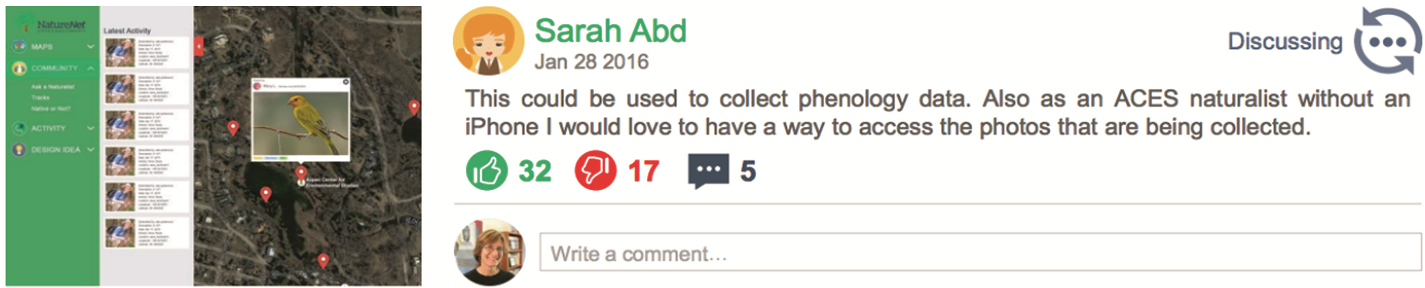 Figure 3: Multi-user tabletop displays in parks facilitate in-person community discussion of crowdsourced data.
Critical Analysis: The Future of Participatory Science
NatureNet proves that Inductive Bias in design—assuming we know what the user wants—can be mitigated by delegating design authority to the crowd.
Limitations & Future Work: While the paper highlights the benefits of "Crowdsourced Design," it notes that synthesizing these ideas still requires a professional design team at the end of the loop. A future challenge is automating the "Mode" of evaluation—perhaps using AI to cluster similar design ideas or predict the technical feasibility of crowd-suggested features.
Conclusion
NatureNet marks a shift from Citizen Science as a Labor Source to Citizen Science as a Community Democracy. By making the platform itself a subject of the crowd's creativity, the project ensures its technological infrastructure is as sustainable as the environments it seeks to protect.