
NCCU Trace: Bridging the Gap Between Synthetic Mobility and Social Reality in DTNs
6787_NCCU Trace social-network-aware mobility trace.
The paper introduces "NCCU Trace," a real-world mobility dataset and model derived from 115 college students via a custom Android application. It proposes an interest-based message dissemination method for Delay-Tolerant Networks (DTNs) that leverages social-network awareness to improve routing performance over traditional synthetic models.
TL;DR
Researchers from National Chengchi University have developed NCCU Trace, a high-fidelity mobility model based on real student data. By moving away from mathematical abstractions like "Random Waypoint" and focusing on social-aware behaviors, they've demonstrated that message dissemination in Delay-Tolerant Networks (DTNs) is heavily influenced by social schedules, leading to more efficient and realistic routing protocols.
Background: The Unreality of "Random" Movement
In the world of Delay-Tolerant Networking (DTN), nodes move, store data, and forward it only when they come into contact. For years, researchers have relied on synthetic models like Random Waypoint (RWP). The problem? Humans aren't particles in a gas; we don't move randomly. We go to class, hang out with friends in specific buildings, and stay home on Saturdays.
The authors argue that routing protocols optimized for random movement perform poorly in the real world because they ignore the social manifold—the underlying structure of human relationships and routines.
Methodology: Collecting the "NCCU Trace"
To capture human movement accurately, the team deployed a custom Android application to 115 participants across the NCCU campus. Unlike simple GPS trackers, this app was "behavior-aware," collecting:
- GPS/Location: Mapping physical movement across the campus.
- Proximity Sensing: Using Bluetooth and Wi-Fi scans to identify who is near whom (even when indoors).
- App Usage Behavior: Tracking interest patterns to facilitate "Interest-based" message dissemination.
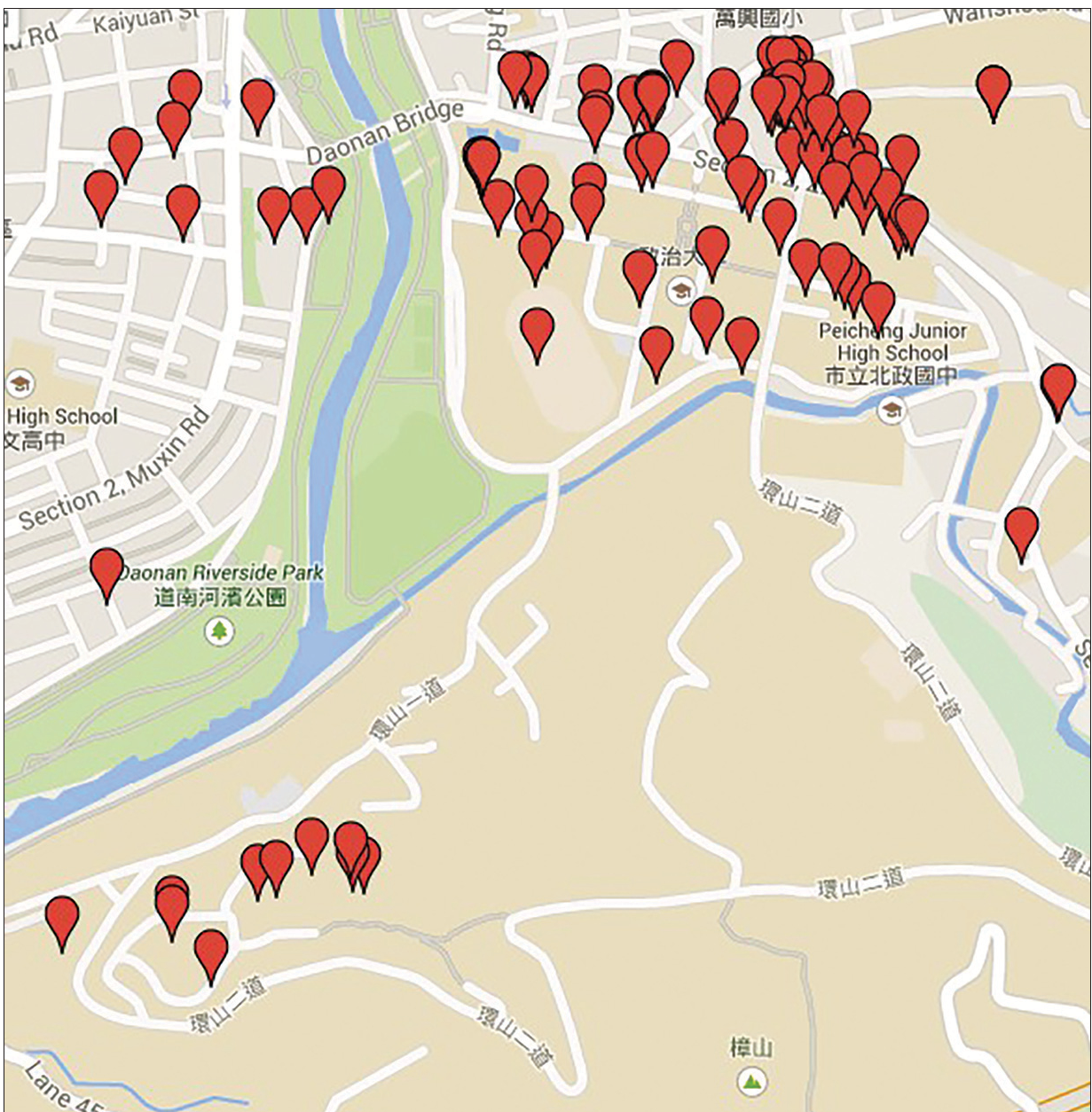 Figure 1: Distribution of GPS data points across the campus area, highlighting the non-random, cluster-based nature of human mobility.
The collected data was then formatted for the ONE (Opportunistic Network Environment) Simulator, providing a benchmark grounded in reality rather than probability.
Social-Aware Routing: The Proposed Approach
The authors proposed an Interest-based Message Dissemination method. Instead of flooding the network (Epidemic) or guessing probabilities (PRoPHET), their method uses:
- Direct Contact: Forwarding data if the encountered node shares an explicit interest.
- Indirect Contact: Using social relay nodes—people who might not be interested themselves but frequent the same social circles as the target audience.
Experimental Insights: Reality Check
The simulation results revealed striking differences between the NCCU Trace and synthetic models.
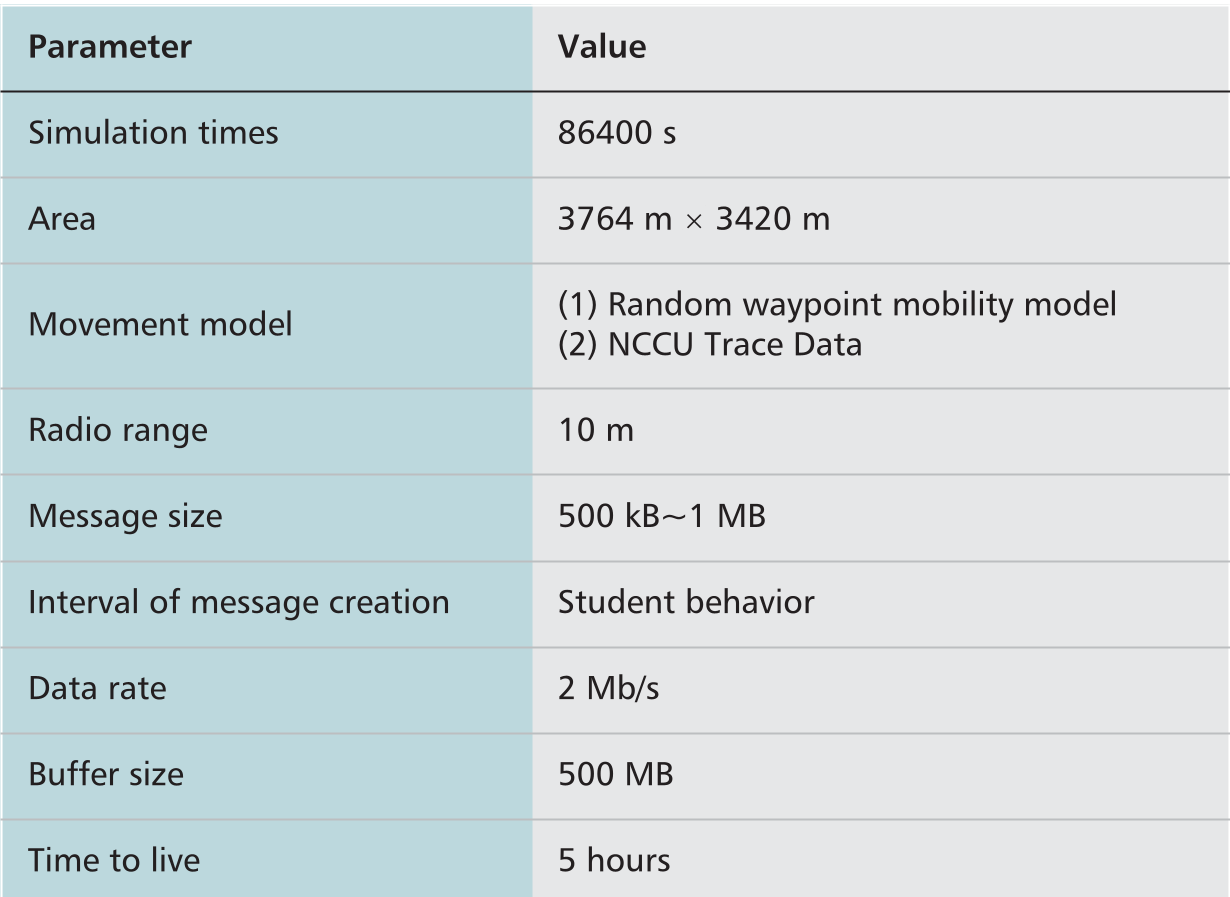
Key Findings:
- The Saturday Slump: On the 4th and 11th days (Saturdays), the delivery success ratio plummeted. Why? Because students don't go to campus on weekends. A synthetic model would never have caught this, continuing to move "nodes" with mathematical indifference.
- Efficiency Gains: While the Epidemic protocol (flooding) achieved the highest delivery ratio, it did so at the cost of massive network overhead. The proposed social-aware method maintained high delivery with a fraction of the overhead.
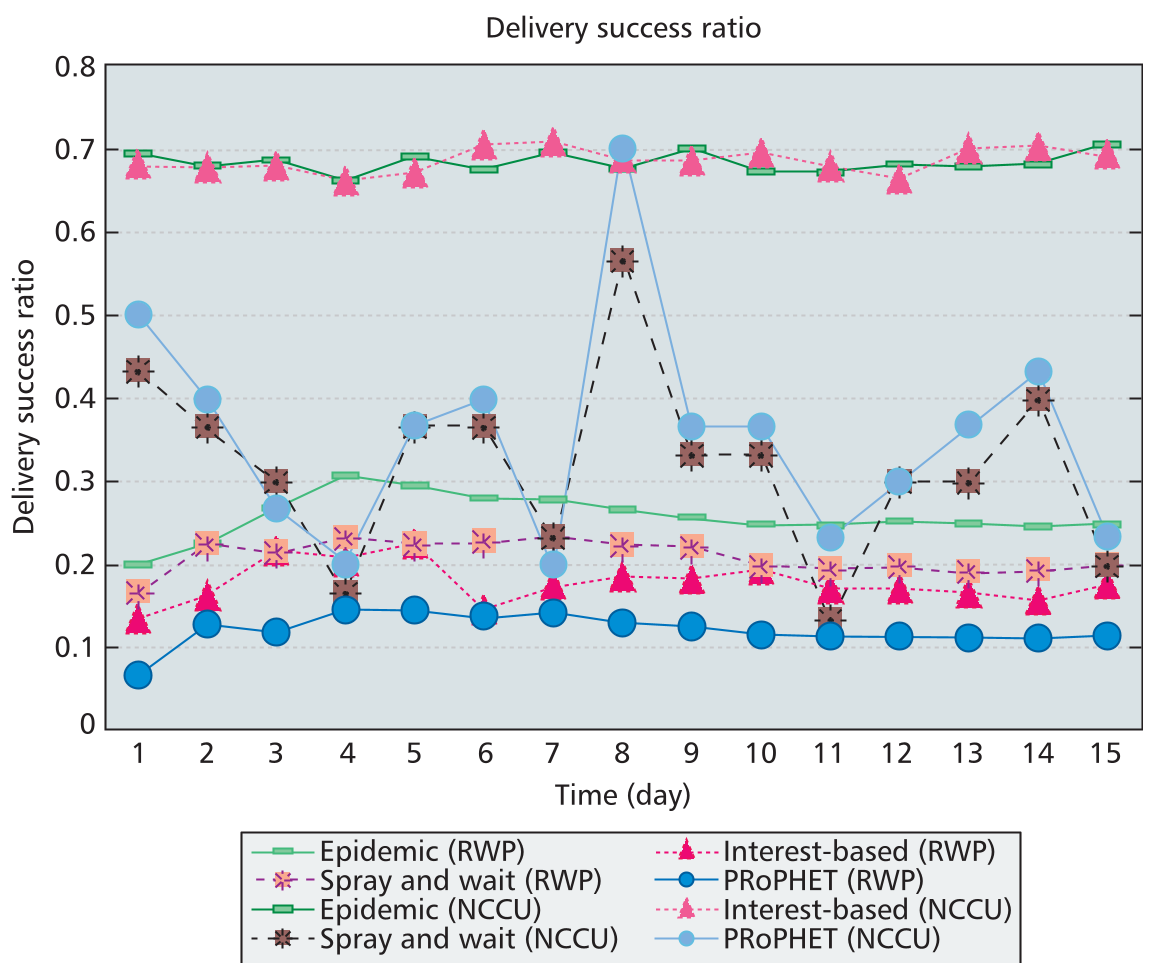 Figure 2: The trade-off between delivery success and overhead. Social-aware methods occupy the "sweet spot" of efficiency.
Conclusion and Future Outlook
The NCCU Trace project demonstrates that the future of DTN routing lies in Context-Awareness. By understanding the social fabric of the environment—such as building attributes and student interests—we can design networks that are resilient even when connectivity is intermittent.
The authors plan to extend this by creating more realistic synthetic models that mimic the patterns found in their trace data, potentially providing the research community with better mathematical tools that finally respect human social logic.
Final Takeaway
If you are building a network for humans, stop assuming they are random. Your routing protocol should be as social as the people carrying the devices.