
Turning Chaos into Context: Near Real-Time Crisis Analytics via Geo-Temporal Networks
Near real time assessment of social media using geo-temporal network analytics
This paper presents a tool-suite and methodology for the near real-time assessment of socio-political crises using geo-temporal network analytics. By integrating the TweetTracker platform with the ORA dynamic network analysis tool, the researchers demonstrate a rapid ethnographic approach to analyze the 2012 Benghazi consulate attack as it unfolded.
TL;DR
In the eye of a political storm or a natural disaster, information is abundant but insight is rare. This paper details a high-speed ethnographic method to analyze crises (like the 2012 Benghazi attack) by fusing Twitter streams and global news into multi-dimensional networks. Using a specialized toolset (TweetTracker and ORA), the researchers moved from raw data collection to actionable "who, what, and where" insights in under 24 hours.
Background: The Speed of Information vs. The Speed of Analysis
When a crisis strikes, the "cultural geography"—the socio-cultural landscape of a region—shifts instantly. Traditional media has a lag; social media has noise. The challenge for analysts is not getting data, but characterizing the landscape before the window for intervention closes. The authors position their work as a bridge between "Rapid Ethnography" and "Dynamic Network Analysis" (DNA).
The "Why": Beyond Simple Keyword Matching
Most social media monitoring tools simply count hashtags (e.g., #Libya). However, this work argues that counts are insufficient. To understand a crisis, you need to see:
- Inductive Bias of Nodes: Is a message coming from a news agency or a person on the street?
- Conceptual Complexity: How are topics (e.g., "protest," "embassy," "security") connecting over time?
- Geo-Spatial Traces: Where is the signal originating vs. where is it being amplified?
Methodology: The Interoperable Stack
The core of this research is a four-tier pipeline designed for interoperability:
- TweetTracker: Filters the Twitter API (keywords, bounding boxes, specific users).
- REA (Rapid Ethnographic Analyzer): Scrapes news articles (LexisNexis) and extracts entities.
- Tweet-to-ORA: The "translator" that formats raw social data into meta-networks.
- ORA: The heavy-lifting engine for graph analytics, visualizing how "Agents," "Knowledge," and "Locations" interact.
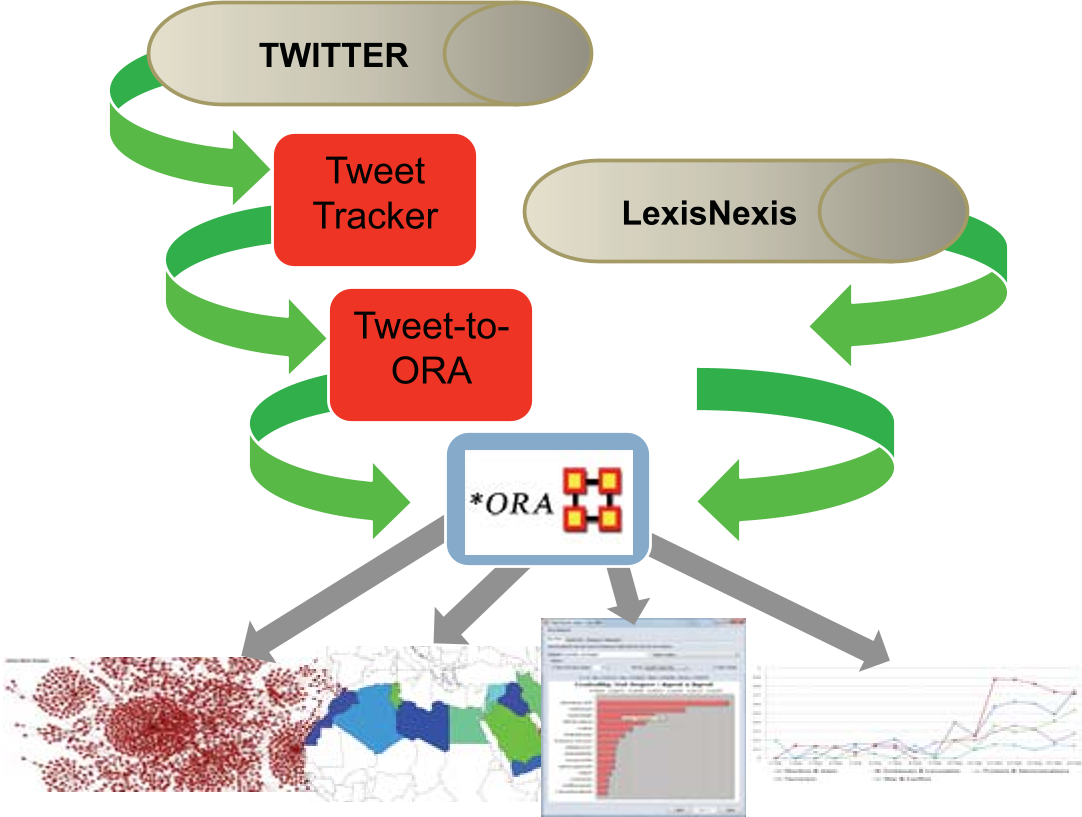 Fig 1: The interoperable collection-to-analysis pipeline developed by ASU and CMU.
Case Study: The 2012 Benghazi Attack
The researchers were actually conducting a training session for EUCOM when the attack occurred, allowing them to test the system in "wild" real-time conditions.
1. The Pulse of the Event
Data showed a massive spike on September 12th—70,630 tweets in a single day, or 23% of the total volume tracked over several months.
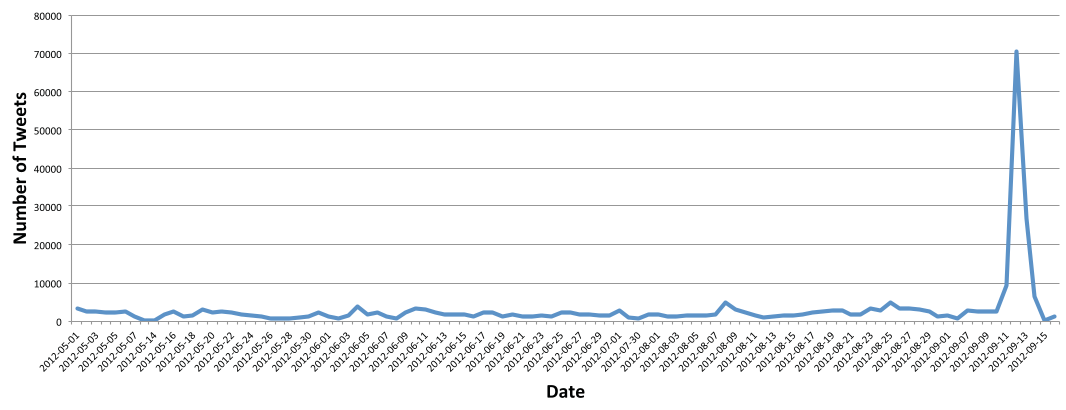 Fig 2: Volume of tweets mentioning Libya showing the distinct "Crisis Signature."
2. Debunking Myths via Topic Centrality
A key insight was the role of the film "Innocence of Muslims." While initial news reports suggested the film caused the riots, the Degree Centrality of the film in the hashtag networks remained low (less than 1.6%) during the initial attack. The network showed that comparisons to other revolutionary activity (e.g., "Cairo," "Syria") were much more central to the discourse than the film its producer.
3. The Power of the Retweet Network
By visualizing the retweet flow, ORA identified "Star" formations—central nodes that drove the narrative. Analysis showed that 4 of the top 6 influencers were news agencies, indicating that the Libya situation, unlike the Arab Spring, was a "broadcast-heavy" event rather than a purely grassroots digital uprising.
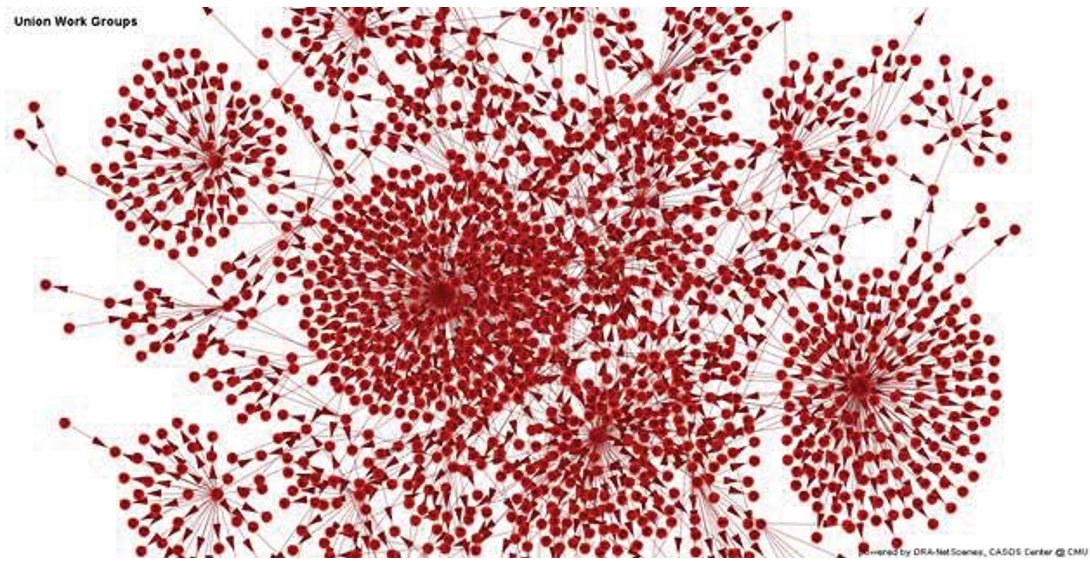 Fig 3: The information flow topology; massive "stars" represent the dominance of a few key broadcasters.
Critical Insight: News Agencies vs. The Public
A significant takeaway from this work is the disambiguation of bias. In the Libyan crisis, 45% of tweets were retweets, rising to 60% post-event. Most were driven by @CNNBrk or @BBCBreaking. This implies that "social media analysis" in modern crises is often an analysis of how news organizations define the narrative, rather than a direct window into the local population’s mind.
Conclusion and Future Outlook
This work demonstrates that while the tools are fast, the analyst's biggest bottleneck remains filter creation (finding the right keywords) and geo-location (since most tweets are not geo-tagged). Future research directions suggested by the authors include:
- Inference algorithms for location based on tweet content.
- Automated translation for multi-language crises.
- LLM-based support for automated filter generation.
The project proves that geo-temporal network analytics can effectively "lift elephants"—processing millions of data points to reveal the core skeletal structure of a crisis in near real-time.