
Decoding the Downvote: Why Some Stack Overflow Posts Fail While Others Thrive
Towards Understanding Negative Votes in a Question and Answer Social Network
The paper investigates the linguistic and temporal features that differentiate downvoted (negative score) posts from upvoted (positive score) ones on Stack Overflow. Using LIWC analysis and machine learning, the authors identify key features—such as post length, analytical tone, and creation time—that significantly influence community voting outcomes.
TL;DR
Why do some Stack Overflow questions get showered with reputation points while others sink into the "negative score" abyss? This study analyzes over 14,000 posts to reveal that the secret to a high-quality post lies in its timing (post at night!), its analytical depth, and its length. By leveraging the LIWC (Linguistic Inquiry Word Count) tool, the researchers built a model that predicts a post's success with 73% accuracy.
The "Negative Vote" Crisis
In the ecosystem of Community Question Answering (CQA), participation is the lifeblood. Stack Overflow uses a gamified system of upvotes and downvotes to filter quality. However, receiving consistent downvotes acts as a "participation killer," driving valuable users away from the platform.
The authors argue that technical accuracy isn't the only thing being voted on. There is a "hidden grammar" of successful posts involving sentiment, status, and logic that users subconsciously react to.
Methodology: The Linguistic Fingerprint
To understand this phenomenon, the researchers extracted two distinct groups:
- Negative Posts: Scores of -5 or less.
- Positive Posts: Scores of +20 or more.
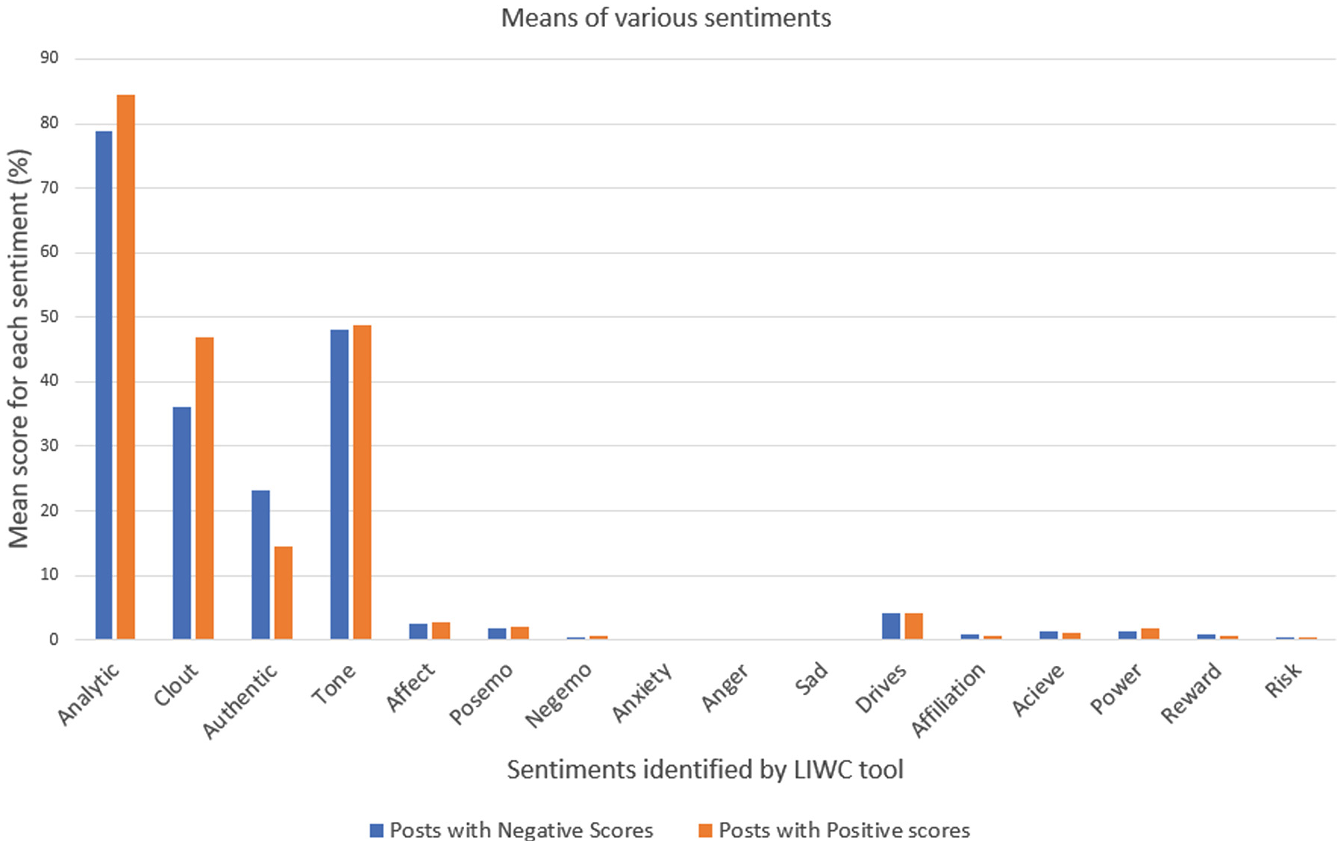
They analyzed these using LIWC, a tool that categorizes words into psychological dimensions:
- Analytic: Formal, logical, and hierarchical thinking.
- Clout: Confidence, leadership, and social status.
- Authentic: Honesty and personal vulnerability.
- Tone: Emotional valence (positive vs. negative).
Key Findings: The Anatomy of a Perfect Post
1. The "Night Owl" Advantage
Surprisingly, the time of day matters significantly. Posts created between 6:01 PM and 12:00 AM received significantly higher scores than those posted in the morning or afternoon. The researchers suggest that the "quality" or "responsiveness" of the community shifts during these hours.
2. Logic Over Emotion
The data shows a stark contrast in linguistic style:
- High Analytical Scores: Successful posts use formal logic and detailed explanations.
- High Clout: Top posts focus on the reader (using "we" and "you") rather than being self-focused (using "I").
- Low Authenticity: Interestingly, "authentic" posts (vulnerable/personal) tend to perform worse. Stack Overflow prefers clinical, technical detachment over personal storytelling.
3. Length Matters
There was a statistically significant difference in word count. High-scoring posts averaged 249 words, while downvoted posts hovered around 152 words. More "real estate" allows for better problem definition and code context.
Predictive Modeling
The authors tested six machine learning algorithms to see if "upvotability" could be predicted at the moment of creation.
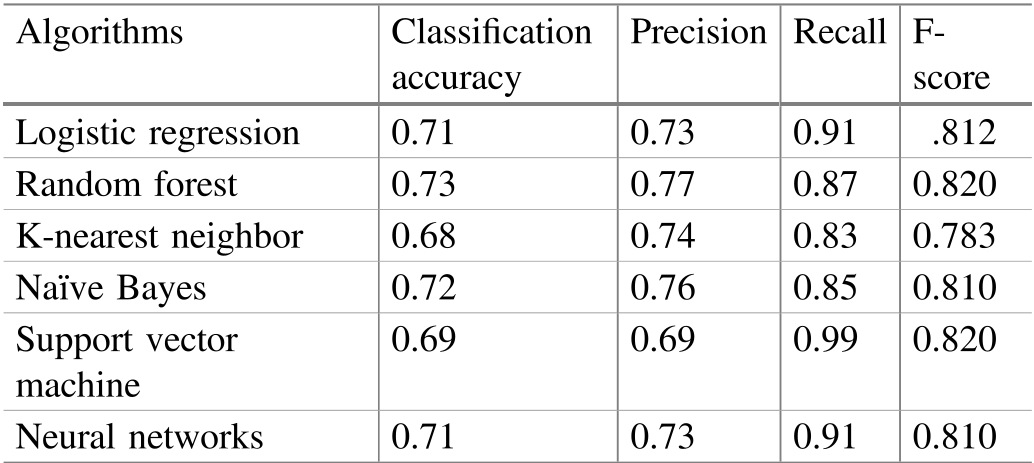
The Random Forest algorithm emerged as the winner. By looking at just the word count, sentiment, and timestamps, the model could correctly classify the post's fate with 73% accuracy.
Critical Insight & Conclusion
This research highlights that Stack Overflow is a knowledge-centric rather than a social-centric network. While Facebook rewards authenticity and emotion, Stack Overflow rewards the "Analytic" and "Clout" dimensions.
Takeaway for Developers: If you want to avoid the sting of a downvote:
- Be Detailed: Aim for over 200 words.
- Be Logical: Use formal technical language and avoid narrative "rambling."
- Be Outward-Oriented: Focus on the technical problem, not your personal struggle (keep authenticity low).
- Watch the Clock: If possible, wait until the evening to submit your query.
The study’s limitation lies in its sample size (14k posts out of millions), but it provides a robust framework for understanding the socio-linguistic biases of the world's largest developer community.