
Beyond Beacons: Architecting Friendship in the Social Internet of Things (SIoT)
Neighbor discovery algorithms for friendship establishment in the social Internet of Things
The paper introduces three novel Neighbor Discovery (ND) algorithms tailored for the Social Internet of Things (SIoT) to facilitate friendship establishment between objects. By leveraging the Lysis platform, these methods—Local Neighbor Discovery (LND), PubSub Alerting (PSAD), and Social Alerting (SAD)—allow devices to discover peers via radio scanning, localization features, or social graph gossiping without requiring direct device-to-device (D2D) communication.
TL;DR
In the Social Internet of Things (SIoT), objects aren't just tools; they are social entities. This paper addresses the critical bottleneck of Neighbor Discovery (ND)—how devices identify potential "friends" to improve network navigability. Unlike traditional methods that focus on radio-level handshakes, the authors propose three algorithms (LND, PSAD, and SAD) that utilize cloud avatars, infrastructure reference points, and social gossip to establish relationships without the need for direct device-to-device communication.
The Evolution of "Meeting": From Packets to Social Bonds
Traditional Neighbor Discovery is a battle of energy versus latency. In Wireless Sensor Networks (WSNs), nodes wake up briefly to ping neighbors and then sleep. However, the SIoT scenario is fundamentally different:
- Internet Ubiquity: Devices are already "online" via LTE/5G.
- Permission Barriers: Modern OS architectures (iOS/Android) often restrict low-level MAC scanning.
- Complex Rules: Establishing a "Co-Work" relationship requires tracking frequency and duration over time, a task too heavy for simple firmware.
The authors argue that we must move the "logic" of discovery to the cloud—specifically to Social Virtual Objects (SVOs)—while keeping the physical device as a simple sensor.
Methodology: Three Paths to Discovery
The researchers detail three distinct strategies to handle heterogeneous device capabilities.
1. Local Neighbor Discovery (LND)
This method turns existing infrastructure into "silent matchmakers." Instead of Obj1 and Obj2 talking to each other, they both observe a third-party Reference Point (RP), like a public WiFi Access Point. If both devices see the same RP-ID, they inform their SVOs in the cloud, which then calculate the potential for friendship.
2. Discovery by PubSub Alerting (PSAD)
For devices like iPhones that restrict scanning, the authors propose a cloud-centric approach. Devices report their GPS coordinates to a central repository. When two objects remain "stationary" in the same Place-ID, a Publish/Subscribe system (like MQTT) triggers a match.
3. Discovery by Social Alerting (SAD)
This is the most innovative of the three. It uses the existing social graph to find new neighbors. If Obj1 is in a cafe, it sends a "Social Alert" to its current friends. These friends forward the alert (gossip) to their friends. If Obj2 (a friend of a friend) is in the same cafe, the match is made via "word of mouth" through the virtual layer.
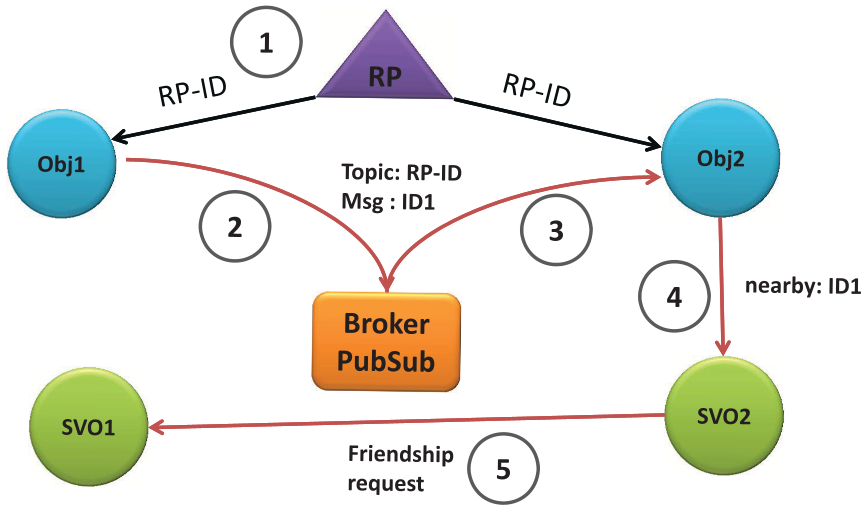 Figure 1: The LND process where physical sensing triggers cloud-based friendship requests.
Evaluating the "Hit Ratio"
The authors used the Small World In Motion (SWIM) model to simulate realistic human/object movement patterns.
Key findings from the experiments include:
- Infrastructure Density: In LND, the "Hit Ratio" (the percentage of real encounters successfully detected) improves significantly with the density of Access Points, reaching nearly 80% with 30 APs in a 17,000 sq.m area.
- The Power of 2-Hops: In Social Alerting (SAD), a 2-hop gossip (friends of friends) was found to be the "sweet spot"—providing high discovery rates without the massive message overhead of a 3-hop system.
- Sampling Rates: The
Ts(inter-scan time) is a critical tradeoff. A shorterTscatches more ephemeral meetings but consumes more battery.
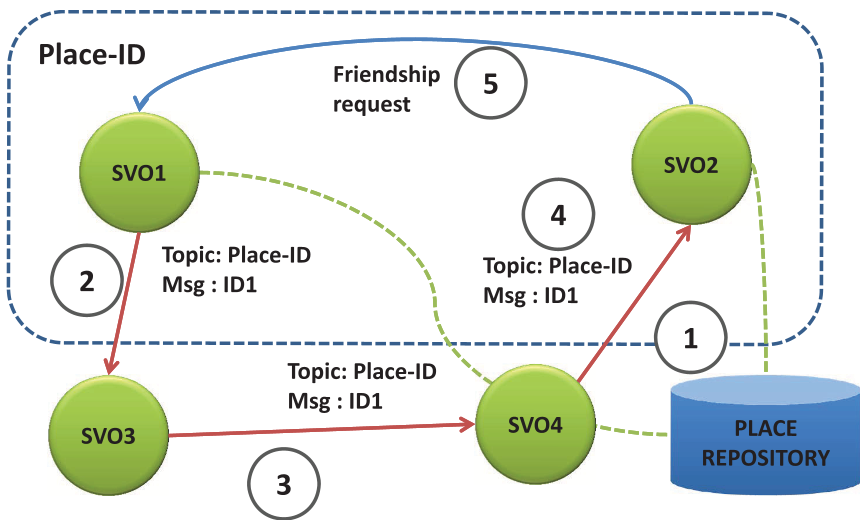 Figure 2: Impact of inter-scan time and Access Point density on the discovery Hit Ratio.
Critical Insight: The Shift to Virtual Discovery
The brilliance of this work lies in its pragmatism. By acknowledging that hardware scanning is often blocked or inconsistent across the IoT landscape, the authors leverage the Social Virtual Object (SVO) as an abstraction layer.
Takeaway for the Industry: As we move toward a "Metaverse of Things," the ability for a device to "know its neighbors" via the cloud, rather than via local radio interference, will be the standard for building trustworthy, navigable, and autonomous device communities.
Limitations and Future Work
While the SAD algorithm is decentralized, the reliance on a "Place Repository" for GPS-based methods introduces a potential single point of failure and privacy concerns. Future research needs to address how to perform these "proximity checks" without exposing exact GPS coordinates to a central broker, perhaps through Zero-Knowledge Proofs or localized Bloom filters.