
The Pulse of Connection: How Your Social Network and Fitbit Data Whisper Your Personality
Network analysis of the NetHealth data: exploring co-evolution of individuals’ social network positions and physical activities
The paper presents a longitudinal network analysis of the NetHealth dataset, tracking the co-evolution of 576 individuals' social network positions (via SMS logs) and physical activities (via Fitbit). By utilizing weekly snapshots over a year, the study identifies specific personality traits—such as introversion and anxiety—associated with users whose social centralities and health behaviors fluctuate or correlate over time.
TL;DR
Researchers from the University of Notre Dame have mapped a year in the life of nearly 600 students, correlating their "social heartbeat" (SMS interactions) with their physical movement (Fitbit steps). The study reveals that the way your social position changes—or stays the same—over time is intimately linked to whether you are an introvert or prone to anxiety.
Background: Beyond the Static Snapshot
Most social science treats your "place" in society as a fixed point. But life is dynamic. Students start college, form cliques, drift apart, and fluctuate in their fitness habits. Current SOTA research has struggled to bridge the gap between high-resolution social dynamics and longitudinal health behaviors. The NetHealth study moves beyond simple "friend-to-friend" influence to look at the "Manifold" of an individual's structural importance in the network.
The "Why": The Intuition of Co-Evolution
Why should a change in how many texts you send correlate with how many steps you take? For some, a vibrant social life might drive physical activity (going out, sports); for others, social withdrawal might mirror a decline in physical health. The authors hypothesized that co-evolution—the statistical dance between social centrality and activity—would be a unique signature of specific psychological traits.
Methodology: The 10-Dimensional Social Map
The researchers didn't just count friends. They used 10 different centrality measures (like Betweenness, Degree, and Graphlet-based measures) to capture the nuance of a student's social "vibe."
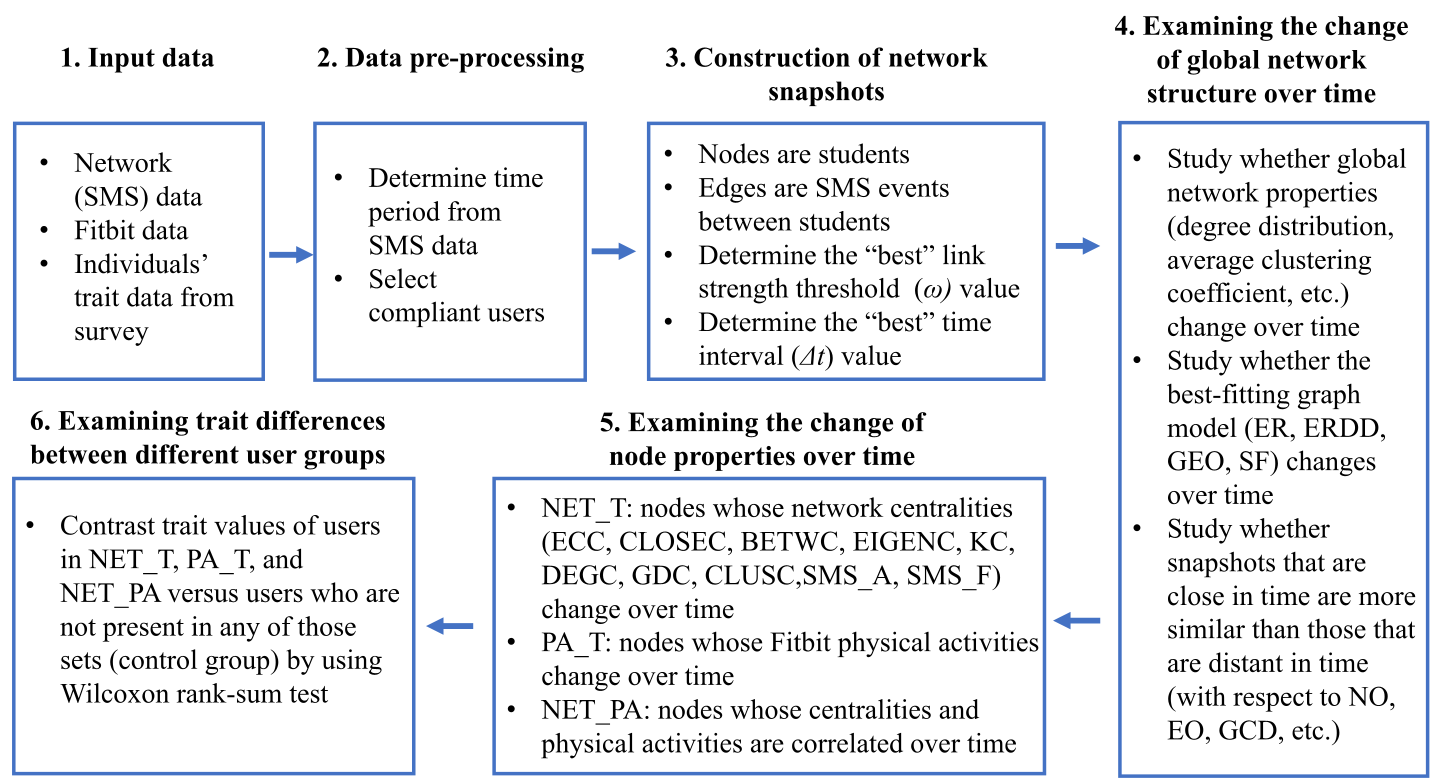 Figure 1: The framework integrating SMS logs, Fitbit data, and psychological surveys.
They constructed weekly snapshots, filtering for "compliant" users (those who actually wore their Fitbits). They then ran Spearman correlations to find three groups:
- NET_T: Those whose social position changed significantly over time.
- PA_T: Those whose step counts changed over time.
- NET_PA: The "Co-evolvers" where social and physical shifts happened in sync.
Experiments & Results: The Introvert’s Signature
The researchers found that while the "Global" network looked stable (fitting a Geometric Random Graph model), the "Local" experience for individuals was highly volatile.
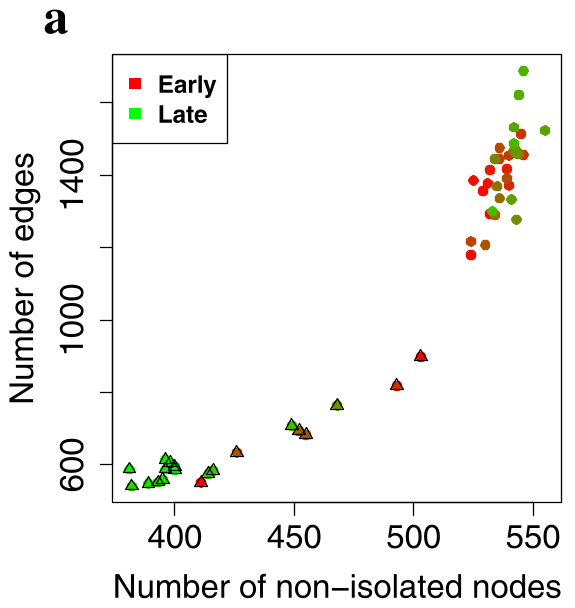 Figure 2: Global connectivity remains stable, while individual node positions fluctuate.
Key Findings:
- The Introvert Connection: Users whose social centralities and fitness levels both changed (Step-NET_T intersection) were significantly more introverted than the stable control group.
- The Anxiety Link: The most striking finding was in the "Core" group (those whose social life and fitness correlated). These individuals were not just introverted, but significantly more anxious.
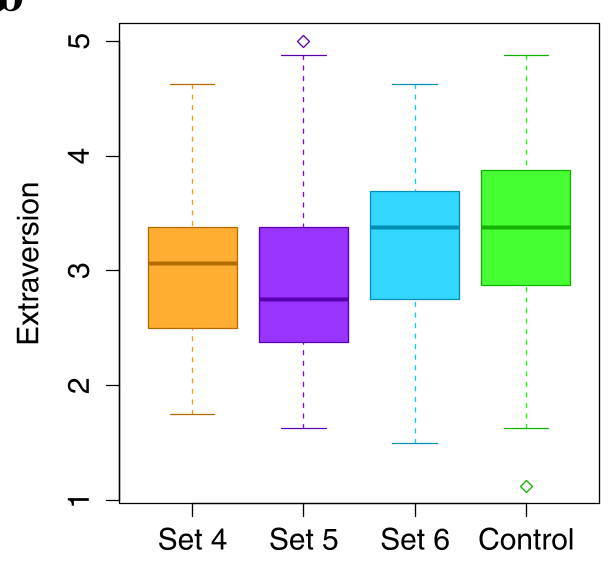 Figure 3: Statistically significant differences in extraversion and anxiety scores for the "co-evolving" group.
Critical Insight: Why Does This Matter?
This paper proves that network structural dynamics are a biological marker. The fact that anxiety can be detected not by what you say, but by the topological shift in your SMS network and your Fitbit steps, is a game-changer for digital health.
Limitations & Future Work
The study focuses on a specific demographic: college freshmen. Their social patterns are unique (the "transition to college" effect). Future work needs to explore if these signatures hold for older populations or across different communication mediums (e.g., Slack, WhatsApp).
Conclusion (The Takeaway)
Your metadata is a mirror. As we move toward a world of personalized medicine, the "Network Analysis of NetHealth" provides a blueprint for how universities and health providers might one day identify students in need of mental health support, simply by looking at the rhythm of their connections and their stride.