
Bifurcated vs. Unified: Decoding Digital Nationalism in Japan and South Korea
Network Analysis on Emotional Responses in International Disputes
This study utilizes network analysis and co-occurrence mapping to examine nationalism and public sentiment in Japan and South Korea during the 2019 trade dispute. Analyzing 23 million tweets, the authors identify structural differences in how both nations process international conflict through social media.
TL;DR
When international disputes erupt, does social media act as a mirror to domestic politics or a megaphone for national unity? By analyzing 23 million tweets during the 2019 Japan-Korea trade war, researchers from the University of Tokyo discovered a startling divergence: Japan's digital landscape split into warring political factions, while South Korea's formed a massive, unified front.
Background: The 2018-2019 Diplomatic Deep Freeze
The relationship between Japan and South Korea reached its post-WWII nadir in 2019. Triggered by historical grievances regarding wartime labor and subsequent export controls on semiconductor materials, the dispute provides a perfect "natural experiment" to see how nationalism propagates through digital networks.
Problem & Motivation: Beyond "Who Said What"
Most traditional sociology relies on surveys—asking people what they think. This paper argues that relationships between objects (who retweets whom) tell a more honest story. The researchers wanted to see if the "echo chamber" effect operates differently when a nation is under perceived external pressure.
Methodology: Mapping the Retweet Galaxy
The authors collected 17 million Japanese and 4.8 million Korean tweets using keywords like 'Abe', 'Moon Jae-in', and 'draftees'. They focused on two metrics:
- Retweeted Relationship Network: Visualizing clusters of users who share similar ideas.
- Co-occurrence Network: Identifying which words "hang out" together to reveal the context of the conversation.
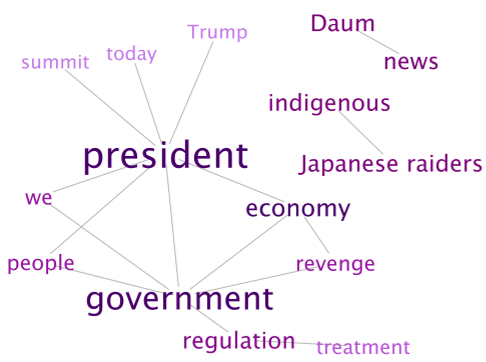 Figure 1: The Japanese Twitter sphere shows a clear partisan divide between liberal and conservative clusters.
Key Insights: A Tale of Two Structures
1. Japan: Nationalism as a Domestic Shield
In Japan, the dispute was refracted through the lens of internal politics. The network was split into two large islands:
- The Liberals: Focused less on Korea and more on Prime Minister Abe, discussing 'elections', 'taxes', and 'the constitution'.
- The Conservatives: Focused heavily on the dispute itself, using terms like 'security', 'boycott', and 'Internet reaction'.
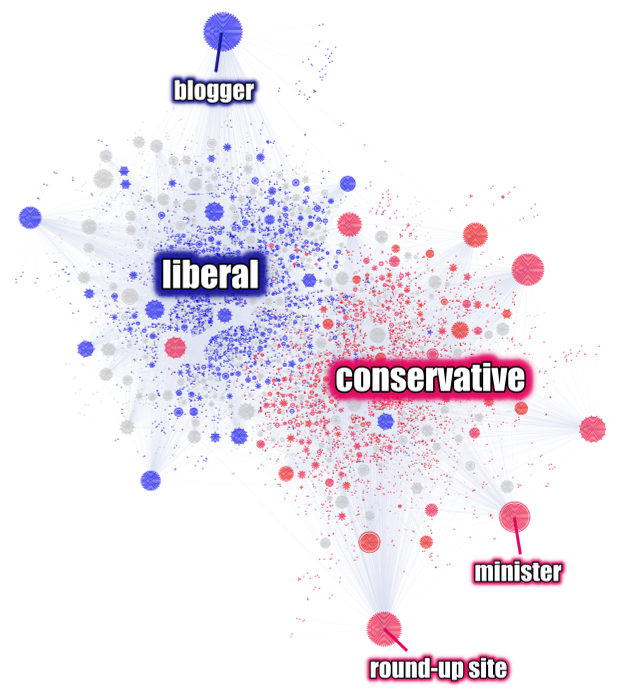 Figure 3: Comparisons of word associations in the Japanese liberal (left) vs. conservative (right) groups.
2. South Korea: Unified Hostility
South Korea showed a remarkably different structure. Despite usually being highly polarized, the samples showed a single massive group. The predominant sentiment was support for President Moon Jae-in and a collective "we" (the people) standing against what they termed "economic retaliation" or "Japanese raiders."
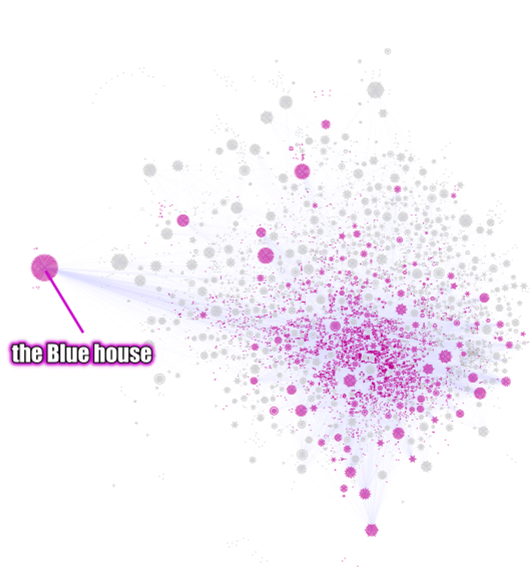 Figure 4: Korean lexical networks show a high degree of integration between the government and people accounts.
Discussion: Why the Difference?
The paper suggests that for Korean users, the dispute served as a unifying external threat, overriding internal political differences. For Japanese users, however, the international conflict was used as another battleground for existing domestic grievances.
Critical Analysis & Conclusion
Takeaway
This study proves that Network Analysis is a powerful tool for International Relations. It reveals that the "internal architecture" of a country's digital public sphere dictates how it responds to external shocks.
Limitations
- Sampling Bias: As noted by the authors, Korean Twitter tends to be more left-leaning historically (Hahn, 2013), which may exaggerate the "pro-Moon" unity found in the sample.
- Timeframe: The study focuses on a 6-week peak; nationalism may evolve or fragment over a longer period.
Future Outlook
Could these network signatures predict how a country might react to future sanctions or diplomatic crises? By monitoring these "retweet islands," analysts might be able to gauge national resilience and political stability in real-time.