
Engineering Co-opetition: Solving Complex Crowdsourcing via Network Theory
Network based mechanisms for competitive crowdsourcing
The paper proposes a network-based mechanism for managing decomposable tasks in competitive crowdsourcing markets. By integrating collaborative elements like the "Envelope Game" into a competitive framework, it aims to optimize task decomposition and worker selection, ultimately identifying the global minimum cost through a Shortest Path algorithm in Directed Acyclic Graphs (DAGs).
TL;DR
Crowdsourcing is great for simple labels but fails when a task is too big for one person. Sankar Kumar Mridha and Malay Bhattacharyya propose a bridge: a Network-based Mechanism that allows competitive workers to collaborate on sub-tasks. By visualizing sub-tasks as edges in a graph and using a game-theoretic "Envelope Game," they reduce the total cost for requesters while allowing specialized workers to win together.
Background: The Complexity Wall
In platforms like Amazon Mechanical Turk (AMT), most tasks are atomic. However, real-world projects—like designing an entire website or writing a complex software module—are decomposable.
The current problem is binary:
- Competitive Markets: Workers compete, but no single worker might have the "best" path for all sub-components.
- Collaborative Markets: Workers work together, but managing them is a nightmare for the requester.
The authors suggest that the "true cost" of a project is often hidden in a mixture of different workers' strengths.
Methodology: The Envelope Game and DAGs
1. The Information Challenge
How do you get a worker to share their secret sauce (subtask costs) in a competitive market? The authors propose the Envelope Game. It’s a mechanism where subtask costs are hidden in "envelopes." If a worker wants to collaborate to form a more competitive joint bid, they play a game of information exchange. This uses curiosity as a driver for engagement.
2. Task Mapping to Networks
The most elegant part of this research is mapping crowdsourcing to Graph Theory.
- Nodes: represent "breakpoints" in a task (e.g., Step 1 finished, Step 2 finished).
- Edges: represents a worker’s bid to get from one breakpoint to another.
- Weights: The cost/remuneration demanded by the worker.
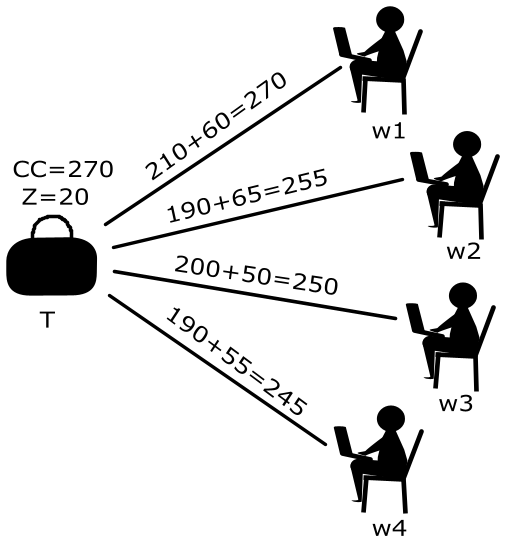 Figure 1: Example of a decomposable task where combined solutions outperform individual ones.
By constructing this network, the "Winner Selection" problem simply becomes a Shortest Path Problem in a Directed Acyclic Graph (DAG). The requester doesn't just pick one winner; they pick a "path" of winners that minimizes the budget.
Experimental Analysis
The authors utilized simulation environments to validate their network-based approach. They compared individual worker performance against the "path-based" selection enabled by their model.
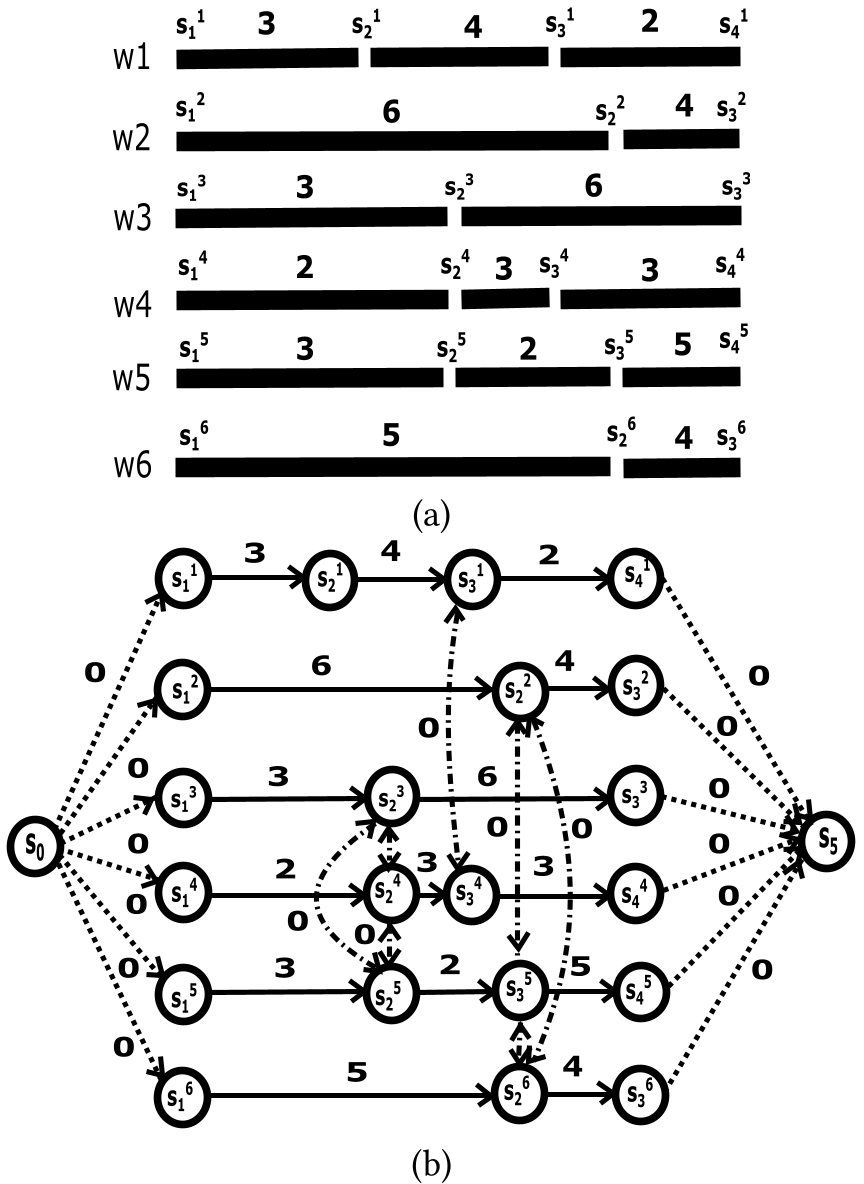 Figure 2: (a) Visualizing how multiple workers post different subtask bids. (b) Mapping these into a network to find the optimal global solution.
Key Insights:
- Cost Reduction: By allowing "multi-hop" solutions (Worker A does part 1, Worker B does part 2), the requester significantly reduces the total cost compared to the best single-worker bid.
- Skill Diversity: The model naturally accommodates workers with niche skills who would otherwise be disqualified from large, multi-disciplinary tasks.
Critical Perspective: The Road to Real-World Adoption
While the theory is sound, the paper identifies a major hurdle: Participation Bias. In a competitive environment, if workers feel the game is "rigged" or too complex, they won't participate.
Moreover, the Envelope Game assumes rationality and a specific type of curiosity that may vary across cultures and worker demographics. The transition from a simulation to a platform like Freelancer or 99designs requires a robust UI that hides the mathematical complexity from the end-user.
Future Outlook
This work pushes crowdsourcing beyond simple "microwork." By applying network optimization to human collaboration, we can start to see crowdsourcing platforms acting as Automated Project Managers. The next step for this research is likely the integration of AI to predict "break points" in tasks automatically, rather than relying on workers to define their own subtasks.
Takeaway for the Industry: To solve complex problems, don't just hire the best person; build a platform that finds the best path through the collective skills of the crowd.