
Unmasking iOS Privacy: A Forensic Deep Dive into App Network Traffic
Network Forensics Analysis of iOS Social Networking and Messaging Apps
This research presents a comprehensive network forensic analysis of 70 iOS applications, focusing on how popular social networking and messaging apps handle user data. Using dynamic penetration testing and traffic reconstruction, the study identifies widespread failures in encryption, revealing that 75% of analyzed messaging apps leak sensitive information in plaintext.
TL;DR
Think your iPhone apps are inherently secure? This study puts that assumption to the test. By performing dynamic network forensics on 70 iOS applications, researchers found that the vast majority—including 15 out of 20 popular messaging apps—leak sensitive data like passwords, locations, and private photos in plaintext. While Apple controls what apps can access, it seems they have far less control over what apps upload to the cloud.
Problem & Motivation: The Illusion of the Walled Garden
Users often trust iOS apps implicitly because of Apple’s stringent App Store review process. However, a significant gap exists between Permission (What an app can see) and Transmission (How an app sends it).
The authors observed that while an app might legitimately ask for location access to provide a service, it often transmits those precise coordinates to third-party advertisers without encryption. The core motivation was to prove that "naive-looking" apps are often the most aggressive data harvesters, utilizing weak security implementations to exfiltrate user data.
Methodology: Peering into the Socket
The researchers built a forensic pipeline to intercept and analyze app behavior in real-time. The setup involved:
- Physical Layer: An iPad (iOS 11.2.6) connected to a controlled Wi-Fi network.
- Proxy Layer: Charles Proxy and Burp Suite intercepted HTTP/HTTPS traffic on a MacBook Air.
- Analysis Layer: Wireshark and NetworkMiner were used to parse
.pcapand.chlsfiles to reconstruct the actual files and text sent over the wire.
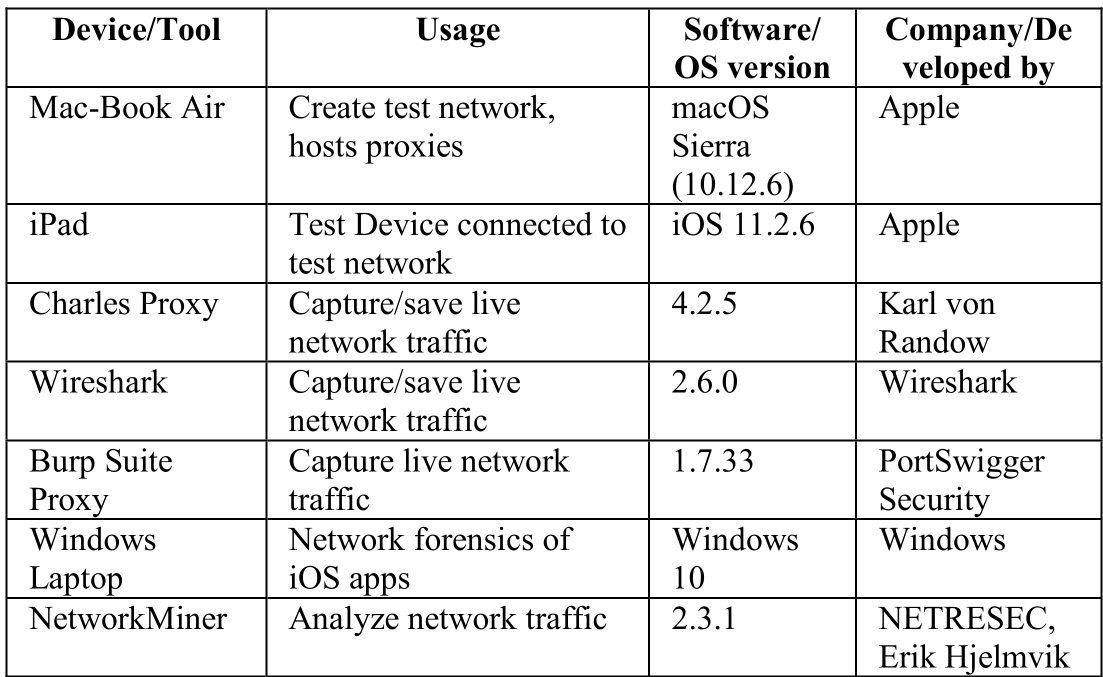 Table 1: The forensic toolkit used for dynamic analysis.
By simulating 20-30 minutes of active use (signing up, sending GIFs, calling friends), they generated a realistic network footprint for each application.
Methodology Explained: How They Reconstructed Your Data
The "magic" of this paper lies in payload reconstruction. Many apps used standard HTTP or poorly implemented SSL, allowing the researchers to pull raw data out of the network stream.
1. Location Tracking
Even when using Google Maps APIs, many apps sent raw latitude and longitude. The researchers could map a user's exact movement by simply sniffing the traffic.
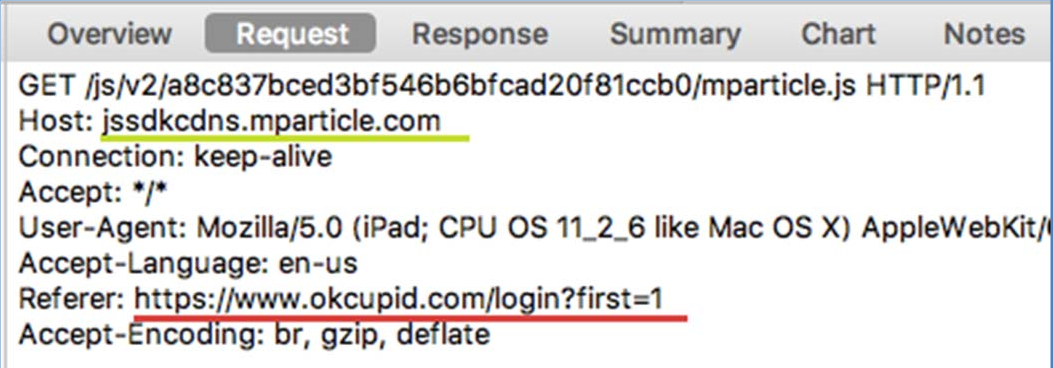 Fig 1: Exact geo-coordinates extracted from unencrypted app traffic.
2. Multimedia & Credentials
Using NetworkMiner, the team reconstructed profile images from the app Azar and intercepted email/password combinations from 95% of the tested apps. This suggests that the "login" process in many lifestyle apps is fundamentally broken from a security standpoint.
Experimental Results: The Hall of Shame
The results were categorized into 20 "deep-dive" apps and 50 "broad-scan" apps.
- The Secure Few: Only Telegram, BBM, Tinder, Snapchat, and Viber used robust encryption for the majority of their traffic.
- The Vulnerable Many: Apps like Tumblr, Pinterest, and various "Anonymous" chat rooms leaked email IDs, search histories, and direct message content.
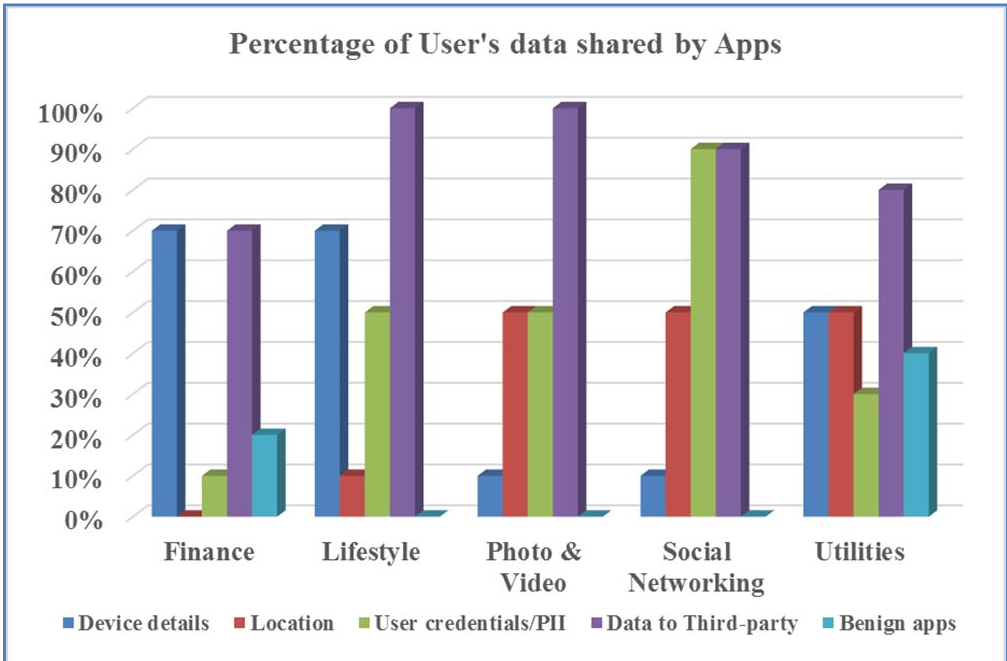 Fig 8: Percentage of apps sharing specific types of user data.
The study found that 90% of apps shared device details (OS version, IMEI, Wi-Fi info) with third-party trackers like data.flurry.com and doubleclick.net the moment the app was opened.
Critical Analysis & Conclusion
Takeaway
The research highlights a systemic failure in the mobile ecosystem: encryption is treated as optional by many third-party developers. While the iOS platform provides the tools (like App Transport Security), developers often bypass them for compatibility or ease of use, leaving the end-user vulnerable to sniffing attacks on public Wi-Fi.
Limitations
The study focused on free applications. The authors hypothesize that paid applications might behave differently, as their revenue model doesn't rely solely on data-sharing with ad networks. Furthermore, modern versions of iOS (post-iOS 15) have introduced "App Privacy Reports," which may mitigate some of these issues, but the underlying vulnerability of plaintext transmission remains a threat for legacy implementations.
Future Outlook
The authors suggest that the forensic process should be automated into a "Privacy Guardian" tool that resides on the device, notifying users the moment an app attempts to send sensitive PII over an unencrypted connection. This move from static permission lists to dynamic traffic monitoring is the next frontier of mobile security.