
The Tale of Two Metrics: Uncovering the Hidden Engine of Affiliate Marketing
Network and Revenue of the Clube Hurb Affiliate Marketing Program: A Story of Two Tales
This paper presents a large-scale empirical analysis of "Clube Hurb," the affiliate marketing program of Brazil's largest online travel agency. It leverages a dataset of over 186,000 affiliates to explore the structural dynamics of referral networks and their direct impact on revenue generation.
TL;DR
In a comprehensive study of Clube Hurb, researchers revealed a paradox: while the program looks like a failure through the lens of traditional social network metrics (low virality), it is a massive success in revenue generation. The secret lies in a "heavy-tailed" reality where a minuscule fraction of elites drives the profit, and the psychological milestone of the "first sale" triples an affiliate's lifespan.
Background: Beyond the Hype of Viral Marketing
For years, e-commerce giants have chased "virality"—the idea that every new user will bring in multiple friends, creating an exponential growth curve. However, Clube Hurb, the affiliate arm of Hurb.com, tells a different story. With over 186,000 affiliates, the program represents a unique laboratory to test whether social network structures actually translate into cold, hard cash.
The Problem: The Failure of Average Metrics
Standard performance indicators often hide the truth. If you look at the "Average Out-Degree" (the number of people an affiliate refers), the value is a dismal 0.06. In the world of epidemiology or viral growth, this would mean the program is "dying."
However, the authors argue that this is a "Story of Two Tales."
- The Supernumary Tale: Most affiliates (over 90%) never refer anyone and never make a sale.
- The Economic Tale: The program is growing healthily in revenue because the few who are active are incredibly efficient.
Methodology: Mapping the Referral Forest
The researchers modeled the affiliate network as a directed forest (a collection of trees). Every time Affiliate A refers Affiliate B, a link is formed.
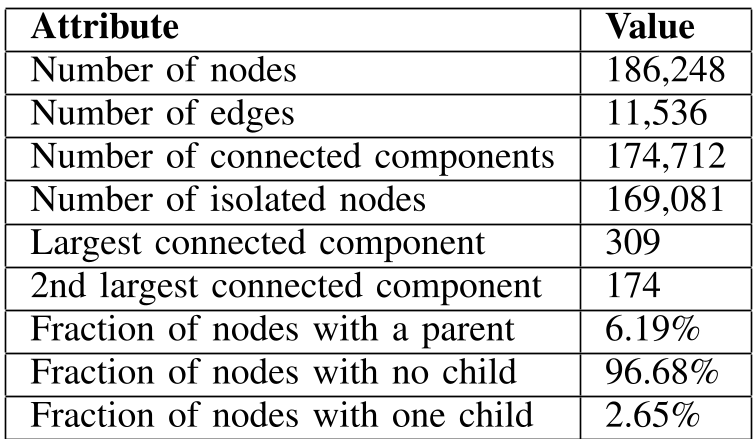
Key insights from the methodology include:
- LTV (Lifetime Value) Analysis: Comparing users who joined via ads versus those who were "socially referred."
- Survival Analysis: Using Kaplan-Meier curves to see how long users stay "active" (logging in) before they drop off.
Key Findings: The Power of the First Sale
The data reveals two massive "boosters" for affiliate success:
1. The Referral Advantage
Affiliates who were referred by a friend (those with a "parent" node) have an LTV of R 60.32 for those who joined directly. Referral isn't just about growth; it’s about quality.
2. The Survival Threshold
The most striking finding is the impact of the first sale. Once an affiliate makes a single sale, their behavior changes fundamentally:
- Longevity: Median lifetime jumps from 130 days to 420 days.
- Engagement: 80% of "sellers" stay active for over 300 days, whereas only 20% of "non-sellers" survive that long.
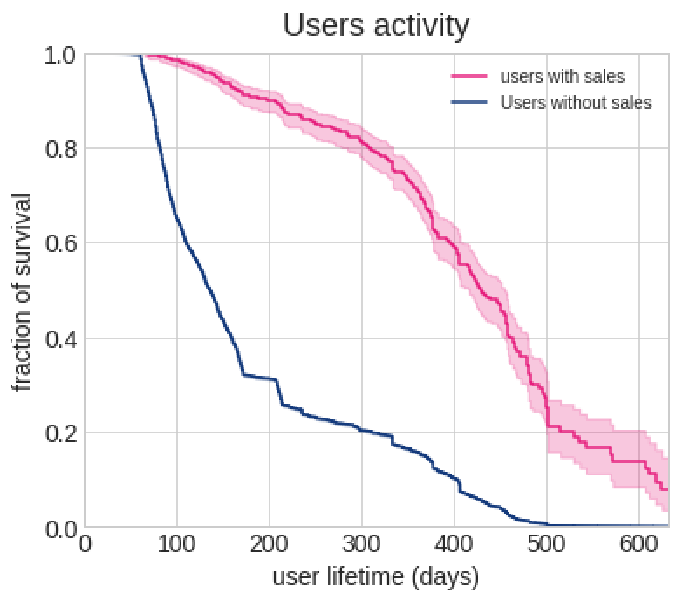 Figure: The Lorenz Curve (left) shows extreme revenue inequality, while the Kaplan-Meier curve (right) illustrates the survival gap between sellers and non-sellers.
Business Implications: Quality over Quantity
The study suggests that companies should stop obsessing over the number of affiliates and start focusing on conversion interventions:
- Nudge the First Sale: Provide personalized ad tools or "starter" incentives to help new affiliates get their first "win."
- Reinvent Commissions: Rewards should perhaps be higher for the first referral or first sale to cross the "death threshold" of 130 days.
Critical Insights & Conclusion
This paper serves as a vital reality check. In the affiliate economy, inequality is a feature, not a bug. The "heavy tail" (the 0.05% of users who generate 75% of revenue) is what makes the business model sustainable at a low investment cost.
Future Work: The next frontier is "Predictive Intervention"—can we use machine learning to identify which 0.05% of sign-ups will become "Super Affiliates" and provide them with white-glove support from Day 1?