
Synergizing Networks and Culture: The Dual Engine of Employee Creativity
Network structure, organizational learning culture, and employee creativity in system integration companies: The mediating effects of exploitation and exploration
This study investigates the impact of network structure (degree centrality, structural holes) and organizational learning culture on employee creativity within system integration (SI) companies. Using a structural equation model (PLS) on data from 137 professionals, it demonstrates that learning culture and working styles (exploitation and exploration) are critical drivers of individual creativity.
TL;DR
In the hyper-competitive world of System Integration (SI), creativity isn't just a "nice-to-have"—it's the difference between winning a contract and fading away. This study reveals that while Social Network Structures (who you know) matter, the true catalyst for innovation is an Organizational Learning Culture. By balancing Exploitation (refining existing skills) and Exploration (risky new experiments), firms can systematically boost the creative output of their teams.
The Core Conflict: Efficiency vs. Innovation
Modern organizations face a "knowledge paradox." Should they focus on Exploitation—the efficient use of what they already know—or Exploration—the risky search for the "next big thing"? Most firms struggle to balance these because they treat creativity as a mysterious individual trait. This research shifts the focus to the context: how can the way we talk to each other and the culture we work in be engineered to produce better ideas?
Methodology: Mapping the Creative Genome
The researchers surveyed 137 professionals from 25 project teams in South Korean SI giants. They utilized Structural Equation Modeling (SEM) to test how three contextual factors influence working styles and, ultimately, creativity.
1. The Network Metrics
- Degree Centrality: The number of direct connections an employee has. High centrality means better access to raw information.
- Structural Holes: The ability to bridge disconnected groups. This was measured through "constraints"—the fewer the constraints, the more "holes" an individual can exploit for unique insights.
2. The Learning Culture
Measured by trust-building, rewarding learning, and encouraging initiative.
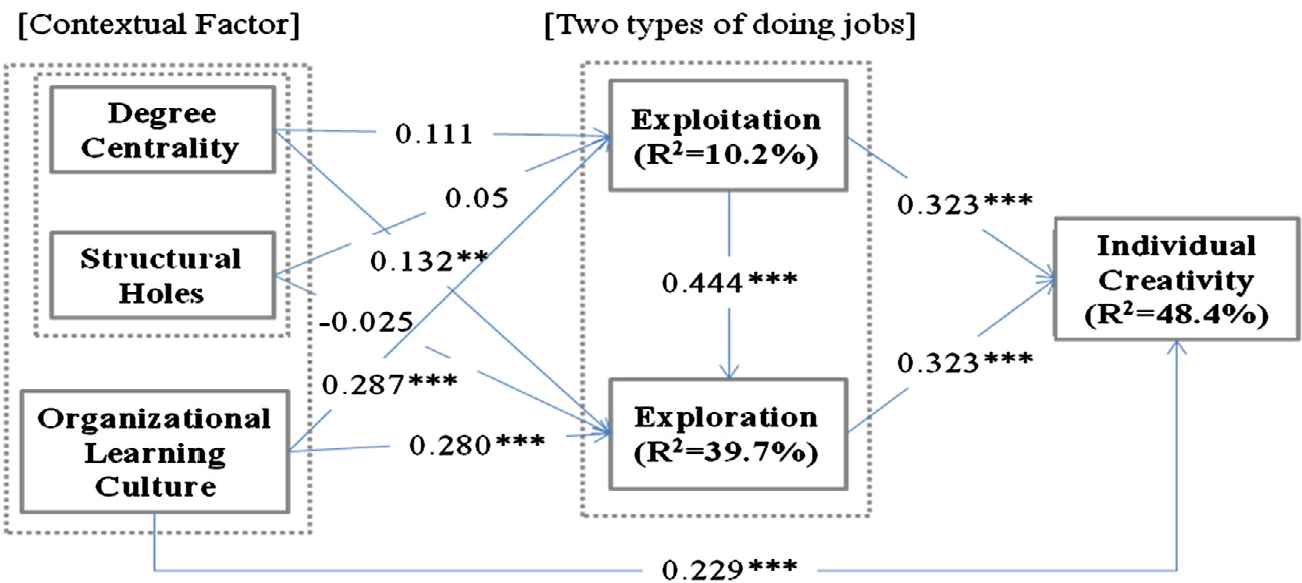 Figure 1: The proposed structural model showing the path from context to creativity.
Key Insights: Why Structure Isn't Everything
The experimental results provided several "Aha!" moments for technical managers:
- The Power of Centrality: Having many connections (Degree Centrality) significantly boosts Exploration. It gives employees a diverse palette of ideas to recombine into something new.
- The Culture Dominance: Organizational Learning Culture was the only factor that significantly boosted all pathways. It serves as the "soil" in which both exploitation and exploration grow.
- The Exploitation-Exploration Link: Interestingly, exploitation (mastering current tools) actually fuels exploration (inventing new tools). You must know the rules well to break them effectively (Path Coeff = 0.444).
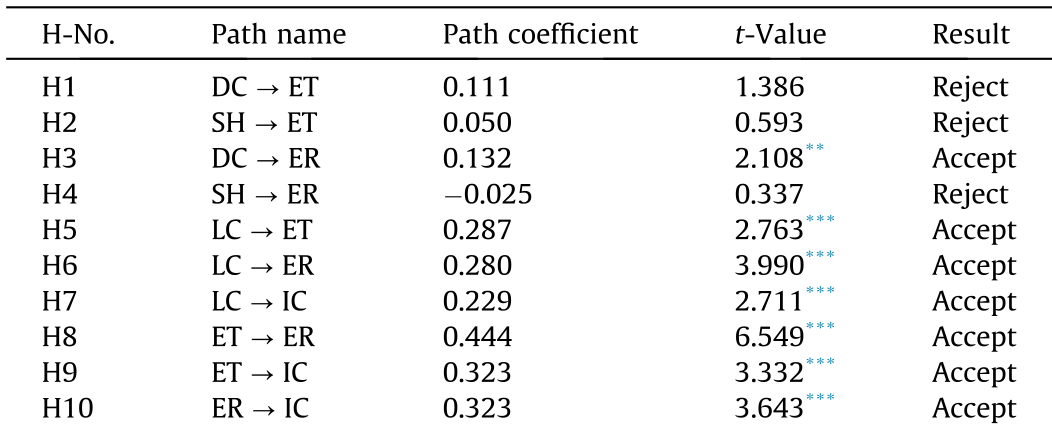 Table 1: Hypothesis testing results. Note the high significance (**) for Learning Culture (LC) and Working Styles (ET/ER).*
Critical Analysis & Future Outlook
Takeaway for Managers
If you want a creative team, don't just hire "creative people." Instead:
- Build a safety net: Create a culture where learning is rewarded over immediate execution.
- Centralize Knowledge: Identify "hubs"—employees with high degree centrality—and empower them to lead exploratory tasks.
- Promote the Cycle: Encourage employees to master existing workflows (Exploitation) as a prerequisite for innovating (Exploration).
Limitations
The study focused on short-term project teams (1 week to 1 month). In long-term R&D environments, the "Structural Holes" (bridging different departments) might play a far more significant role than they did here.
Conclusion
Creativity in technical fields is a structural and cultural byproduct. By engineering an environment that rewards the acquisition of new knowledge and facilitates dense communication networks, companies can turn creativity from a "black box" into a manageable, scalable resource.