
Beyond the Privacy Toggle: The Collective Reality of Networked Privacy
Networked Privacy Management in Facebook: A Mixed-Methods and Multinational Study
This study investigates "Networked Privacy Management" on Facebook, shifting the focus from individual control to collective co-management of information. Using a mixed-methods approach (Focus Groups and Multinational Surveys), it identifies four distinct behavioral dimensions—Collaborative, Corrective, Preventive, and Information Control—and establishes their SOTA measurement scales.
TL;DR
Privacy on social media isn't just about what you do; it's about what your friends do with your data. This seminal study by Cho and Filippova moves the needle from individual privacy settings to Networked Privacy Management. Through a multinational lens (Singapore & USA), the research identifies four key behavioral pillars—Collaborative, Corrective, Preventive, and Information Control—and reveals that our social "Collective Efficacy" is the secret sauce for healthier digital boundaries.
The Problem: The Myth of Individual Autonomy
For decades, academic literature defined privacy through the lens of individual control: my data, my settings, my choice.
But social media shattered this silo. On Facebook, your digital identity is often a shared asset. A friend tags you in an "unglamorous" photo; a colleague sees a post intended for family. This research argues that because information is co-owned and co-managed, the traditional "Privacy Calculus" fails to capture the social friction of "Context Collapse"—where different social circles collide, and your privacy depends on the competence and kindness of your network.
Methodology: A Dual-Continent Deep Dive
The authors employed a robust mixed-methods workflow:
- Phase 1 (Qualitative): Focus groups in Singapore to map the "wild" strategies users actually use (beyond just clicking a button).
- Phase 2 (Quantitative): A 299-participant survey across the US and Singapore to validate a new measurement scale for "Networked Privacy."
The Research Model
The authors didn't just look at privacy concern; they looked at Self-Efficacy (I can do it) and Collective-Efficacy (We can do it together).
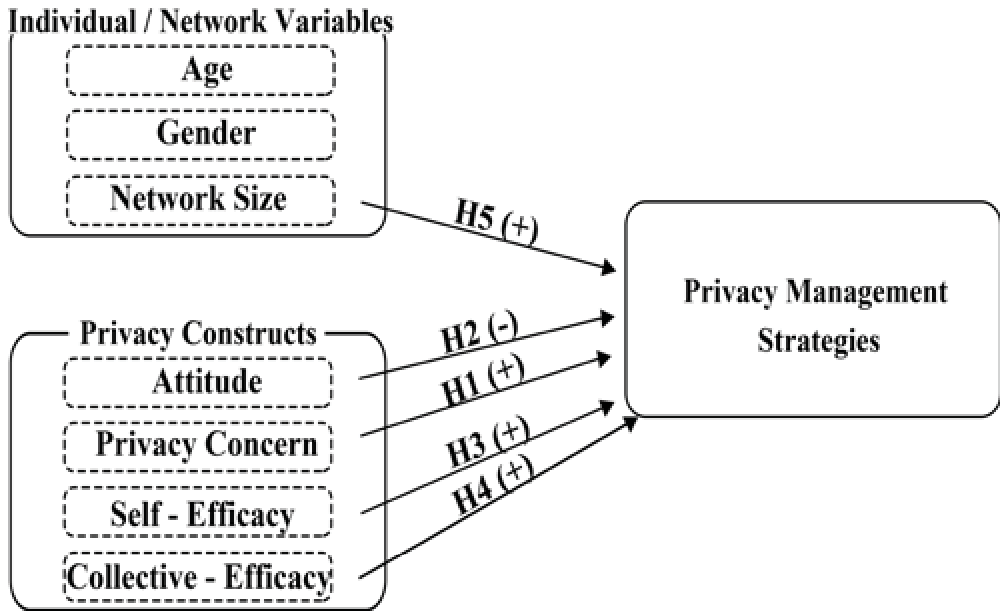 Figure 1: The theoretical framework linking individual concerns and group dynamics to behavioral outcomes.
The Four Pillars of Networked Privacy
One of the paper's most significant contributions is the formalization of four strategy types:
- Information Control (The Common Denominator): Self-censorship. Only posting what is "safe" for everyone to see.
- Preventive Strategies (The Wall): Restricting audiences via "Friends Only" lists, secret groups, or refusing friend requests from parents/bosses.
- Collaborative Strategies (The Negotiation): Explicitly discussing rules with friends—e.g., "Please don't post photos of me without asking."
- Corrective Strategies (The Cleanup): Untagging, unfriending, or the awkward "Please take that down" text after the fact.
Key Insights: Why "Collective Efficacy" Matters
The findings offer a fascinating technical and sociological breakdown:
- The Power of Trust: Users with high Collective Efficacy (trust that their friends will look out for them) are far more likely to engage in Collaborative strategies.
- The Corrective Decline: Interestingly, high collective efficacy reduces the use of Corrective strategies. When we trust our network, we don't feel the need to police our timeline or "untag" frantically.
- Culture Matters: Singaporean users were found to be significantly more proactive in Collaborative and Preventive strategies compared to their U.S. counterparts, hinting at cultural nuances in how collective Harmony vs. Individualism manifests online.
Performance & Usage Stats
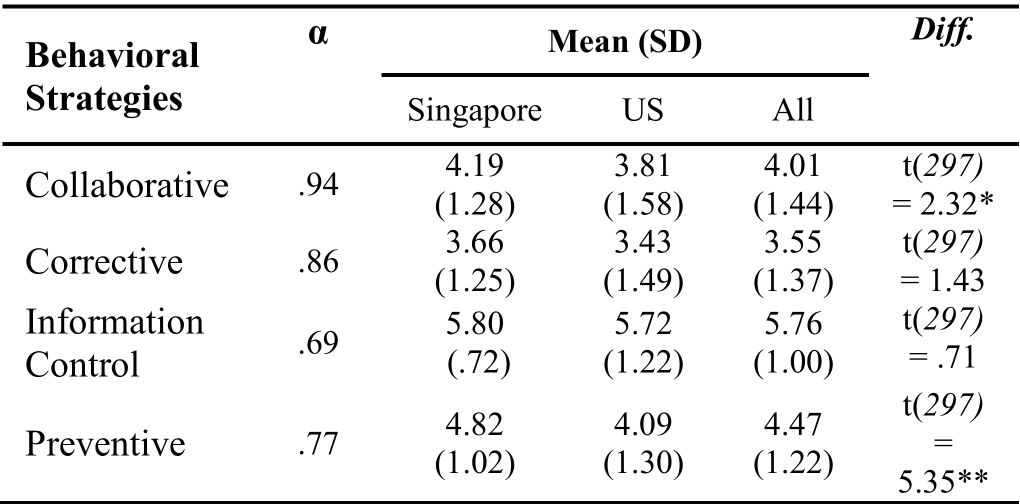 Table 2: Comparison of engagement levels across different privacy strategies.
Critical Analysis & Future Outlook
Takeaway for Designers
Current SNS interfaces are "Collaboratively Impaired." Most privacy tools are designed for a single user interacting with a machine. The authors suggest a shift toward Shared Awareness Tools: imagine a "Group Privacy Check" that makes a friend's privacy preferences visible to the uploader before they hit post.
Limitations
The study relies on self-reported survey data, which can suffer from "Privacy Paradox" bias (users saying they care about privacy but acting otherwise). Furthermore, as Facebook's UI evolves daily, some findings on "Timeline Review" may need updating for the age of ephemeral Stories and AI-managed feeds.
The Future
As we move toward a "Post-Privacy" perspective—where some participants noted "If you need privacy, hide in a cave"—the need for Networked Privacy scales becomes even more critical. This paper provides the foundational "ruler" to measure how we collectively survive the transparency of the digital age.