
Digital Ourselves: Navigating the Ethical Frontier of a Hyperconnected World
How Is the Networked Society Impacting Us
The article titled "How Is the Networked Society Impacting Us?" explores the profound transition toward a hyperconnected world driven by digitization, networking, and automation. It introduces the concept of "Digital Ourselves"—the synergy between humans and their digital representations—and the socio-economic shifts caused by the "platform economy."
TL;DR
As we transition into a Networked Society, our physical lives are merging with a pervasive digital fabric. This paper explores "Digital Ourselves"—the fusion of humans and AI avatars—while sounding the alarm on the loss of accountability in automated decision-making and the erosion of privacy through data correlation. The author argues for a radical shift in governance, moving from passive observation to proactive, interdisciplinary design of our digital future.
Problem & Motivation: The Opaque Reality of Connectivity
The promise of the networked society is "near-zero cost" data transmission and hyper-efficiency. However, the author, Thas A. Nirmalathas, identifies a critical irony: the tools meant to empower us—social media, recommendation engines, and virtual assistants—often serve as invisible mechanisms for manipulation.
Existing privacy frameworks (like standard Terms & Conditions) are fundamentally broken. They are too opaque for the average user, allowing companies to "nudge" worldviews and engage in price discrimination. Furthermore, the author highlights the Anonymization Paradox: data that appears anonymous in isolation can be deanonymized when correlated with other sets, such as matching exercise records to health insurance premiums.
Methodology: Redefining the Human-Digital Interface
The core of this work revolves around two transformative concepts:
1. The Rise of "Digital Ourselves"
Instead of viewing AI as a separate entity, the author proposes a symbiotic relationship.
- Expansion of Capability: Using bots and avatars to handle mechanical and mundane tasks.
- On-Demand Expertise: Accessing professional support (e.g., legal or technical) through automated representations that learn from our visual cues and body language.
 Figure 1: The overarching transition toward a Society-Centric Networked Environment.
2. The Shift in Accountability
A major methodological concern is the "Balancing Act" of decision-making. In traditional systems, transparency and administrative review are standard. In a networked society, accountability shifts from human administrators to computer platforms. The author notes that "engineered solutions" are insufficient for problems like racial bias in sentencing software or the hacking of autonomous vehicles.
Experiments & Critical Insights: Data as the New Currency
The paper analyzes the "Platform Economy" through the lens of data integration.
- Commercial Insight vs. Privacy: Retailers use WiFi pinging to track customer movement, converting visitors into paying customers. While efficient for business, it raises consent issues.
- Public Good: Governments can leverage integrated data sets for better city planning and disaster response, provided they balance societal benefits against individual safeguards.
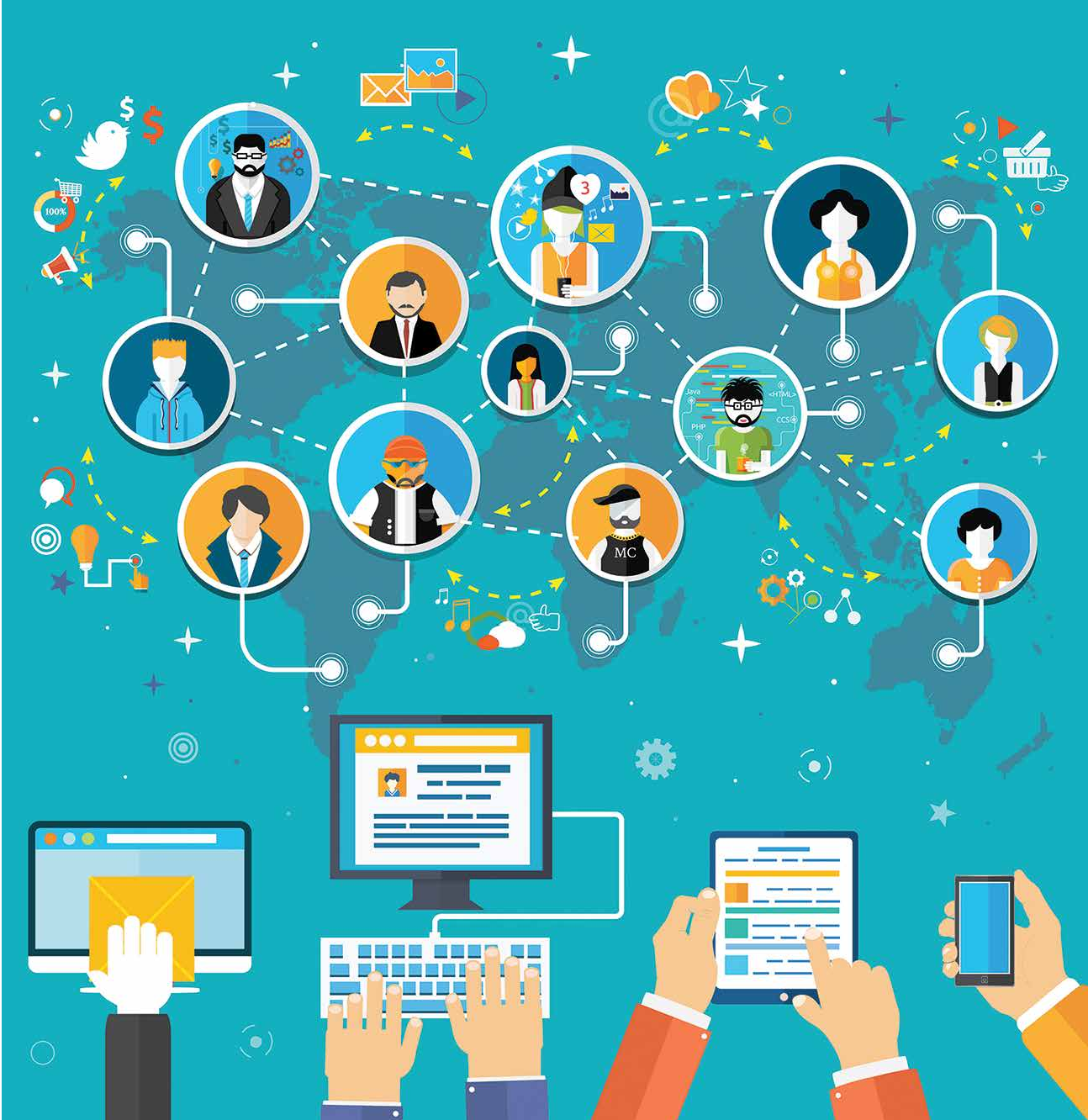 Figure 2: The feedback loop of digitization, networking, and automation that disrupts modern governance.
Critical Analysis & Conclusion: Shaping the "Networked" Future
The author concludes that we cannot rely on "post-development evaluation." Because experimental technologies are deployed continuously (RLHF, beta-testing in the wild), intervention must be baked into the design phase.
Takeaway for the Industry: The future of technology is not just about faster chips or better algorithms; it’s about Governance Engineering. We must solve for:
- Data Ownership: Users must own their data and see exactly how it is being used.
- Wealth Redistribution: Addressing the risk that the "wealth of nations could be limited to a few individuals" in an automated economy.
- Human-Centricity: Doubling down on roles that require creativity and emotional intelligence—things AI still struggles with.
Ultimately, the Networked Society is an evolutionary step. Whether it leads to a "Bot-aful life" or a manipulated dystopia depends on our willingness to ask the hard questions today.