
Forecasting the Labor Market: Neural Networks and Search Query Data
A Neural Network Based Forecasting Method For the Unemployment Rate Prediction Using the Search Engine Query Data
This paper presents a data mining framework that leverages search engine query data to forecast the US unemployment rate. By combining Genetic Algorithms (GA) for feature selection and various Neural Network (NN) architectures, specifically selecting the GA-NN-oss model, the authors achieve superior predictive accuracy compared to traditional time-series models (e.g., ARIMA) and simple keyword correlation methods.
TL;DR
This research pioneers a robust data mining framework that uses search engine behavior to predict the US unemployment rate. By filtering 500+ search keywords through a Genetic Algorithm (GA) and training a Neural Network (NN) with One-Step Secant Backpropagation (OSS), the authors created a "nowcasting" tool that significantly outperforms traditional statistical benchmarks like ARIMA.
Background: Beyond Lagging Indicators
Typically, unemployment data is a "lagging indicator"—by the time the government releases a monthly report, the economic damage may already be done. The core insight of this paper is that human intent, captured via search queries like "file for unemployment" or "unemployment benefits", precedes official statistics. However, the challenge lies in the noise: not every job-related search indicates a new unemployment claim.
Methodology: The GA-NN Pipeline
The authors don't just dump search data into a model; they use a sophisticated refinement process:
1. Feature Selection (The Filter)
Out of 500 initial keywords, the authors found that 108 had a correlation coefficient > 0.65 with unemployment claims. They then used a Genetic Algorithm to find the "optimal subset" of these keywords, effectively evolving a set of inputs that provide the cleanest signal.
2. Neural Architecture (The Engine)
The paper compares several training algorithms:
- NN-rp: Resilient backpropagation.
- NN-gdx: Gradient descent with momentum (Adaptive learning rate).
- NN-oss: One-step secant backpropagation.
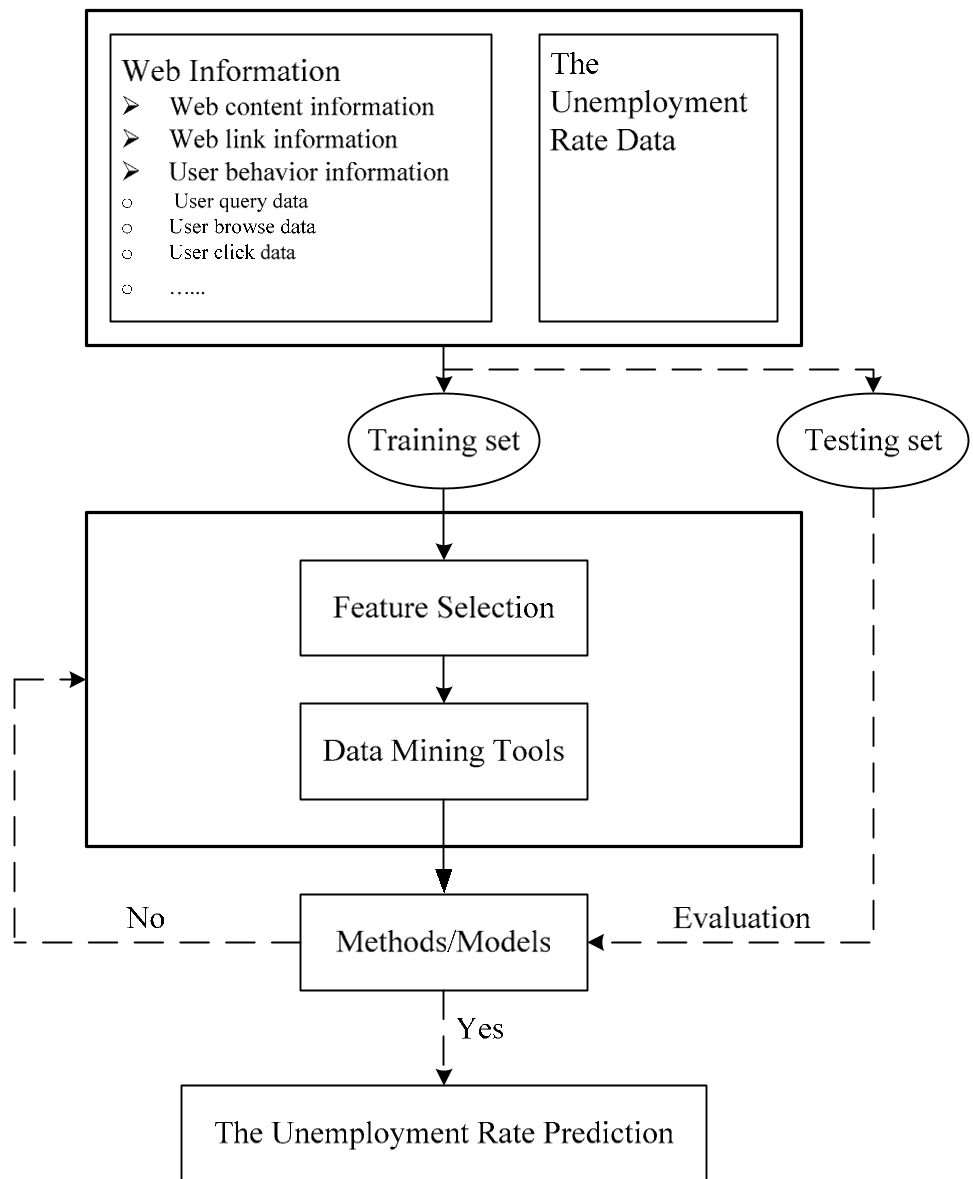 Figure 1: The overarching data mining framework proposed for unemployment forecasting.
Experimental Battleground: GA-NN-oss vs. The Rest
The results were conclusive. The GA-NN-oss model achieved an average Root Mean Square Error (RMSE) of 25,917.99, whereas models without the GA feature selection recorded RMSEs nearly three times higher (approx. 70,000+).
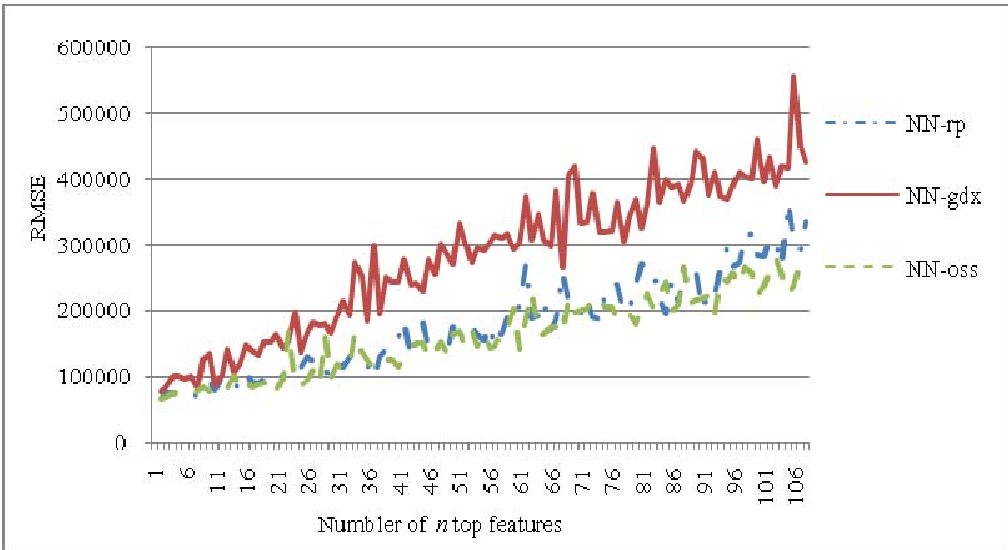 Table 2: Comparison of different NN training algorithms show that OSS (One-step secant) provides the most stable and accurate results.
Why OSS?
The One-step Secant method is a compromise between the speed of Conjugate Gradient methods and the accuracy of Quasi-Newton methods. In the context of noisy search data, it proved more resilient to local minima than standard gradient descent.
Real-World Tracking
The authors tested the model on the period between Sept 2009 and March 2011. As shown in the visualization below, the predicted values (blue) followed the actual Unemployment Initial Claims (red) with remarkable synchronicity.
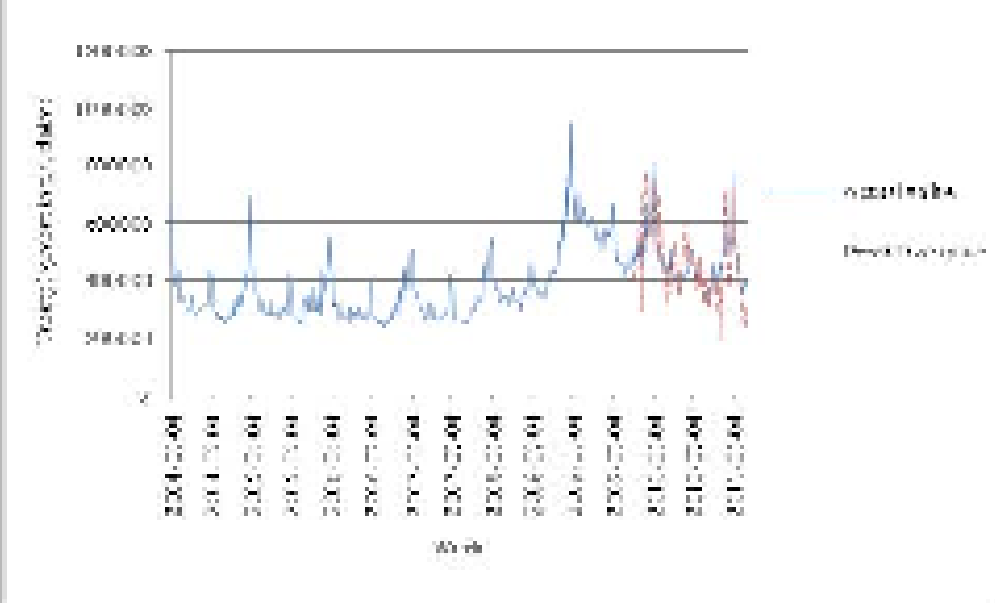 Figure 4: Real-world tracking of US unemployment claims, demonstrating the model's ability to act as a leading indicator.
Critical Insight & Future Outlook
While this work proves that web behavior is a goldmine for social forecasting, it also highlights the necessity of feature engineering. Simply having "Big Data" isn't enough; you need heuristic tools like Genetic Algorithms to weed out the "junk queries" that don't correlate with actual economic distress.
Future Directions: The authors suggest that this framework could be extended to the real estate and crude oil markets. Integrating modern NLP techniques (like Sentiment Analysis) with these search volumes could further refine the accuracy by distinguishing between "curiosity searches" and "desperation searches."
Summary Table
| Feature | Value |
|---|---|
| Best Model | GA-NN-oss |
| Primary Input | Google search queries (Jobs/Welfare) |
| Target | Unemployment Initial Claims (UIC) |
| Key Advantage | Real-time "Nowcasting" capability |