
Judging Legal Rationality: A Neural Network Approach to Litigation Risk
A Neural Network Based Method for Judging the Rationality of Litigation Request
The paper introduces a neural network-based framework for judging the rationality of litigation requests, specifically targeting loan disputes. By combining a Multi-party Evidence Association Model with deep neural networks, the system predicts the efficiency and legitimacy of legal claims to assist in case diversion and judicial risk warning.
TL;DR
Legal disputes are often bogged down by unrealistic expectations from parties involved. Researchers from the China Justice Big Data Institute have developed a framework that combines Multi-party Evidence Association with Deep Neural Networks to predict whether a litigation request is "rational." By quantifying judicial features—such as the statute of limitations—the system helps courts prioritize cases and provides parties with realistic litigation warnings.
The Motivation: Moving Beyond Semantic NLP
Traditional methods in legal AI often rely heavily on Natural Language Processing (NLP) to parse judgment documents. However, simply understanding what a document says isn't enough to judge if the request is legally sound.
The industry faces two core challenges:
- The Heterogeneity Gap: Every case is different, making it hard to create a universal model.
- The Logic Gap: Existing machine learning models often lack the "judicial intuition" required to link evidence from multiple parties (plaintiff, defendant, and third parties) into a coherent factual chain.
Methodology: The Core Engine
The authors tackle this by creating a structured bridge between raw evidence and deep learning.
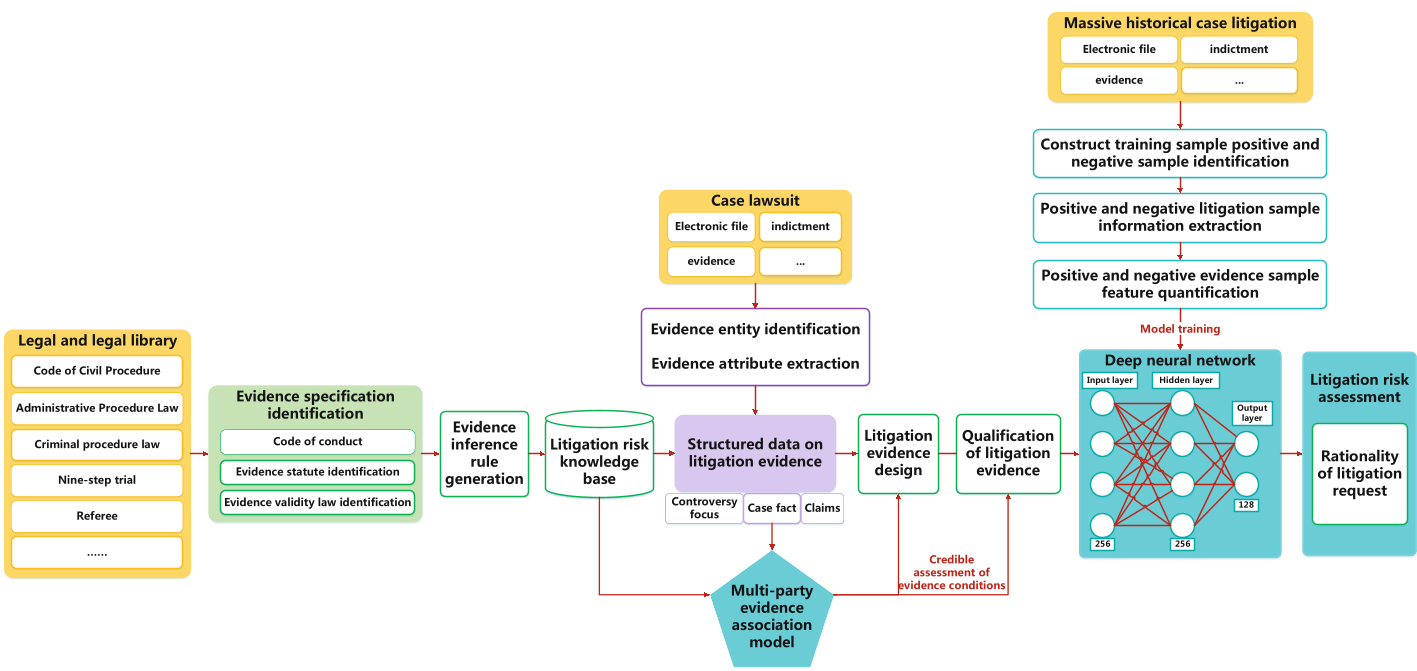
1. Factual Judgment Chain
The system doesn't look at evidence in isolation. It uses a "Factual Judgment Chain" (e.g., Beating -> Disability -> Medical Expenses -> Claim) to guide the reasoning of the evidence chain.

2. Multi-party Evidence Association Model
Instead of treating the case as a flat text file, the model builds a network of nodes. It classifies evidence into categories (Plaintiff, Defendant, Third-party) and uses Bayesian/Markov reasoning to find the most "credible" evidence chain. This is crucial because legal truth is often found in the contradiction or verification of multi-party claims.
3. Feature Quantification
The researchers meticulously mapped legal rules into numerical vectors. For instance, the Statute of Limitations (a critical factor in civil litigation) is quantified based on repayment dates, loan terms, and dunning periods. If a claim exceeds the 2-year window (under the then-current Chinese law), the "risk feature" is flagged.
Experimental Results
The model was tested using real data crawled from referee documents. In a trial run of 11 loan cases:
- Reasonable Claims: Identified with high confidence (scores 0.83 to 1.00).
- Unreasonable Claims: Correct detected (scores 0.38 to 0.52).
This suggests the neural network successfully learned the "logic" of legal rationality rather than just performing keyword matching.
Professional Insight & Conclusion
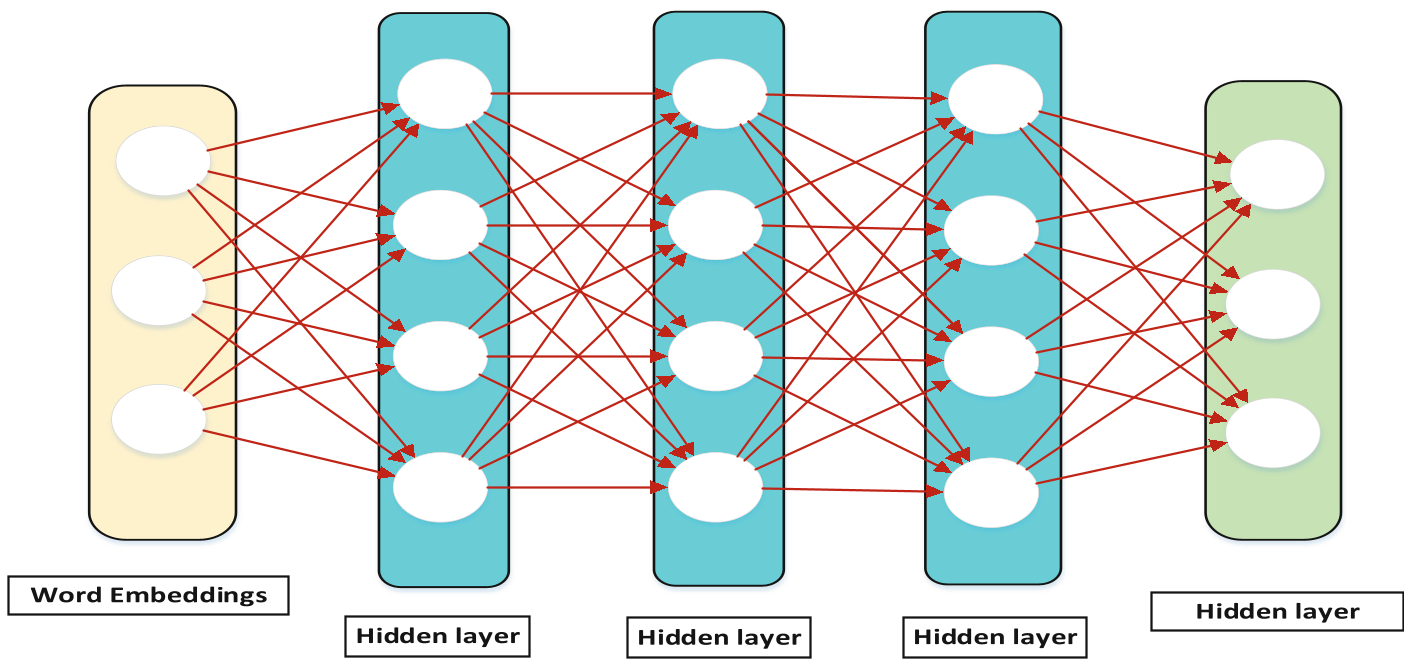
The real value of this paper lies in its Inductive Bias. By forcing the neural network to look at specific "Judicial Features" (Table 1) rather than raw text, the authors avoided the "black box" problem where a model might focus on irrelevant textual noise.
While the sample size (11 cases) is small for a deep learning study, the methodology provides a blueprint for how Symbolic Legal Reasoning (Knowledge Bases) can be merged with Connectionist AI (Neural Networks). Future work will likely involve scaling this to thousands of cases using more complex architectures like Transfomers or Graph Neural Networks to further refine the "Evidence Chain" reasoning.
Takeaway: The "Intelligence Court" of the future won't just summarize cases; it will calculate the probability of winning based on the structural integrity of the evidence provided.