
Bridging Neoclassical Economics and Deep Learning: Neural ODEs for Sustainable Growth
Neural Ordinary Differential Equations for the Regression of Macroeconomics Data Under the Green Solow Model
This paper introduces a hybrid modeling approach for the Green Solow model of sustainable economic growth using Neural Ordinary Differential Equations (Neural ODEs). By embedding neural networks into a coupled system of three differential equations, the authors achieve highly accurate regression of macroeconomic data (capital, income, and emissions) across 73 countries, outperforming traditional constant-parameter neoclassical baselines.
Executive Summary
TL;DR: Researchers from the National University of Singapore and SUTD have successfully integrated Neural Ordinary Differential Equations (Neural ODEs) into the Green Solow model, a core neoclassical framework for sustainable growth. By allowing model parameters to vary over time through neural networks, they solved the long-standing issues of data scarcity, autocorrelation, and rigid parameter assumptions in macroeconomics.
Positioning: This work is a significant "System Identification" and "Model Refinement" contribution. It moves beyond treating AI as a black box by embedding it within the structural constraints of economic theory, providing a blueprint for Scientific Machine Learning (SciML) in the social sciences.
Problem & Motivation: The Rigidity of Neoclassical Models
The Green Solow model attempts to explain the interplay between capital (), income (), and emissions (). However, the traditional approach suffers from three "fatal" flaws:
- Ceteris Paribus Fallacy: It assumes parameters like technological progress () are constant, whereas they fluctuate due to policy shifts and innovation.
- Coupling Contradictions: When equations are solved independently, a single parameter (like labor growth) might yield two different estimates, making the results uninterpretable.
- Data Pathologies: Macroeconomic data is notoriously scarce and highly autocorrelated, which biases standard regression.
The authors' insight was to replace static coefficients with Neural Networks that act as dynamic parameter generators, all while maintaining the "blueprint" of the underlying differential equations.
Methodology: The Neural ODE Intervention
The core innovation lies in treating the differential equations as the architecture of the neural network.
The Architecture
The paper proposes three distinct ways to inject deep learning into the Solow model:
- State-Dependent Parameters (Model 1): . Here, the economy's state dictates the current rate of technological progress.
- Time-Dependent Parameters (Model 2): . This captures historical shifts regardless of the specific state variables.
- Multiplicative Adjustments (Model 3): Instead of replacing parameters, it learns a "correction factor" to adjust the expert-defined model.
 Figure 1: The modified Green Solow equations with time-varying neural parameters.
By using the Adjoint Sensitivity Method, the model calculates gradients through the ODE solver itself. This is mathematically elegant because it eliminates the need to discretize the time series, effectively solving the autocorrelation problem.
Experiments & Results
The researchers tested their models on a massive dataset covering 73 countries from 1970 to 2008.
Performance Gains
In the case of Botswana (a developing economy with high volatility), the results were striking:
- Model 0 (Baseline): Failed to capture the non-linear "hump" in emissions.
- Model 1 (Neural ODE): Perfectly tracked the increasing gradient of capital stock, reducing error by over 50%.
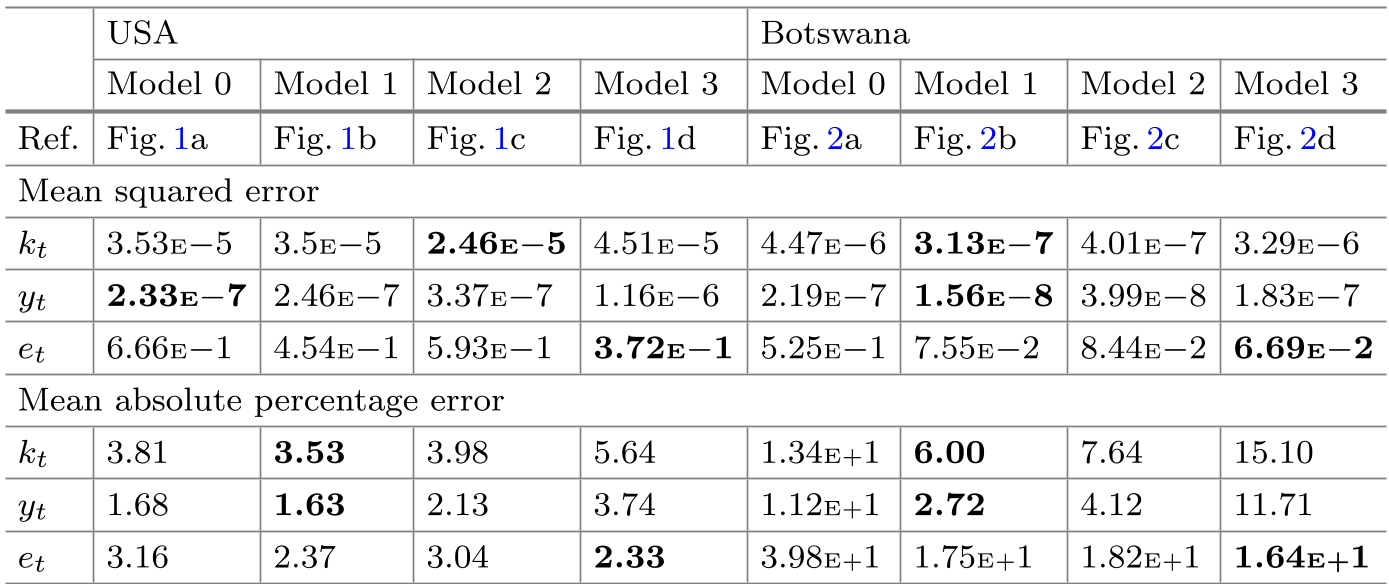 Table 1: Error metrics highlighting the superiority of Neural ODE models over the baseline.
Across the global cohort, the "Boxplot" analysis (Figure 3 in the paper) confirms that Neural ODEs provide a tighter fit across all three economic variables compared to traditional regression.
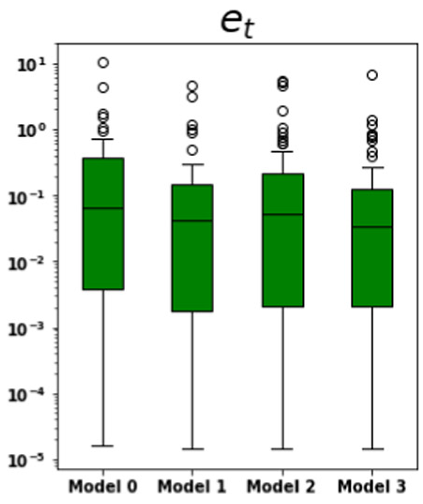 Figure 2: Distribution of MSE across 59 countries showing the performance shift.
Critical Insight & Future Outlook
Takeaway: The real value here isn't just "lower error." It is Consistency. By solving the system as a coupled unit, the estimated parameters (like the capital share of output ) remain mathematically valid across both the income and capital equations.
Limitations:
- Training Complexity: Neural ODEs are computationally expensive. Model 3 takes nearly seconds per country, which is 10x slower than the simpler models.
- Extrapolation: While the fit is excellent, Neural ODEs can sometimes struggle with long-term "out-of-distribution" forecasting compared to LSTMs (though LSTMs lack the physical interpretability).
Future Work: The authors suggest merging LSTMs with Neural ODEs to get the best of both worlds: the predictive power of recurrent networks and the structural consistency of differential equations. This could lead to more robust "Climate-Economy" simulators for policy makers.