
Decoding the Digital Mask: Can Facebook Profile Colors Predict Neuroticism?
Detecting Individuals High in Neuroticism based on the Color Features of the Facebook Profile Picture
This study investigates the feasibility of detecting Neuroticism (a Big Five personality trait) using pixel-level color features of Facebook profile pictures. The authors evaluate four machine learning algorithms (k-NN, Naïve Bayes, and SVMs) across features like colorfulness, HSV indicators, and PAD emotional load on a sample of 508 Romanian users.
TL;DR
Researchers attempted to predict Neuroticism by analyzing the technical color properties (colorfulness, cold colors, and emotional load) of Facebook profile pictures. Using a dataset of 508 Romanian users and multiple machine learning models (SVM, k-NN), the study found that pixel-level color data alone is a poor predictor of personality, achieving sub-par accuracy (AUC < 0.65). This suggests that our "visual footprints" are more complex than simple color histograms.
Background: Why Profile Pictures?
In the realm of digital footprints, profile pictures are unique. Unlike status updates or "likes" that fluctuate daily, a profile picture is a persistent anchor of self-identity. The authors hypothesized that individuals high in Neuroticism—characterized by emotional instability and a tendency toward negative affect—would subconsciously choose images with specific aesthetic signatures: less colorful, darker, or "colder" tones.
The Methodology: From Pixels to Psychology
The study transformed raw images into mathematical representations using three distinct frameworks:
- Metric Colorfulness (Cm): Calculating the distribution of pixels across the Red-Green and Yellow-Blue axes to determine how "vivid" an image is.
- HSV Analysis: Splitting the image into Hue (color type), Saturation (intensity), and Value (brightness). The authors specifically looked at the proportion of cold colors (Blue, Green, Violet).
- PAD Emotional Load: Applying the Valdez and Mehrabian model to convert Saturation and Value into three psychological dimensions: Pleasure, Arousal, and Dominance.
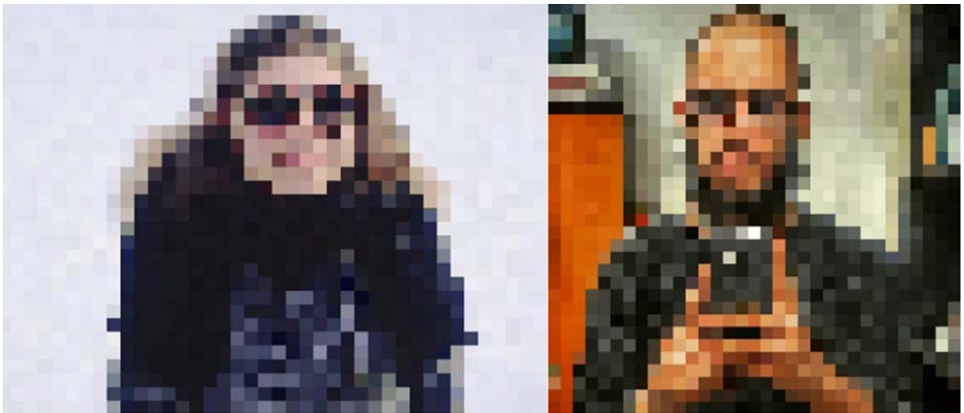 Fig 1: Contrast between a user high in Neuroticism (Left - less colorful, colder) and high in Emotional Stability (Right - more vivid).
Experimental Reality Check
Despite the intuitive appeal of the hypothesis, the machine learning results were underwhelming. The researchers trained k-Nearest Neighbors (k-NN), Naïve Bayes, and SVMs.
- The Best Performer: An SVM with a radial kernel using "Colorfulness" as input managed an accuracy of 65%, but with an AUC of 0.65, it stayed well below the "fair performance" threshold of 0.70.
- Statistically Weak: Correlation coefficients showed that "Red" was slightly associated with lower emotional stability, but the effect sizes were too small to be practically useful for screening.
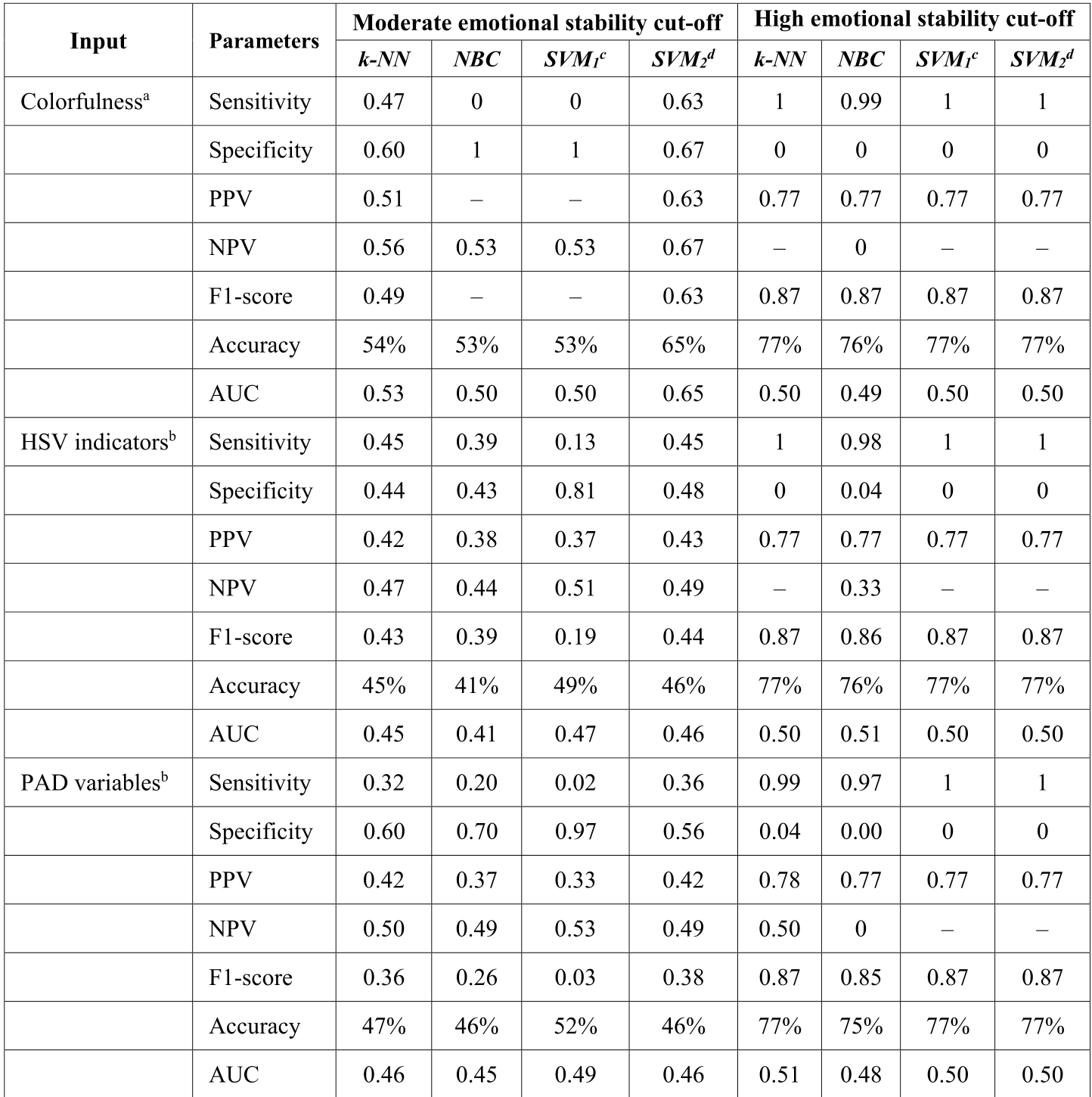 Table 1: Classification performances showing AUCs hovering around 0.50 (random chance).
Critical Insight: Why Did It Fail?
As a Senior Tech Editor, there are three critical takeaways from this "negative result" paper:
- The "Self-Presentation" Bias: Social media is a stage. Neurotic individuals may intentionally choose bright, "happy" colors to mask their internal state—a phenomenon common in cultures with high mental health stigma.
- Context Over Color: A profile picture is often a group photo, a logo, or a filtered selfie. The content (is it a face? a landscape? a pet?) likely carries more weight than the pixel averages.
- Data Homogeneity: The sample consisted entirely of Romanian university students. Local trends (e.g., students using the same profile filter for a faculty event) can easily "drown out" the subtle signal of personality.
Conclusion & Future Outlook
This paper serves as a vital cautionary tale for computational social science: pixel-level heuristics like HSV and Colorfulness are likely too "low-level" to capture the nuance of human personality. Future breakthroughs will likely require multi-modal approaches—combining facial expression analysis, text from captions, and deep-feature extraction (via CNNs) to see past the "color mask" of the profile picture.
While the study did not find a "golden key" to neuroticism, it highlights the need for cross-cultural validation in AI-driven psychological tools.