
Beyond the Follower Count: Precision Identification of Topical Authorities on Twitter
A New Approach for Predicting an Important User on a Topic on Twitter
The paper proposes a multi-dimensional framework to identify and predict "Important Users" on Twitter tailored to specific topics. By integrating Latent Dirichlet Allocation (LDA) for topic modeling with a novel composite metric—combining Influence, Activity, and Popularity scores—the method successfully distinguishes authoritative voices within specialized discussion clusters.
TL;DR
In the era of information overload, being "popular" is not the same as being "important." This paper introduces a robust mathematical framework to identify Important Users by individual topics. By combining Influence, Activity, and Popularity scores with LDA topic modeling, the researchers provide a blueprint for identifying credible sources in specific niches, offering a potent tool against the spread of misinformation.
The Granularity Gap: Why Global Influence Fails
Most social media metrics are "flat." We look at a user's follower count () and assume global influence. However, a celebrity influential in Pop Culture might have zero credibility in Quantum Physics.
The authors argue that existing paradigms (like PageRank or HITS) often treat the network as a monolithic entity. The real challenge lies in the Topic-Specific Importance:
- Credibility Risk: Following a popular but non-expert user leads to the spread of untrustworthy messages.
- Contextual Dynamics: User behavior changes based on what they are talking about.
Methodology: The Unified Importance Score
The authors decompose "Importance" into a tripartite mathematical model. Each component is derived from specific Twitter metrics (Retweets, Mentions, Replies, etc.).
1. Topic Modeling (LDA)
Before measuring influence, the system must know what is being discussed. Using Latent Dirichlet Allocation (LDA), the corpus of tweets is clustered into latent topics ().
2. The Three Pillars of Score
- Popularity Score (): Focuses on the "Social Capital" — the ratio of followers to followees.
- Activity Score (): Measures the "Output" — how many original tweets, replies, and favorites the user generates for a specific topic.
- Influence Score (): Measures the "Impact" — the reaction ratio from the community (how many people retweeted or mentioned them).
Technical Insight: The authors cleverly use a logarithmic function in Equations 2 and 3. This acts as a "damper" to prevent users who spam retweets or mentions from artificially inflating their importance scores.
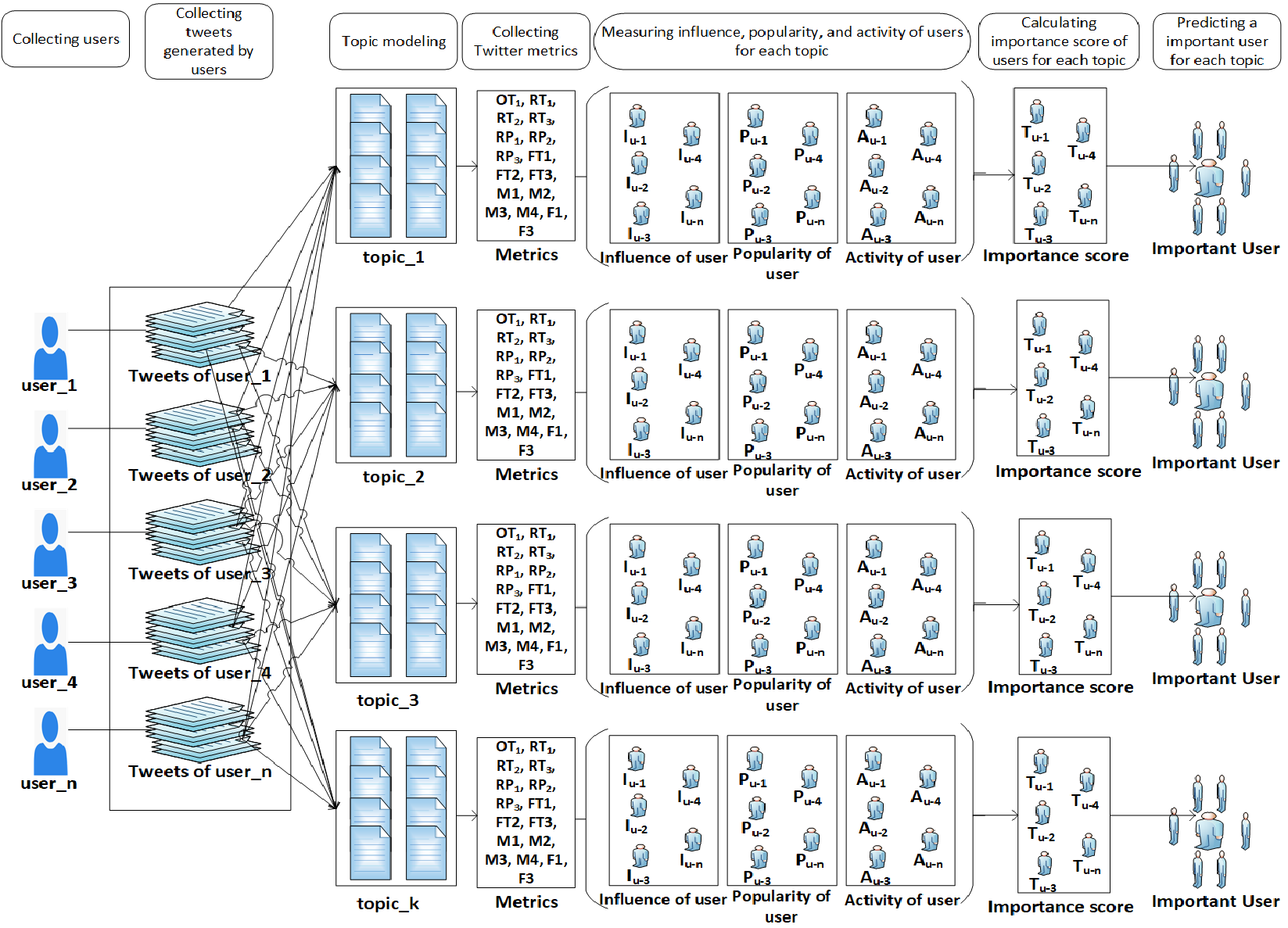 Fig 1: The architecture of the proposed importance prediction pipeline.
Experimental Findings: The 90/10 Rule
The researchers tested their model on a dataset of the top 10 Twitter users and their associated interaction networks.
Statistical Distribution
The results showed a stark power-law distribution in importance:
- 90% of users in any given topic have an importance score of zero.
- Only 2% of users qualify as "Highly Important" (score 4-5).
- Topical Switching: User was the most important in Topic 1, but fell significantly in Topic 5, proving that importance is not a fixed attribute of the user but a fluid attribute of the subject matter.
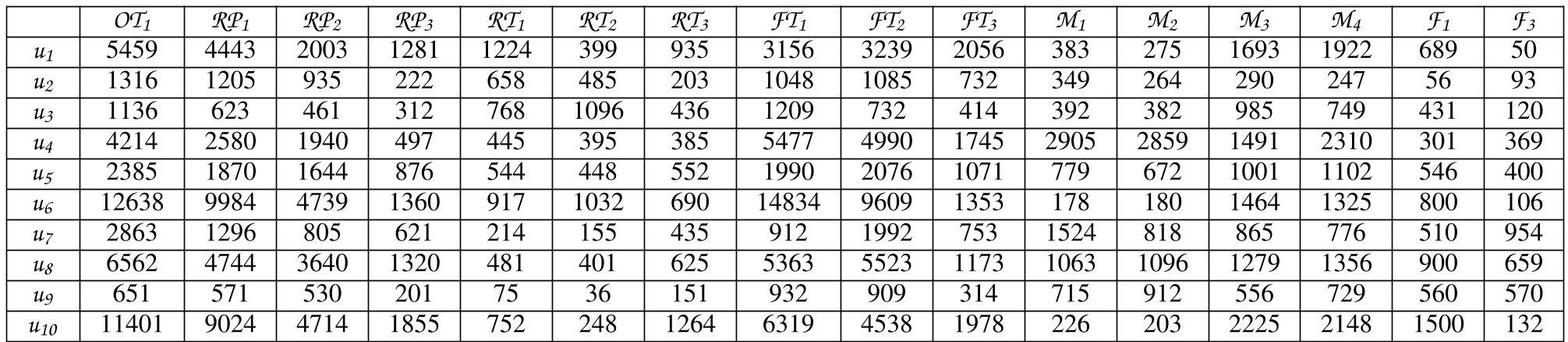 Table 1: Raw metrics across different users (U1-U10) used for scoring.
Critical Insight & Conclusion
The true value of this work lies in its Ablation-style thinking: by separating the "noise" (over-activity) from "signal" (community reaction/influence), we can find the true "Authorities."
Limitations & Future Work
The authors honestly note the lack of a head-to-head comparison with other SOTA models (like modified Topic-sensitive PageRank). However, their framework sets a high bar for multi-metric fusion. The next frontier? Temporal Importance—tracking how a user's authority waxes and wanes as a topic evolves from a breaking news event to a historical footnote.
Final Takeaway: To find the truth on social media, don't look at who has the most followers; look at who has the most "Topic-Specific Importance."