
The Red Bridge: Re-engineering CPC-CPV Relations for a New Era
新时代中国共产党与越南共产党党际交往研究_王雨彬
This thesis explores the inter-party relations between the Communist Party of China (CPC) and the Communist Party of Vietnam (CPV) in the "New Era." It emphasizes the transition from traditional diplomatic frameworks to the innovative construction of a "China-Vietnam Community with a Shared Future," positioning party-to-party exchange as the core driver of the bilateral Comprehensive Strategic Cooperative Partnership.
TL;DR
In an era of global volatility, the relationship between the Communist Party of China (CPC) and the Communist Party of Vietnam (CPV) has evolved from mere "Comrades and Brothers" into a "Community with a Shared Future." This transition leverages the unique institutional DNA of socialist states to bypass traditional diplomatic friction, focusing on high-level ideological alignment and pragmatic economic integration to navigate the "century-old changes" in global politics.
The Motivation: Why State Diplomacy Isn't Enough
For decades, China-Vietnam relations were viewed through the lens of Westphalian sovereignty or historical sentiment. However, the author argues that state-to-state diplomacy is susceptible to external shocks—specifically maritime disputes and US-led containment strategies.
The "New Era" demands a more resilient structure. The CPV and CPC share a unique "Socialist Identity," which allows them to communicate through a shared vocabulary of Marxism-Leninism, providing a layer of "political trust" that capitalist diplomatic frameworks lack.
Methodology: The "Three Pillars" of Modern Party Diplomacy
The thesis identifies a shift in the mechanism of engagement. No longer just about symbolic handshakes, the relationship is now built on three functional pillars:
- High-Level Strategic Guidance: Frequent hotlines and "Special Envoy" visits (as seen in the 2022/2023 summits) ensure that top-level consensus filters down to administrative departments.
- Theoretical Exchange: The "Theoretical Seminar" mechanism (17 editions held) transforms governance into a shared science, comparing notes on "Strict Party Governance" and "Anti-Corruption" (Vietnam's "Internal Enemy" vs. China's "Self-Revolution").
- Institutionalized Grass-roots Cooperation: Moving from the "Center" to the "Local," encouraging border provinces to engage in "Smart Port" development and poverty reduction pilots.
Note: The relationship operates on the 'Sixteen-Word Guideline': Long-term stability, future-oriented, neighborly friendship, and all-round cooperation.
Empirical Evidence: Trade and Stability
The data suggests that party-led diplomacy yields tangible economic dividends. Despite the South China Sea (East Sea) tensions, the "Safe Valve" of party communication has kept economic corridors open.
- Trade Volume: Reached $175.6 billion in 2022, representing 24% of Vietnam's total trade.
- Political Resilience: During the 2014 maritime crisis, it was the "Special Envoy" mechanism (Le Hong Anh's visit) that restored the bilateral temperature, proving that party channels can navigate waters where traditional naval or state channels stall.
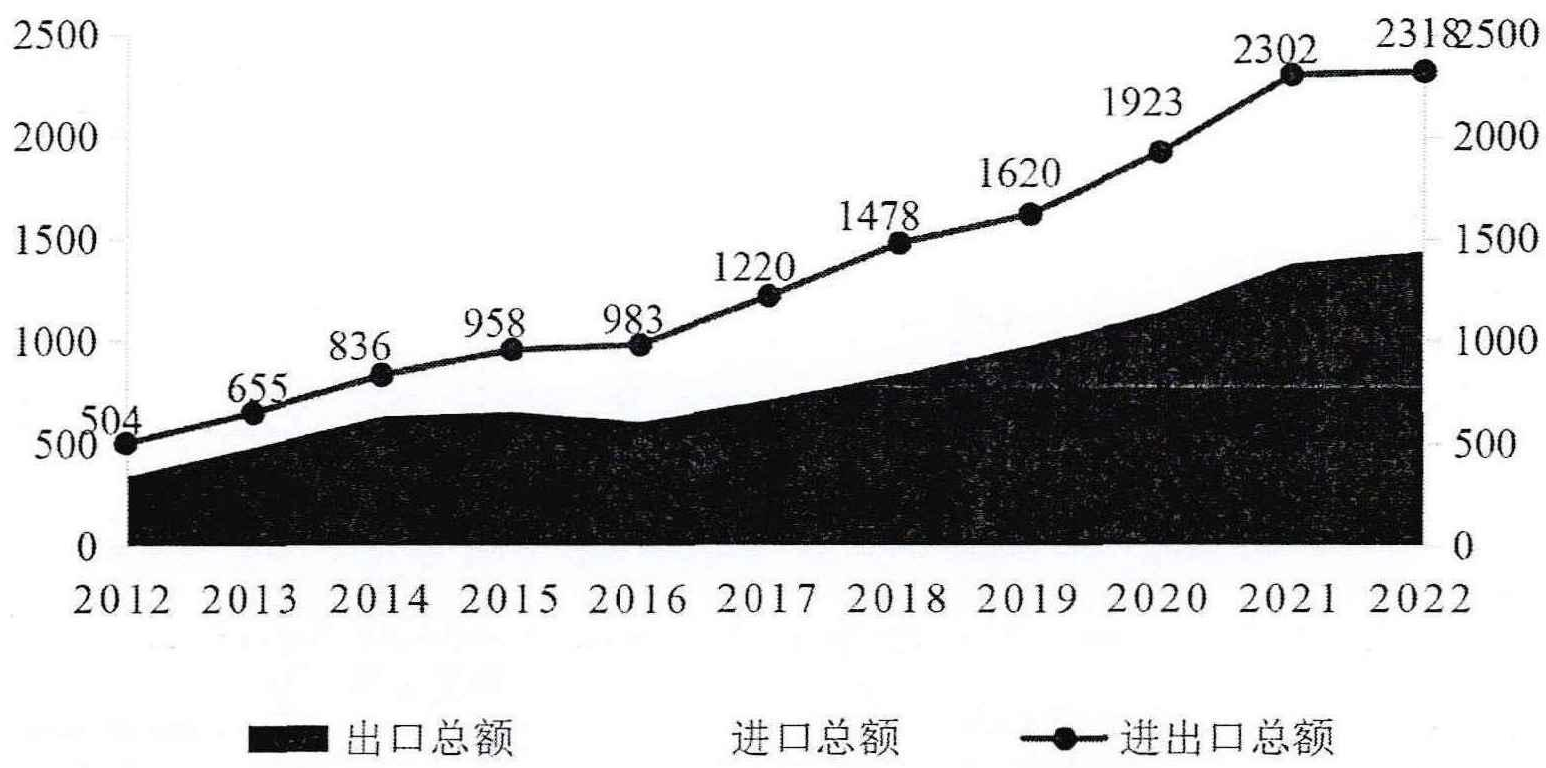 Figure 4-1: Sustained growth in trade volume from 2012 to 2022, demonstrating economic decoupling from political friction.
Critical Analysis: The "Bamboo" Challenge
The author does not shy away from the limitations. Vietnam’s "Bamboo Diplomacy" (firm roots, flexible branches) creates a delicate balancing act between China's regional vision and US security interests.
The "Realistic Obstacles" identified include:
- Low Grass-roots Participation: Diplomacy remains top-heavy, with limited involvement of local party branches.
- Flexibility Gap: High-level mechanisms sometimes struggle to react to sudden maritime skirmishes in real-time.
- The US Factor: External intervention remains the largest variable in the "Shared Future."
Future Outlook: Moving Toward "Representative Mechanism"
The thesis concludes with a bold recommendation: Institutionalizing the "Inter-party Representative." By establishing permanent party-to-party liaison offices—independent of traditional embassies—China and Vietnam could create a "Firewall" for disputes, ensuring that localized conflicts never escalate to systemic ruptures.
In summary, the CPC-CPV bond is more than a historical relic; it is a sophisticated, ideological infrastructure designed to preserve the socialist path in an increasingly multipolar world.