
ECLAP: Redefining Digital Heritage through Semantic Clouds and Social Media
A New Generation Digital Content Service for Cultural Heritage Institutions
The paper introduces ECLAP (European Collected Library of Artistic Performance), a next-generation digital content service and Best Practice Network for cultural heritage institutions. Leveraging semantic computing and social media integration, it aggregates performing arts metadata for Europeana while providing advanced tools for automated content ingestion, IPR management, and cross-media annotation.
TL;DR
The European Collected Library of Artistic Performance (ECLAP) is not just a digital archive; it is a sophisticated service ecosystem that transforms how cultural institutions manage performing arts content. By integrating automated ingestion, semantic computing, and IPR management, ECLAP bridges the gap between traditional libraries and modern social networks, enabling over 35 global institutions to share and enrich their collections.
The Evolution of Digital Libraries: Beyond the Search Bar
For decades, digital libraries were static repositories—places where you searched a term and received a list of text links. In the age of YouTube and Facebook, this model is dead. Users, especially students and researchers, now expect "living" content: videos they can annotate, collections they can curate, and systems that recommend content based on their behavior.
The authors of ECLAP identified a critical bottleneck: while institutions used social media for promotion, they lacked a professional platform capable of handling the complex IPR (Intellectual Property Rights) and semantic relationships inherent in artistic performances (e.g., linking a sketch of a costume to a video of the performance it was used in).
Methodology: The "Brain" Behind the Portal
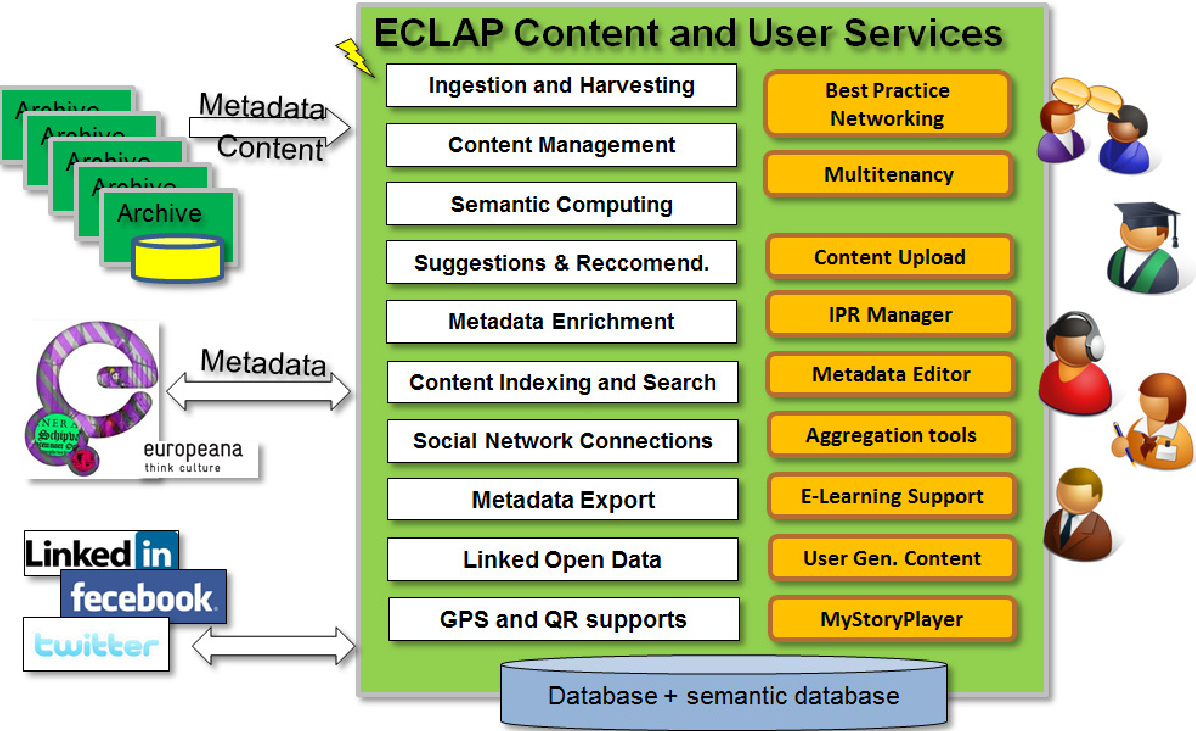
ECLAP’s architecture is driven by several core components that move beyond simple metadata storage:
1. Automated Back-Office (AXCP)
Instead of manual uploads, ECLAP uses the AXCP media grid to automate ingestion. It handles over 500 digital formats, automatically repurposing them for PC or mobile viewing. It doesn't just store files; it "semantifies" them—extracting technical descriptors, geo-localizing content, and generating QR codes.
2. MyStoryPlayer & Content Aggregation
One of the most innovative breakthroughs is MyStoryPlayer. This tool allows users to create relationships between audiovisual segments without altering the original files.
- Synchronized Execution: Play two video segments side-by-side for comparison.
- Annotations: Link a specific timestamp in a video to a PDF document or another audio clip.
- LOD Integration: These relationships are stored as RDF triples, making them searchable via SPARQL queries.
3. The IPR Wizard
IPR is the "nightmare" of digital heritage. ECLAP solves this with an MPEG-21-based IPR Model. Content owners can define granular rules based on:
- User Type (Educational vs. Public)
- Device (PC vs. Mobile)
- Action (Streaming vs. Downloading vs. Embedding)
Experimental Results & User Impact
ECLAP’s success is measured by its massive scale and utility. Currently hosting over 112,000 items, the platform acts as a primary aggregator for Europeana.
Key Metrics:
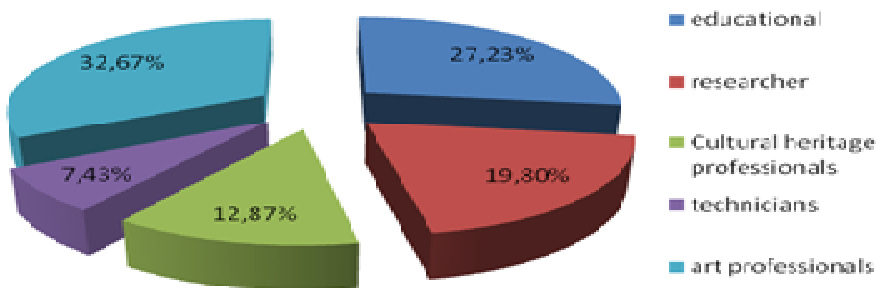
- User Base: 2,000 registered professionals and students.
- Efficiency: The back-office handles the "cross-media" challenge, providing faceted search results that include videos, images, and e-books in a single query.
- Engagement: Users spend an average of 5 minutes per session, with a significant shift toward navigating the Social Graph to discover content through relationships rather than just keyword searches.
Critical Insight: The Multitenant Advantage
The secret to ECLAP's adoption is its multitenancy. Each institution (like the British Library or the Louvre) can have its own branded channel. This allows them to maintain their "brand identity" while benefiting from a massive, shared semantic infrastructure that they could never afford to build alone.
Conclusion & Future Outlook
ECLAP represents the "New Generation" of digital content services. By moving the focus from storage to aggregation and connection, it provides a blueprint for how cultural heritage can survive and thrive in a semantic web.
Limitations: While ECLAP is powerful, its reliance on specific plugins (like Flash in the original implementation mentioned) highlights the need for constant updates to modern web standards like HTML5/WebAssembly for long-term sustainability.
Future Work: The authors suggest applying the ECLAP framework—particularly its IPR Wizard and MyStoryPlayer—to other "vertical" domains such as medical education or specialized history archives.