
Beyond Psychology: How Media Technology Shapes the Pulse of Social Word-of-Mouth
New gratifications for social word-of-mouth spread via mobile SNSs: Uses and gratifications approach with a perspective of media technology
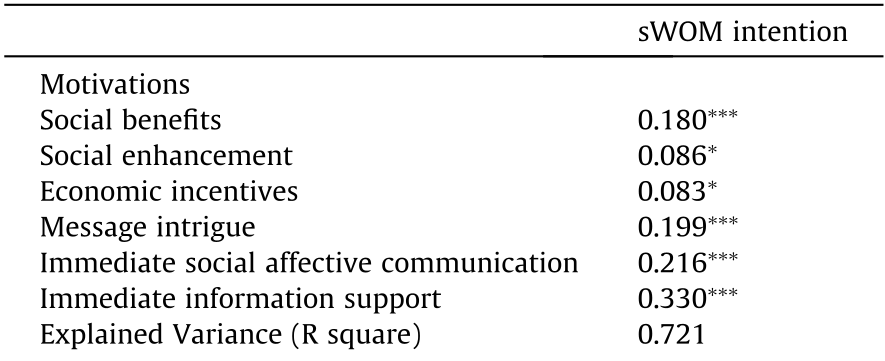
This study applies the Uses and Gratifications (U&G) approach through a media technology lens to identify motivations for disseminating social word-of-mouth (sWOM) via mobile SNSs. By combining qualitative in-depth interviews with quantitative factor analysis, the authors identified six key motivations, achieving a high variance explanation (72.1%) for sWOM intention.
TL;DR
Why do we hit "share" on our phones? While traditional views focus on social status or rewards, this study reveals that immediacy is the new king of social Word-of-Mouth (sWOM). By integrating the "affordances" of mobile technology—like mobility and constant connectivity—into the Uses and Gratifications (U&G) framework, the authors identified Immediate Information Support as the most powerful driver of sharing behavior on mobile SNSs like Facebook.
The "Why" Behind the Share: Filling the Technology Gap
Most academic literature treats human motivation as a static psychological trait. We share because we want to look smart (Social Enhancement) or because we want a discount (Economic Incentives). However, these theories often ignore the device in our hands.
The authors argue that mobile SNSs aren't just smaller versions of PCs; they are different species. Their inherent "affordances"—mobility, portability, and ubiquity—create new "gratification-opportunities." If the technology allows us to be helpful instantly, our motivation to share evolves from a planned social act into a spontaneous, technology-enabled impulse.
Methodology: From Interviews to Clusters
The researchers didn't just guess these motivations; they built them from the ground up:
- Qualitative Discovery: They interviewed 48 active Facebook app users to find 31 raw reasons for sharing.
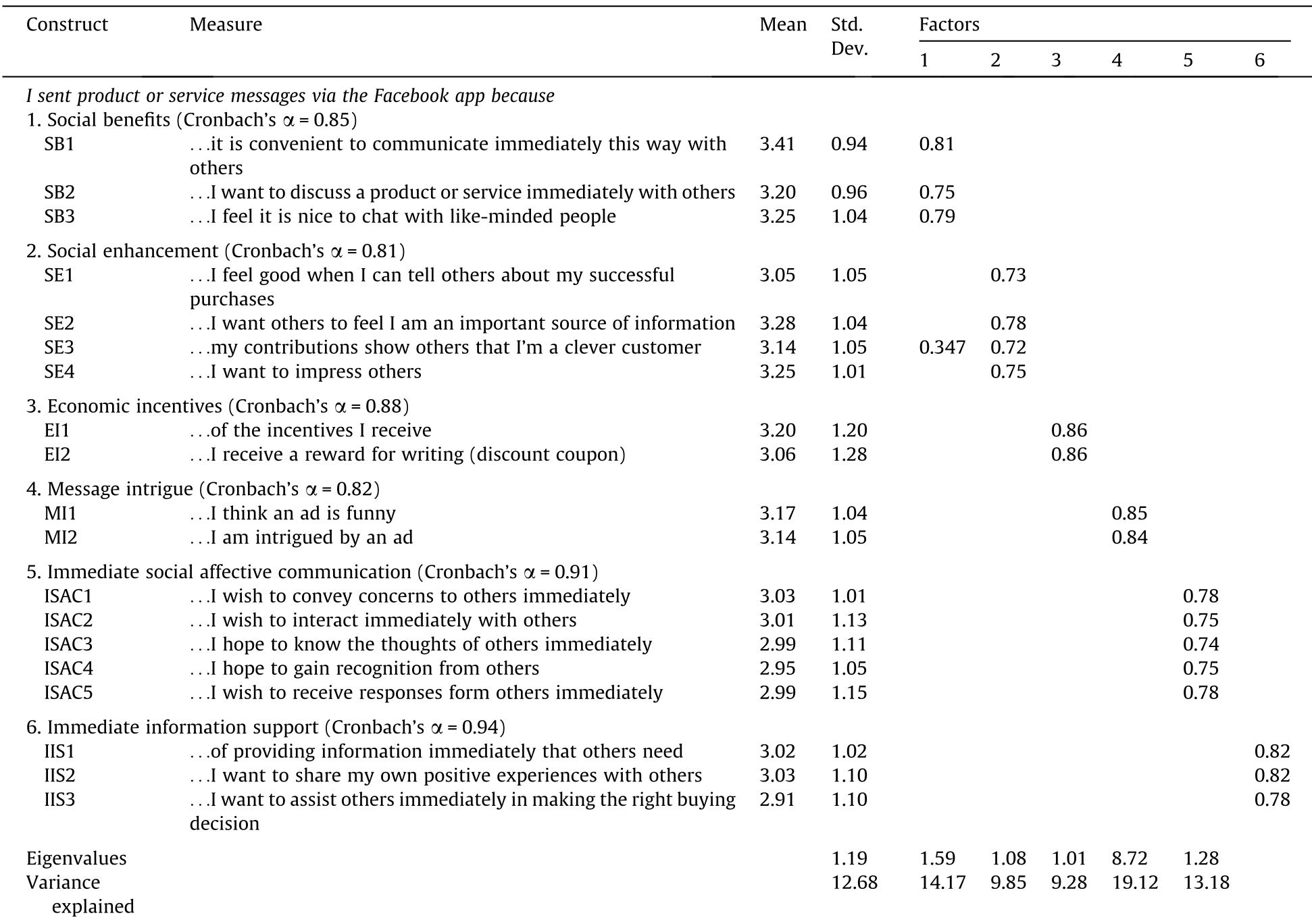
- Quantitative Validation: They surveyed 310 users and used factor analysis to distill these into six clean dimensions.
- Predictive Modeling: They ran a regression to see which motivations actually led to the intent to share.
The Six Pillars of Mobile sWOM
The study identified six primary motivations. Four are "old guard" factors, and two are "new-age" technological factors:
- Social Benefits: The convenience of real-time chat.
- Social Enhancement: Looking like a "clever customer" to peers.
- Economic Incentives: Coupons and rewards.
- Message Intrigue: Sharing because an ad is genuinely funny or weird.
- [NEW] Immediate Social Affective Communication: The urge to convey concern or receive an immediate emotional response.
- [NEW] Immediate Information Support: The drive to assist others in making a buying decision right now.
Key Results: Immediacy Wins
The most striking finding is the hierarchy of influence. Immediate Information Support (β=0.330) and Immediate Social Affective Communication (β=0.216) outperformed traditional drivers like economic incentives.
Furthermore, the study segmented users into four specific "disseminator types":
- Recognition Seekers: Driven by social status.
- Multi-motivation Senders: The "power users" driven by almost everything.
- Disinclined Senders: The "lurkers" who rarely share.
- Experience Sharing Senders: Mostly older females who value social benefits and funny messages.
Deep Insight: What This Means for the Future
The industry value of this work lies in the pivot from content-centric marketing to context-centric marketing.
- For Brands: Stop just offering coupons. Instead, create "information support" tools. Help a user help their friend immediately (e.g., shareable size guides or real-time availability).
- The Limitation: The study focused on the Facebook app in Taiwan. As we move toward 2026, the roles of AI-curated feeds and short-video "affordances" (like TikTok's Stitch/Duet) may further evolve these "immediate" gratifications.
Takeaway: Mobile sWOM is no longer about the reward; it's about the speed of the connection.