
LBSNs Redefined: Why Location Alone Isn't Enough for the Next Generation of Social Networks
New perspectives for Recommendations in Location-based Social Networks: Time, Privacy and Explainability Pavlos kefalas
This paper provides a comprehensive survey and a new conceptual framework for Location-based Social Networks (LBSNs), proposing the integration of three critical dimensions: Time, Privacy, and Explainability. It maps the complex relationships between users, locations, activities, and groups through multi-partite graphs and benchmarks 14 real-world LBSN platforms against these perspectives.
TL;DR
Location-based Social Networks (LBSNs) have bridged our physical and digital lives, but they face a triple threat: static temporal modeling, privacy vulnerabilities, and a lack of transparency. This paper argues that the future of LBSNs lies in the "Holy Trinity" of Time, Privacy, and Explainability, moving beyond simple "check-ins" to deeply contextualized and secure user experiences.
Background: The Quadripartite Reality
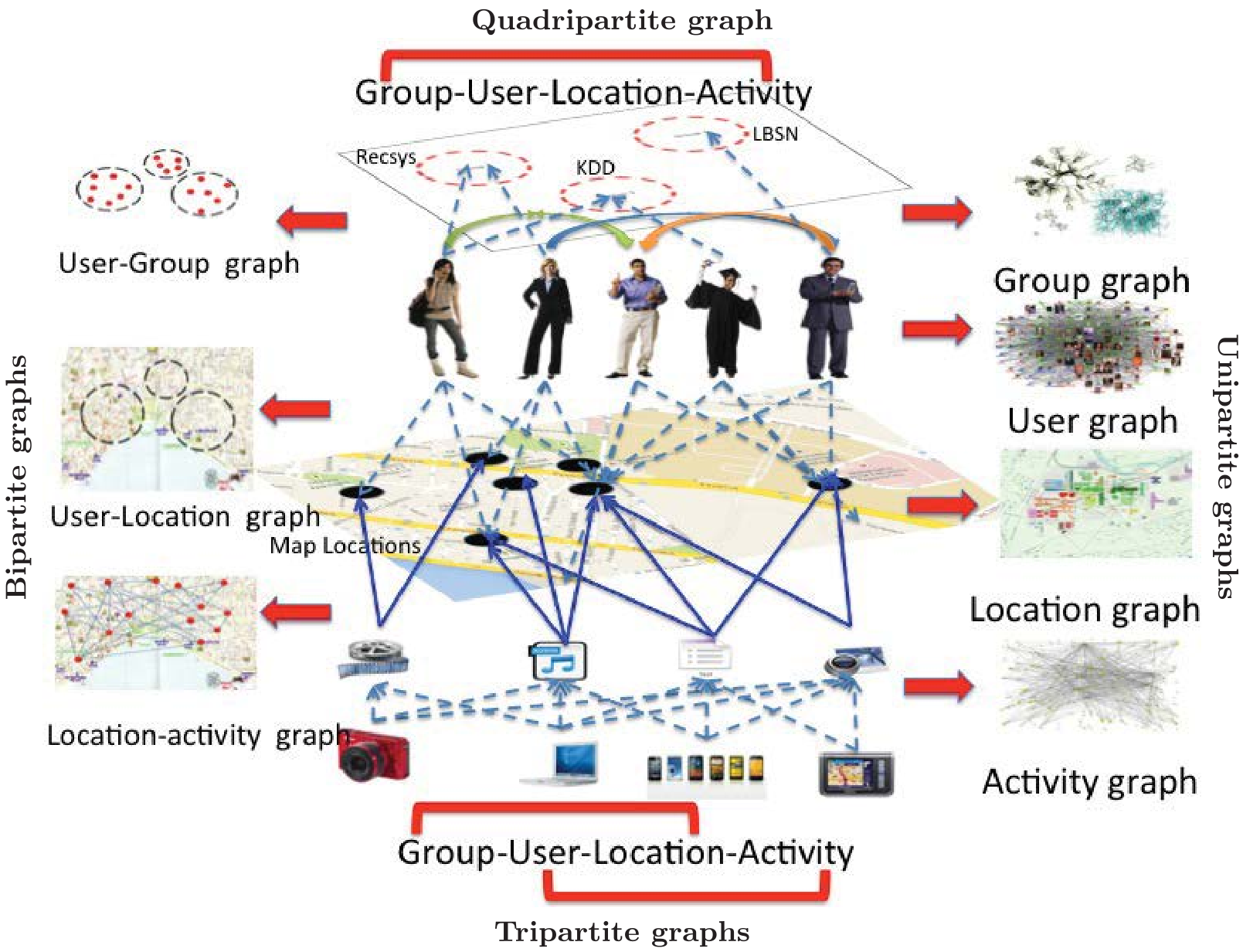
The transition from Online Social Networks (OSNs) to LBSNs introduced a critical 4th dimension—Location. However, the authors posit that we must look at LBSNs through a quadripartite lens involving Users, Locations, Activities, and Groups. By mapping these in multi-partite graphs, the complexity of human mobility becomes apparent: we don't just "visit a place"; we perform an activity within a social group at a specific time.
The Three Pillars of Modern LBSN
1. Time-Awareness: The "When" Matters
A recommendation for a scenic park is useless at midnight. The paper highlights that human mobility is highly periodic (daily/weekly).
- Methodology: Advanced models utilize User-Time-POI (UTP) cubes. By splitting the day into time slots, the system predicts the probability of a check-in at location l at time t.
- Short-term vs. Long-term: Utilizing Session-based Temporal Graphs (STG), systems can distinguish between a user’s permanent interests (home/work) and transient needs (a coffee shop while on a trip).
2. Explainability: Building Trust Through Transparency
Why did I get this recommendation? Without an answer, users are less likely to act.
- 1-D Explanation: "Recommended because 4 of your friends have been here."
- Multi-D Explanation: Combining user ratings with activity types (e.g., "Recommended because it has a 4.9 rating and focuses on live music, which you enjoy").
3. Privacy: The Achilles' Heel
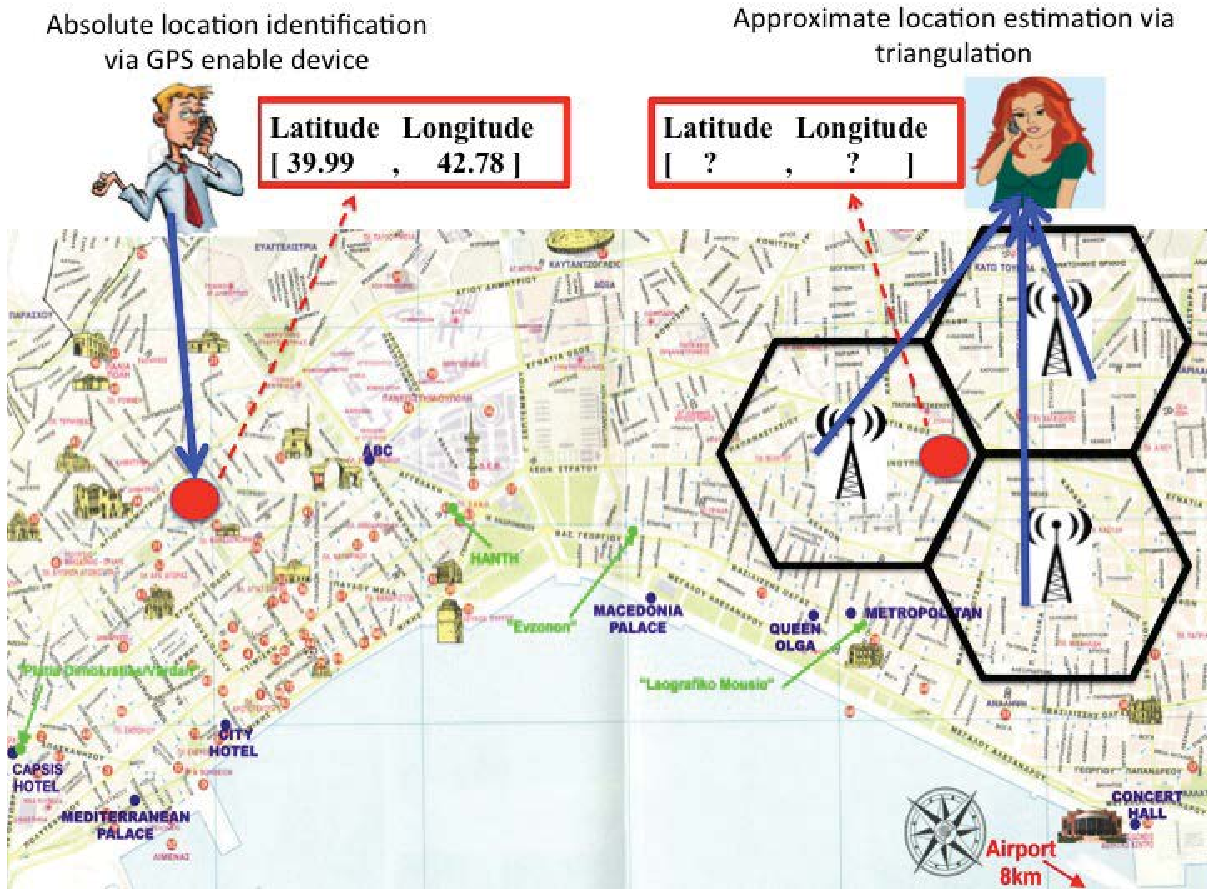
LBSNs are fundamentally intrusive. Sharing your location at a restaurant accidentally informs the world—and potential burglars—that your home is empty.
- Proposed Solutions: The paper discusses MobiShare and Wyse, which advocate for storing encrypted location data on untrusted servers while keeping cryptographic keys on client devices. This ensures that only trusted social relations can decode your precise coordinates.
Experimental Insights: Real-World Gaps
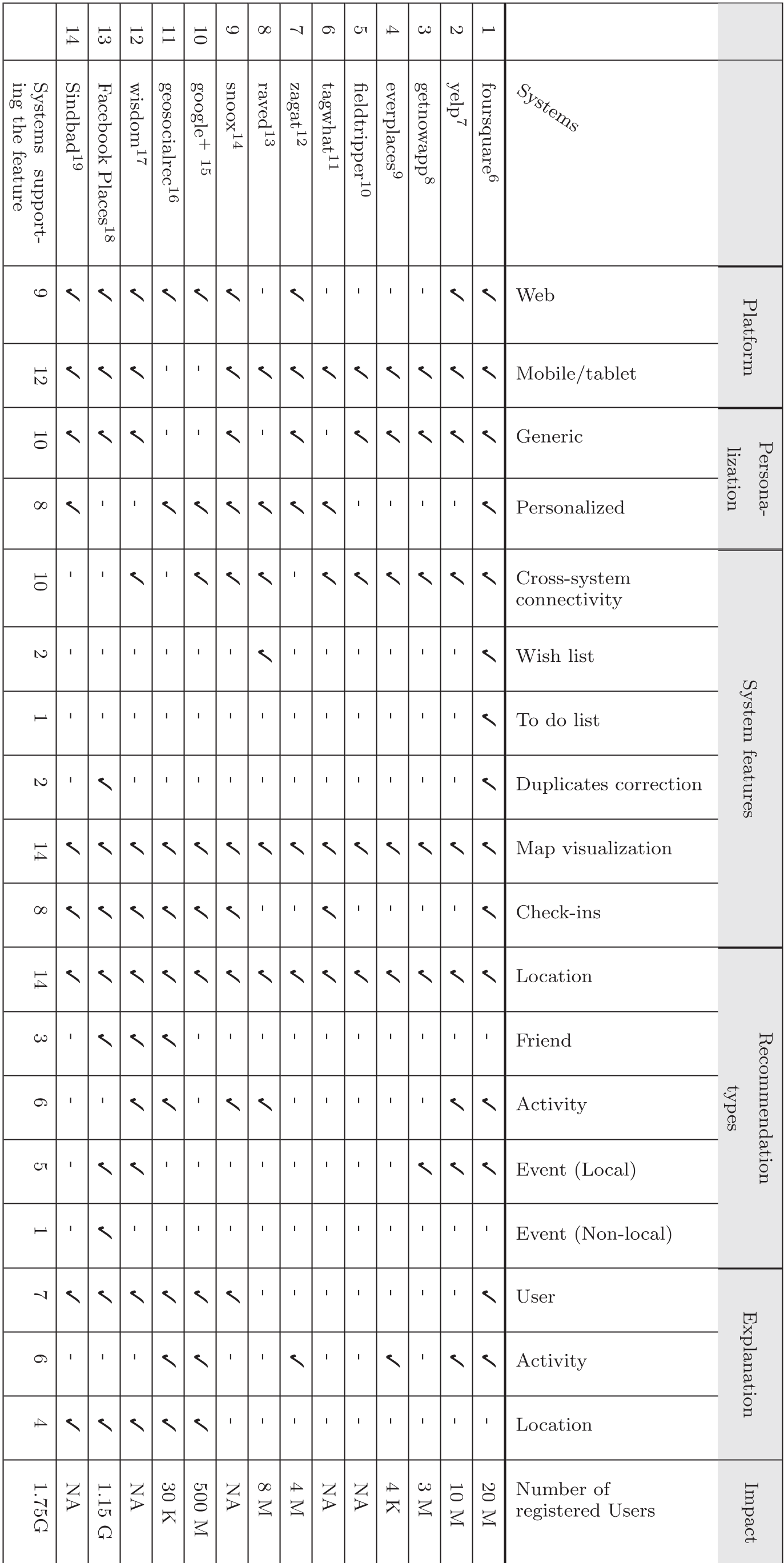
The authors benchmark 14 industry giants (Foursquare, Yelp, Google+, etc.). The results reveal a stark reality:
- Platform Parity: Most systems now support mobile, but generic (non-personalized) results still dominate.
- Feature Deserts: While "Map Visualization" is universal, features like "To-do lists" or "Duplicate correction" (addressing the synonymity of tags like "Home") are rare.
- The Privacy Vacuum: Despite the risks, very few mainstream apps allow users to define "safe regions" or time-based visibility rules natively.
Strategic Takeaways & Future Outlook
This work serves as a manifesto for the next stage of ubiquitous computing. To move LBSNs from mere utility apps to "The Next Big Thing," developers and researchers must:
- Adopt Spatio-Temporal Fusion: Stop treating location and time as independent variables.
- Move to the Edge: Privacy-preserving architectures should shift functional computation to the user's device (the client) rather than a centralized server.
- Humanize the Algorithm: Use explainability not just as a UI feature, but as a core feedback loop for the recommendation engine itself.
Conclusion: As we enter the era of ubiquitous sensing, the "Social" in LBSN must evolve to prioritize the "Human"—protecting our data while explaining the logic behind our digital world.