
Next Steps in E-Government Crowdsourcing: Moving Beyond the Digital Suggestion Box
Next steps in e-government crowdsourcing
This research analyzes the evolution of e-government crowdsourcing in the US, categorizing initiatives into policy input, idea generation, expert collaboration, and work distribution. It highlights the transition from simple transparency tools to complex collaborative platforms like ExpertNet and Challenge.gov.
TL;DR
E-government crowdsourcing in the US has moved past its "honeymoon" phase. This paper examines why many initiatives stall and provides a roadmap for "Version 2.0"—shifting from passive transparency to active, moderated collaboration. The key takeaway? Success isn't about the tool; it's about the knowledge workers who moderate the crowd and the feedback loops that prove to citizens their input actually matters.
Contextual Positioning
Published shortly after the Obama administration's Open Government Initiative (2009), this work serves as a critical mid-point evaluation. It moves beyond the hype of early platforms like Wikipedia and Linux to ask: Can these decentralized models actually work within the rigid hierarchy of government?
The "Participation Gap" and the Motivation Problem
The author points out a glaring issue: Why do people contribute? In open-source software (like Linux), contributors are often motivated by professional utility. In e-government, altruism is rarely enough.
The paper identifies a significant drop-off in participation when users feel their ideas disappear into a "black hole." For instance, the SAVE Award—a federal initiative for cost-saving ideas—saw participation plummet from 38,000 ideas in 2009 to just 18,000 in 2010.
The Insight: Crowdsourcing fails when it is a one-way street. Without a moderator to provide "results-based feedback," the crowd loses interest.
Methodology: The Four Pillars of Crowdsourcing
The research categorizes the landscape into four distinct types, each requiring different levels of technical and human intervention:
- Public Policy Input & Budgeting: Transparency-focused (e.g., EPA comments).
- Idea Generation: Freeform suggestion boxes (e.g., IdeaScale implementations).
- Expert Collaboration: Deep technical work (e.g., SCAG Bike/Pedestrian Plan).
- Work Distribution: Micro-tasking for efficiency (e.g., Peer-to-Patent).
Evolution of Initiatives
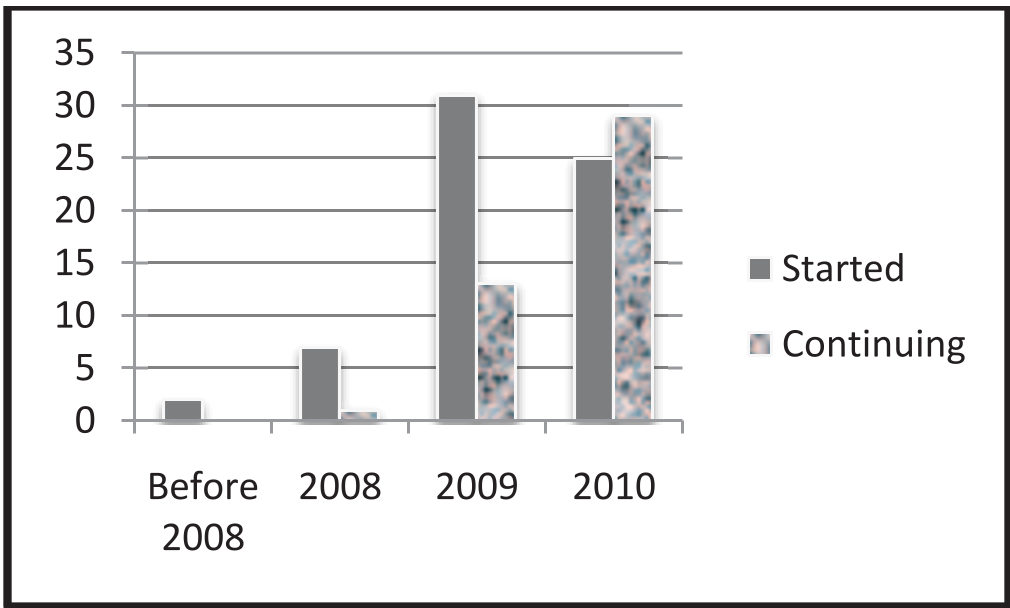 Figure 1: While the "start-up" peak occurred in 2009, the focus has shifted toward sustaining and managing existing platforms.
The Core Strategy: Moderated Collaboration
The paper introduces a "Success Matrix" for second-generation crowdsourcing. The most radical shift is the role of the Moderator.
Instead of just being a "bouncer" who removes spam, the new moderator must be a Knowledge Worker. Their role involves:
- Synthesis: Linking related ideas to prevent fragmentation.
- Assessment: Using tools like the Analytical Hierarchy Process to bubble up the best ideas.
- Rights Management: Moving away from "open-for-all" editing (which leads to wiki wars) toward earned rights systems based on peer review and contribution history.
Comparison of Crowdsourcing Types
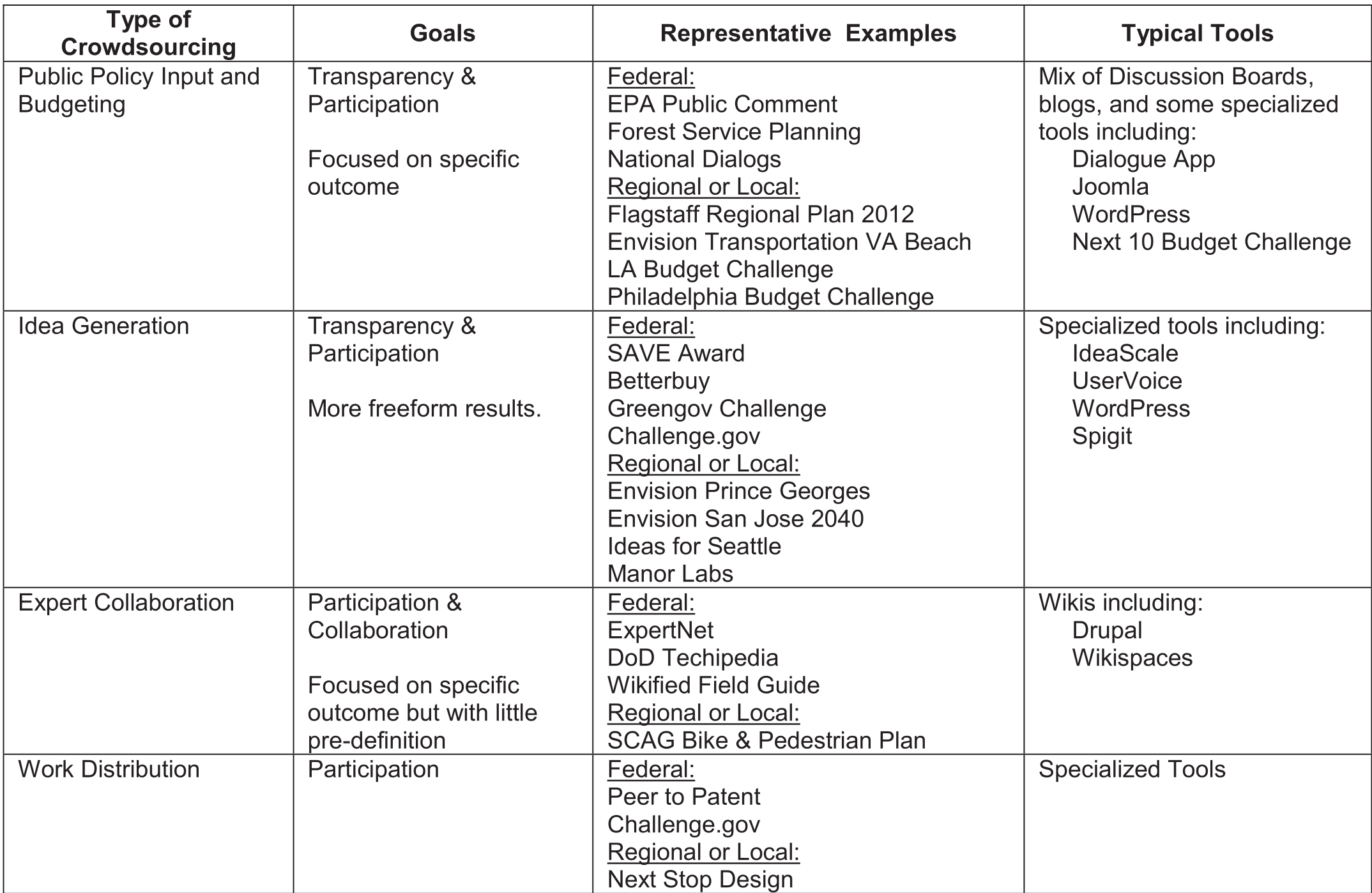 Table 1: Mapping goals to representative examples and tools.
Critical Analysis & Future Outlook
Takeaway: The paper argues that e-government must stop treating crowdsourcing as an "add-on" task and start treating the crowd as a distributed workforce.
Limitations: The author acknowledges the "coordination cost." If the effort required to moderate and synthesize thousands of ideas exceeds the value of the ideas themselves, the project is a failure.
The Road Ahead: The future of digital government lies in ExpertNet and Challenge.gov—platforms that don't just ask for opinions, but ask for vetted expertise and tangible prototypes. The challenge for 2026 and beyond will be integrating these social inputs into AI-assisted decision-making frameworks without losing the "human in the loop" legitimacy that democracy demands.
Author Perspective: Janice Warner (Georgian Court University) emphasizes that the "next step" is less about the technology and more about a cultural shift in civil service.