
neXtream: Architecting the Convergence of Social Media and Lean-Back Television
neXtream: A Multi-Device, Social Approach to Video Content Consumption
NeXtream is a multi-device framework for social video consumption that integrates smartphones, PCs, and TVs to create a unified viewing experience. It employs a dynamic stream generation algorithm that aggregates content from diverse sources based on individual preferences and social network interactions, facilitating both personalization and asynchronous community dialog.
Executive Summary
TL;DR: neXtream is a research prototype from the MIT Media Lab that reconceptualizes television as a personalized, socially-driven stream rather than a static broadcast. By integrating smartphones as sophisticated "smart remotes" and leveraging social network data, it transforms fragmented video consumption across TVs, PCs, and mobile devices into a unified, community-centric experience.
Academic Positioning: This work sits at the intersection of Social TV and Cross-Device Interaction (CDI). It moves beyond simple DVRs or VOD services by proposing an algorithmic "Virtual Operator" that replaces traditional network programmers with the collective intelligence of a user's social circle.
The Friction of Fragmentation
The authors identify a core paradox in modern media: while we have more content and devices than ever, the experience is increasingly disjointed.
- The Complexity Gap: While young generations embrace the interactivity of PCs, older demographics may find the shift away from "lean-back" TV frustrating.
- Social Detachment: Traditionally, watching TV was a social activity (sitting on a couch together). Modern digital viewing is often solitary, and social interaction (commenting/sharing) often requires interrupting the primary content.
- Content Overload: The "Long Tail" of content makes choice overwhelming, leading to "decision paralysis" for the viewer.
Methodology: The Stream and the Virtual Operator
NeXtream’s core innovation is the Dynamic Stream. Instead of channels, users subscribe to themes where the system aggregates short-form (YouTube-style) and long-form content.
1. Collaborative Filtering & Implicit Feedback
The system calculates a "likedness" value () using an exponential weighting formula:
- (Average Likedness): Derived from the percentage of a video watched (e.g., watching 4/5 of a clip yields a higher than skipping after 30 seconds).
- (Strength): Based on explicit actions like "favoriting" (Weight 3) or "disliking" (Weight -1).
2. The Dual-Screen Architecture
NeXtream utilizes a hub-and-spoke architecture. A central server (MySQL/PHP) handles the metadata, while the Apple TV (Quartz Composer) provides the visual output. The iPhone acts as the primary Interaction Point.
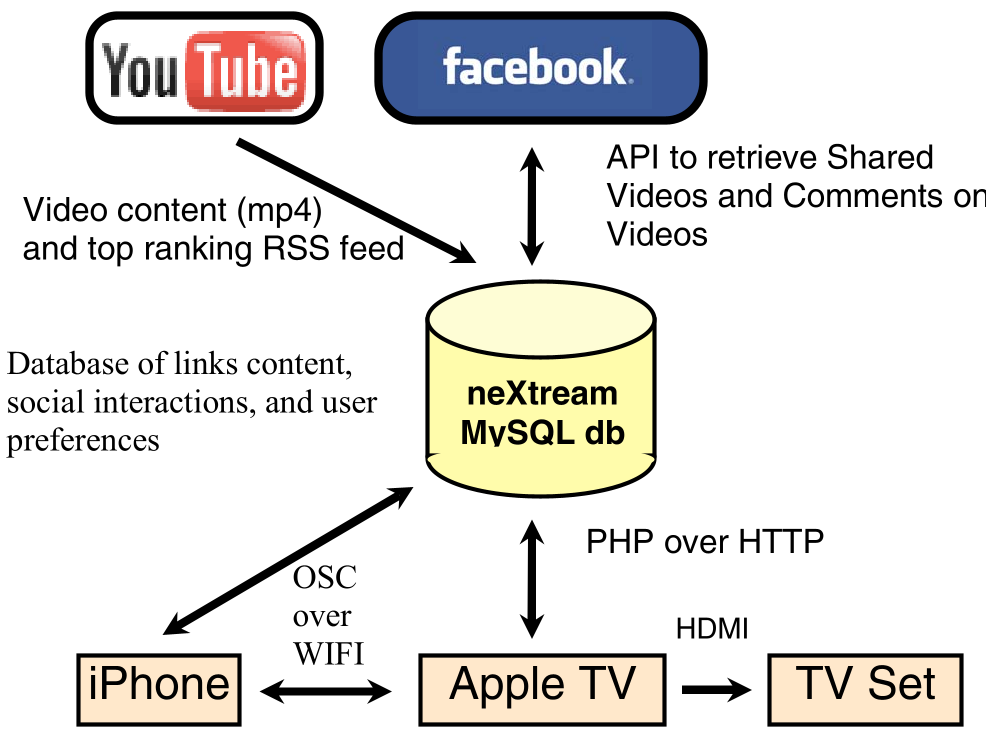 Figure 1: The backend-to-frontend pipeline showing the coordination between the mobile device, TV, and content server.
Experimental Interface and Synchrony
A key challenge addressed is the Haptic Gap. Using a touchscreen (iPhone) to control a TV can be distracting if the user has to keep looking down. NeXtream solves this by Interface Mirroring. Actions performed on the phone are instantly reflected on the TV via OSC (Open Sound Control) over WiFi, allowing for a seamless "look-up" experience.
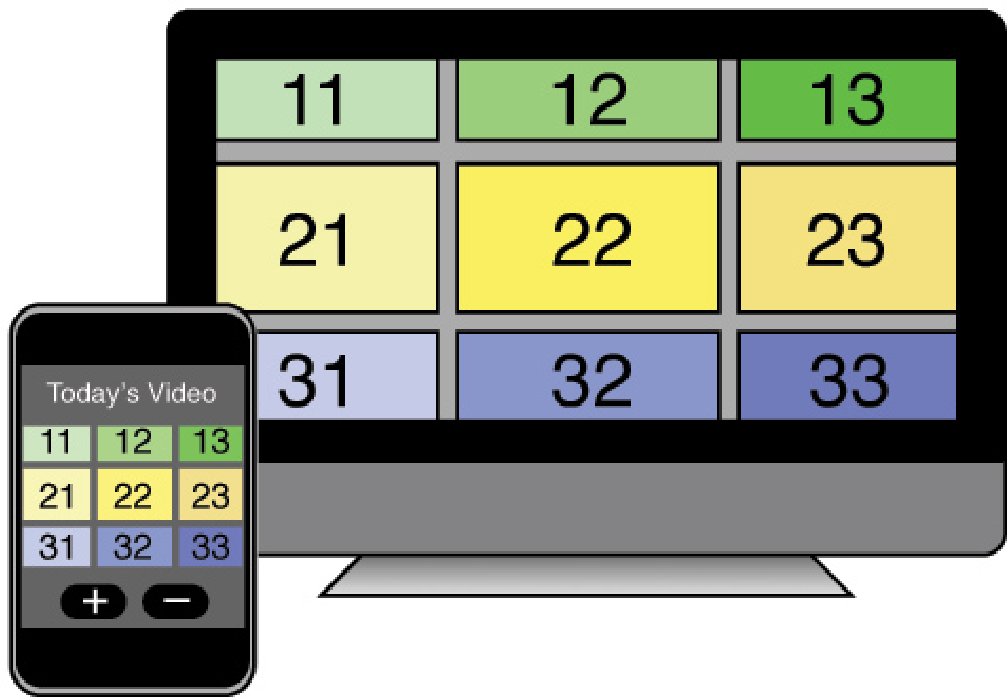 Figure 2: Visual synchronization between the primary screen and the secondary controller.
Critical Analysis: The Socioeconomic Shift
The authors correctly predicted the "Virality" of media. By turning a user's social network into a "Virtual Operator," neXtream pre-dated the current trend where platforms like TikTok or Netflix's "Play Something" feature dictate consumption.
Strengths:
- Social Integration: Effectively moves asynchronous dialogue (comments/messages) to the mobile screen, preventing UI clutter on the TV.
- Lean-Back Interaction: Automates the transition between short clips to maintain viewer attention.
Limitations:
- Cold Start Problem: The "likedness" algorithm requires initial data; the paper suggests a threshold that might permanently filter out content if a user skips it early on, creating a potential "filter bubble."
- Right Management: As a "content aggregator," the platform faces legal hurdles regarding transcoding and rebroadcasting across different IP networks—a challenge still prevalent in today's streaming wars.
Conclusion and Future Outlook
NeXtream provides a blueprint for a converged media ecosystem. It suggests that the future of television isn't just about higher resolution, but about contextual intelligence—knowing what to play, on which device, and which friends are currently discussing it. As we move further into the era of AI-driven recommendations, the "Virtual Operator" concept remains more relevant than ever.